
Crypto OTC Desk in India are quickly becoming a must-have for high net worth individuals, family offices, and corporate treasuries that want to buy or sell large volumes of Bitcoin and other altcoins without moving the markets. Over the last few years, India’s crypto ecosystem has come a long way, and the growers and givers are getting more and more sophisticated.
The Indian market and its large players are making it difficult for normal exchange order books to accommodate bulk crypto orders. One big bulk crypto buy or sell order will move market prices. This could cost large amounts of money, like lakhs or crores, to institutions. This is where OTC desk trading truly comes to the rescue, providing a private, efficient, and price-certain way of bulk crypto trading.
Are you also interested in starting a crypto OTC desk in India? The article below discusses everything you need to know about OTC desk trading in India. Let’s start.
What is crypto OTC desk trading?
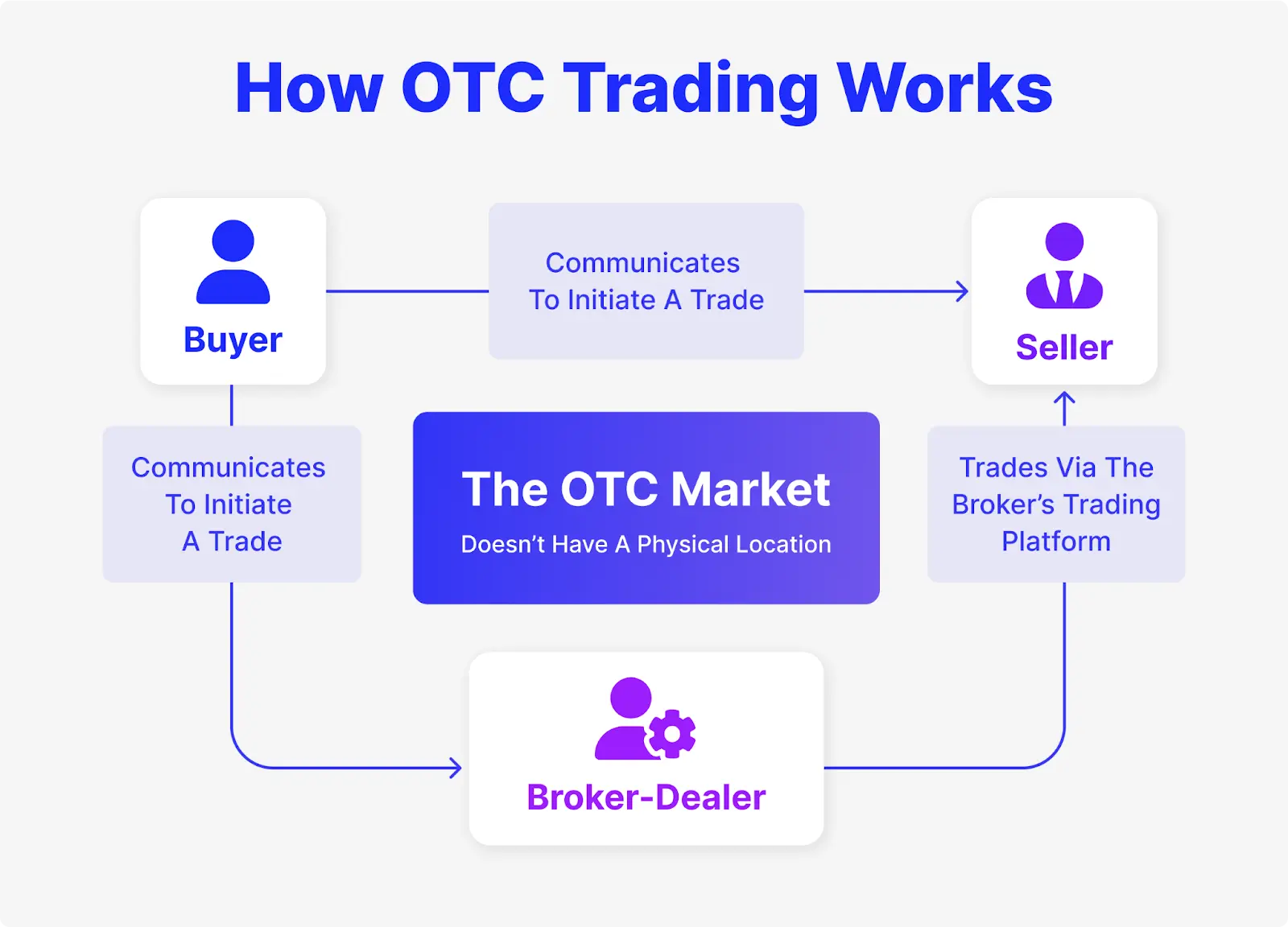
An OTC desk, short for over-the-counter desk, is a dedicated trading service through which two parties can buy or sell a large volume of cryptocurrency directly without involving the public order book of a centralized crypto exchange. Unlike any standard spot or derivatives trading services, OTC desk trading is negotiated between a buyer, a seller, and a trusted intermediary and is private in nature. Prices are agreed before a trade is executed to avoid any price fluctuations in the market.
This model is incredibly relevant in India. With the introduction of a 30% flat tax on crypto gains and a 1% TDS on selling transactions that will be applicable as per the VDA taxation model, institutional crypto players need to optimize their tax as well as their crypto-execution efficiency. Without a doubt, a large order may well be a market-moving transaction if executed on a normal public exchange, making crypto the OTC desk in India is the preferred option for institutional on-ramps for trades of ₹10 lakh and more.
How does a crypto OTC desk in India work?
The workflow behind the crypto OTC desk in India is structured and straightforward, even for first-time institutional participants:
- Registration and Onboarding: The client registers with the OTC provider and provides KYC and AML documentation: PAN, Aadhaar, proof of address, and expected monthly volume for individuals; CIN, GST, board resolution, and director ID proofs for corporates.
- Inquiry and Quote Request: The client reaches out to their respective OTC Desk manager to request a price quote for a particular trade volume and asset pair.
- Price Lock-In: The price is locked in once both parties agree on a rate. You won’t be exposed to market volatility between the agreement and the settlement.
- Fund Deposit: The client deposits INR or crypto into their wallet as applicable. For amounts under ₹50,00,000, instant net banking via IMPS/RTGS/NEFT is available.
- Trade Settlement: The OTC desk executes the trade with strict compliance adherence.
- Withdrawal: The client can later trigger a withdrawal of crypto to their external wallet upon settlement through the multi-chain withdraw option on the platform.
Who is eligible to use the crypto OTC desk in India?
The crypto OTC desk in India is used by a wide variety of market players. The most common are HNIs (high-net-worth individuals) who want to allocate a major part of their portfolio into digital assets without causing market price impact. Family offices managing wealth over multiple generations across asset classes often prefer engaging in OTC desk trading to diversify into crypto, due to the privacy and scale it offers.
On the institutional front, corporate entities, such as private and public limited companies, LLPs, trusts, and partnerships, can use Crypto OTC Desk services to facilitate treasury management or cross-border transfers, among other needs. Sole proprietors and professional traders doing bulk trades also fit in. Most Indian OTC desks set an eligibility limit of at least 10,000 USDT or ₹8,50,000 (whichever is lesser).
What are the advantages of a crypto OTC desk?
The structural benefits of trading through a dedicated crypto OTC desk in India are well-established and go beyond simply avoiding slippage:
- Zero Market Impact: Large orders executed off the order book do not alert other traders, let alone automated (bot) systems, ensuring no impact on price while the order is executed.
- Price Certainty: Rate is negotiated and locked in prior to any transfer, providing institutional clients with total certainty in cost.
- Depth of Liquidity: OTC desks have connections with a broad set of liquidity providers, thereby allowing the successful execution of orders that can not be filled on a single retail exchange.
- Privacy and Anonymity: Trades are not publicly reported, providing privacy and anonymity to large buyers/sellers
- Set of Pairs: Depending on the use case, OTC desks can support INR-to-Crypto, Crypto-to-INR, and Crypto-to-Crypto pairs.
- Dedicated Manager: Clients typically have a dedicated relationship manager for execution support.
- Advanced Use Cases: A crypto OTC desk in India is the infrastructure that supports crypto arbitrage, market making, and other advanced use cases such as P2P settlement and cross-border crypto transfers.
What are the legal requirements for a crypto OTC desk in India?
When researching OTC desks, a question prospective clients often ask is whether it’s legal to do this type of trading in India. The answer is yes, OTC desk trading in crypto is legal, but not under dedicated crypto technology or law. The compliance requirements are:
All providers of crypto OTC desks in India need to be registered with the Financial Intelligence Unit (FIU-IND) under the Prevention of Money Laundering Act (PMLA). This is a requirement under the 2023 amendment that included Virtual Digital Asset (VDA) service providers under PMLA. Clients undergo a complete KYC and AML/CTF (Counter-Terrorist Financing) verification during the onboarding process.
At the taxation level, crypto gains, whether they are from OTC transactions or others, are taxed at a fixed rate of 30% under Section 115BBH of the Income Tax Act, with no deduction for losses. 1% TDS is levied on every sell transaction under Section 194S. If you want to choose an OTC intermediary, it is not just a legal obligation to use an FIU-registered exchange; it is the only option you have.
How does SunCrypto’s OTC desk stand out?
For investors who aim to find a reputable crypto OTC desk in India, SunCrypto has positioned itself as one of the most authentic and structured entities. Ranked among the top three cryptocurrency exchanges in India and registered with FIU-IND, having more than 2.5 million users and 600+ listed tokens, SunCrypto wants to provide you with an OTC infrastructure built around the same principles that give our retail exchange its commitment towards compliance. The OTC Desk has a monthly volume of ₹120 crore and 50+ OTC clients and has support for 10+ major digital assets, including Bitcoin, Ethereum, and Tether.
But what sets this OTC desk apart is the speed, compliance, and personalization available to our clients. SunCrypto OTC Desk offers settlement within 15 mins for high-volume trades, a number that few desks in India can target. After issuance of quotes, our OTC desk manager will contact clients individually to lock the price and provide settlement and post-trade withdrawal support via a personalized communication channel. Multi-chain crypto withdrawals are available several hours after settlement.
How to get started with the SunCrypto OTC desk?
Getting onboarded to the SunCrypto OTC Desk is very simple; just follow these steps
Step 1: Register on the OTC Desk page
Fill in the OTC registration form at suncrypto.in/crypto-otc-desk or message [email protected] to start the onboarding process
Step 2: Submit KYC documents as an individual client
- Identity proofs – PAN / Aadhaar card
- Proof of address – Bank statement / Utility bill / etc.
- Monthly trade volume – Minimum ₹8,50,000
Step 3: Submit KYC documents as a corporate user
- CIN / GST registration number
- Certificate of incorporation
- Board resolution authorizing crypto trading
- Last three months’ financial statements + source-of-funds documents
- Identity proofs of all directors / authorized signatories
Step 4: Complete AML / CTF verification
The SunCrypto team will verify all KYC and AML / CTF details before granting you access to the OTC desk
Step 5: Get assigned a dedicated OTC Manager
A personal OTC Desk Manager is assigned to you as the sole point of contact for everything related to quotes, rate locks, deposits and withdrawals after the trade has been settled
Step 6: Start trading
Contact your OTC Manager and get a live price for your desired asset and volume locked in seconds; deposit funds and get your trade settled, usually in 15 minutes
Final Thoughts
The institutional crypto adoption in India has forged one of the most significant motives for the emergence of crypto OTC desks in India. For bulk participants like HNIs, family offices, corporate treasuries, and portfolio managers undertaking digital asset allocation, OTC desk trading solutions are now not only a convenience but a necessary requirement.
This is why SunCrypto’s OTC Desk has managed to blend the regulatory credibility of an FIU-registered exchange with the speed of the 15-minute settlement and the human touch through a dedicated relationship manager, making it one of the most attractive, credible, and comprehensive OTC desk trading solutions available today for bulk participants in India.
Is OTC desk trading legal in India?
Yes, OTC (Over-the-Counter) desk trading is legal in India, but its legality depends entirely on the asset class being traded and strict regulatory compliance
Is TDS applicable for OTC sell orders in India?
Yes, TDS is generally applicable for OTC (over-the-counter) sell orders in India.
What is the minimum order size for using the SunCrypto OTC desk?
The minimum order size for using the SunCrypto OTC Desk is set at 10,000 USDT or ₹8,50,000 (whichever is less).