

Stablecoin market cap just posted its steepest monthly decline in nearly four years, and the ripple effects are showing up across crypto liquidity everywhere. This drop, recorded in June 2026, marks the sharpest dollar-value pullback since the Terra-Luna collapse of May 2022.
For anyone who trades or holds crypto, this decline in market cap is worth understanding. This article explains exactly what happened, why it happened, how it diverges from other periods of crypto decline, and what it really means for the long-term picture.
What is a stablecoin?
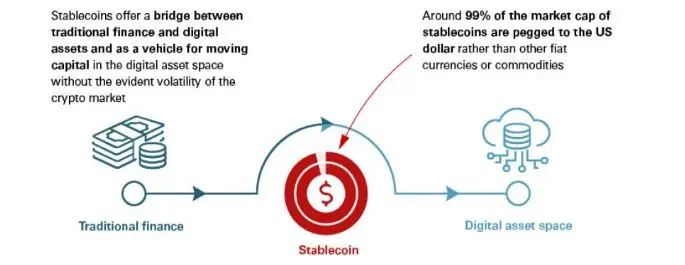
A stablecoin is a digital token designed to hold a steady value, usually pegged one-to-one with the US dollar, by being backed with reserves such as cash, treasury bills, or other liquid assets. Unlike Bitcoin or Ethereum, whose prices swing constantly, this well-collateralized token is built to trade close to $1 at all times.
Traders use it to park funds between trades, move money across exchanges instantly, and settle transactions without touching a bank. Because these tokens sit at the center of nearly every trading pair, their combined supply acts as a rough proxy for how much capital is sitting ready to flow into crypto at any given moment.
Why did the stablecoin market cap dip so much in June?
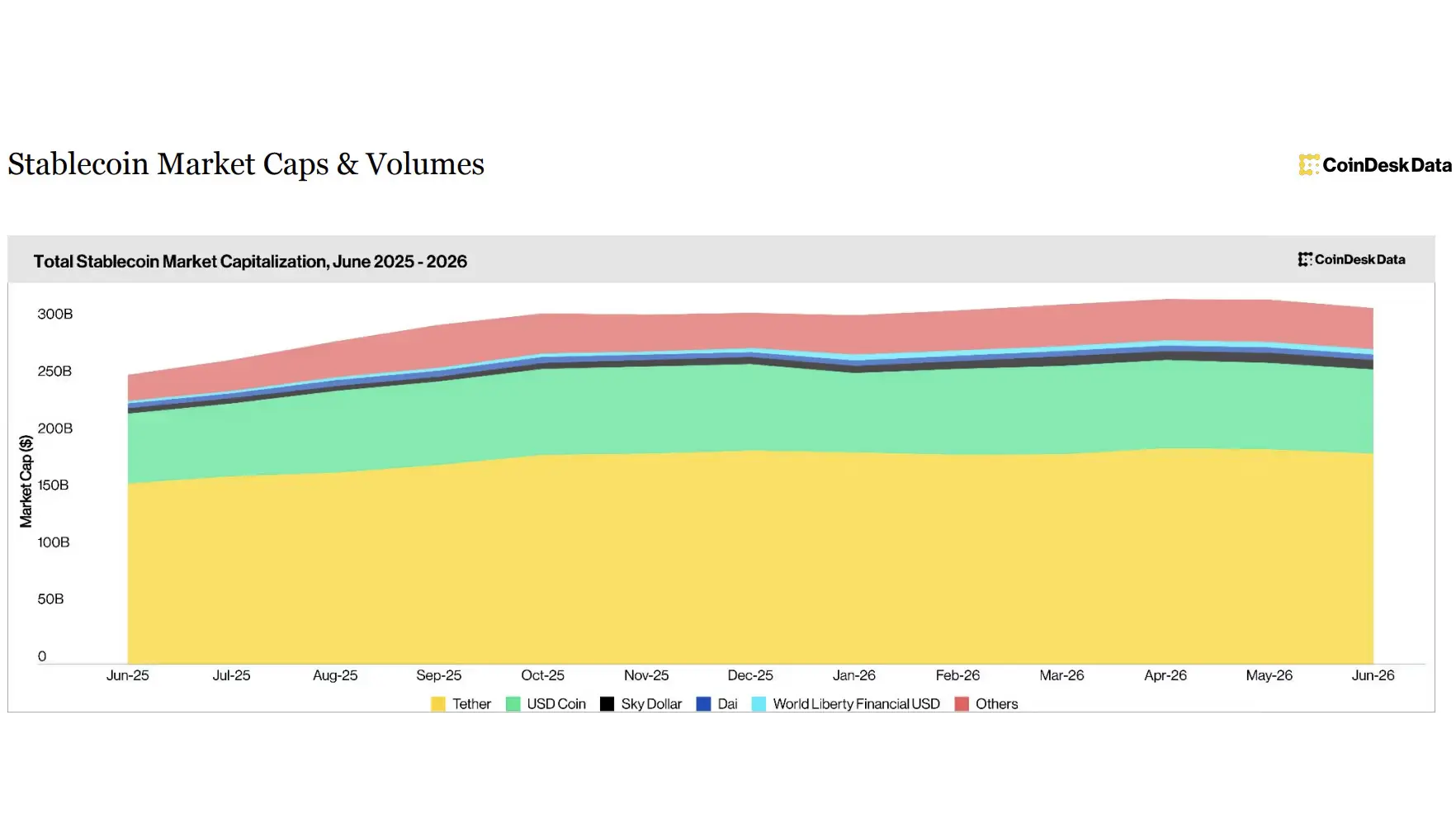
As per CoinDesk data, the circulating stablecoin supply fell by roughly $7.7B in June 2026, which is the biggest single-month dollar decline ever since May 2022. Looking a little further back, reports suggest that total supply has dropped an almost $10B since the May 2026 peak, a decline of 3% in percentage terms.
That 3% figure is significant because it is the steepest percentage pullback on record since 2023, although it is a lot smaller than the 26% collapse that occurred during the 2022 bear market. These two issuers account for almost the entire drop, and their individual performance carries most of the story.
How Did USDT and USDC drive the pullback?
- Tether’s USDT slipped from about $190B in May to $184B
- Circle’s USDC fell from March’s $80B peak to $73B
- Together, the two issuers still control 88% stablecoin supply
- Both remain the dominant quote currency for crypto trading pairs
- Smaller declines were partly offset by growth in newer entrants
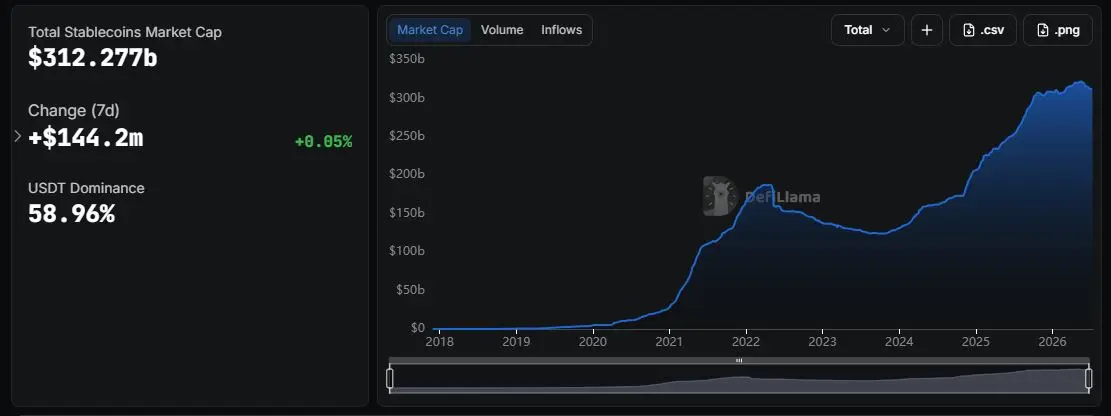
Even with the pullback, Tether still makes up approximately 58% of total stablecoin market cap as per DefiLlama monitoring as of early July 2026, indicating how concentrated the stablecoin market is at the top.
Is this as bad as Crypto Winter 2022?
Stablecoin market cap swings can look alarming without proper context, and history offers plenty of it here.
- 2022’s crash alone erased 26% of dollar-token supply
- March 2022 saw $166B fall to $122B by 2023
- USDT dropped from $78B to $65B between March and November 2022
- USDC collapsed from $55B to under $24B by November 2023
- Silicon Valley Bank’s 2023 failure deepened USDC’s separate slide
- TerraUSD’s implosion alone wiped out roughly $18B in value
- Today’s 3% dip is nowhere near that scale of damage
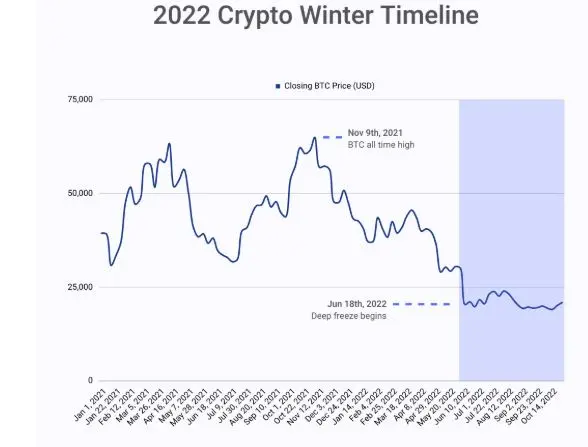
There was also a periodic, though subtler, rollback from December 2025 to February 2026 when supply also fell by around $9 billion along with Bitcoin dropping from roughly $95k to $60k, only to rebound fully to fresh highs. In that context, June’s rollback in stablecoin market cap seems like a temporary pause instead of an unwelcome red flag.
What’s fueling the competition among stablecoin issuers right now?
Below the headline figures lies a more intriguing undercurrent: new challengers have found their grounds at the established duopoly. Regulatory clarity from the US GENIUS Act has allowed a fresh wave of compliant issuers to step into the market. Paxos’s Global Dollar (USDG), supported by a consortium that includes Robinhood, has passed $3.2B in circulation, while Anchorage Digital’s USDGO has nearly doubled toward $900M.
A newer consortium-backed initiative, OpenUSD, is also positioning itself to challenge USDT and USDC’s grip, not by minting another token but by giving businesses the rails to mint, redeem, and integrate dollar tokens into everyday treasury operations. From the viewpoint of the ecosystem, this is arguably a good thing in the long run, even if it risks lowering the total stablecoin market cap of any individual issuer in the short term.
Should traders be worried?
Based on current data, analysts generally view the decline as a normal liquidity pullback rather than evidence of market stress. So, no, there is no immediate reason to worry. A 3% pullback from an all-time high, after two-plus years of the sector more than doubling in size, is exactly the kind of breather healthy markets take. Experts label this decline as a “relatively small pullback” within an ongoing long-term growth trend and explain that short-term liquidity movements don’t affect the overall structural trend.
Wall Street has already done its homework. In its latest research, Citi projects this market could reach $1.9 trillion by 2030 under its base case scenario and a whopping $4 trillion under its bull case. Standard Chartered projects $2 trillion by 2028. None of these institutions have walked back their long-term bullish stance because of one soft month. If anything, a stablecoin price that continues holding its peg through this turbulence, with no depegging events, no reserve scares, and no counterparty failures, is a genuine sign of resilience, not fragility.
Final Thoughts
The recent stablecoin market cap decline is real, well-documented, and worth watching, but it is not that of a big crisis as some beginners might perceive and go into panic.
It’s nothing like the 26% wipeout of 2022’s genuine crypto winter four years ago in 2022, but rather a modest 3% pullback that’s mostly limited to just a couple of issuers despite all the competition, ongoing institutional trust, and a market landscape that is far more sophisticated than it was then. If you’re just another trader or investor, the better approach is to continue focusing on the data and understand the difference between a normal month’s pullback and a systemic shock and avoid reacting solely to one month’s figures.
Why do stablecoins stay “stable”?
Stablecoins maintain their peg via arbitrage and redemption mechanisms. When a coin drops to $0.99, traders buy and redeem them for $1, reducing circulating supply until it reaches equilibrium again.
Can stablecoins withstand inflation?
No. Because they are pegged to fiat currencies, they depreciate at the same rate as the anchored currency. They hedge against cryptocurrency volatility, not real-world inflation.
What does stablecoin market cap mean?
Market capitalization is the total value of all stablecoin units currently circulating on blockchains. It directly represents the total capital flowing into or held within these digital dollar rails.