

SpaceX has once again captured the attention of crypto trackers, although not for one of their rocket launches but because of an $88 worth of BTC transaction. On July 7, 2026, Arkham Intelligence on-chain data indicated a small transfer between two SpaceX-branded wallets, ending six months of complete wallet silence and reigniting speculation about the future of its billion-dollar digital asset treasury. Given the size of the holding involved, even a routine wallet check can lead to curiosity among the entire market.
This article covers what actually happened, why it is relevant in the bigger picture and what that means for the institutional crypto holders in the future.
What is SpaceX?
Founded in 2002 by Elon Musk, SpaceX has become famous as a private aerospace manufacturer and space transportation company that builds the Falcon 9, Starship and Starlink satellite network. But the firm has also quietly built what in the end turned out to be one of the largest treasury corporate digital asset portfolios in the world.
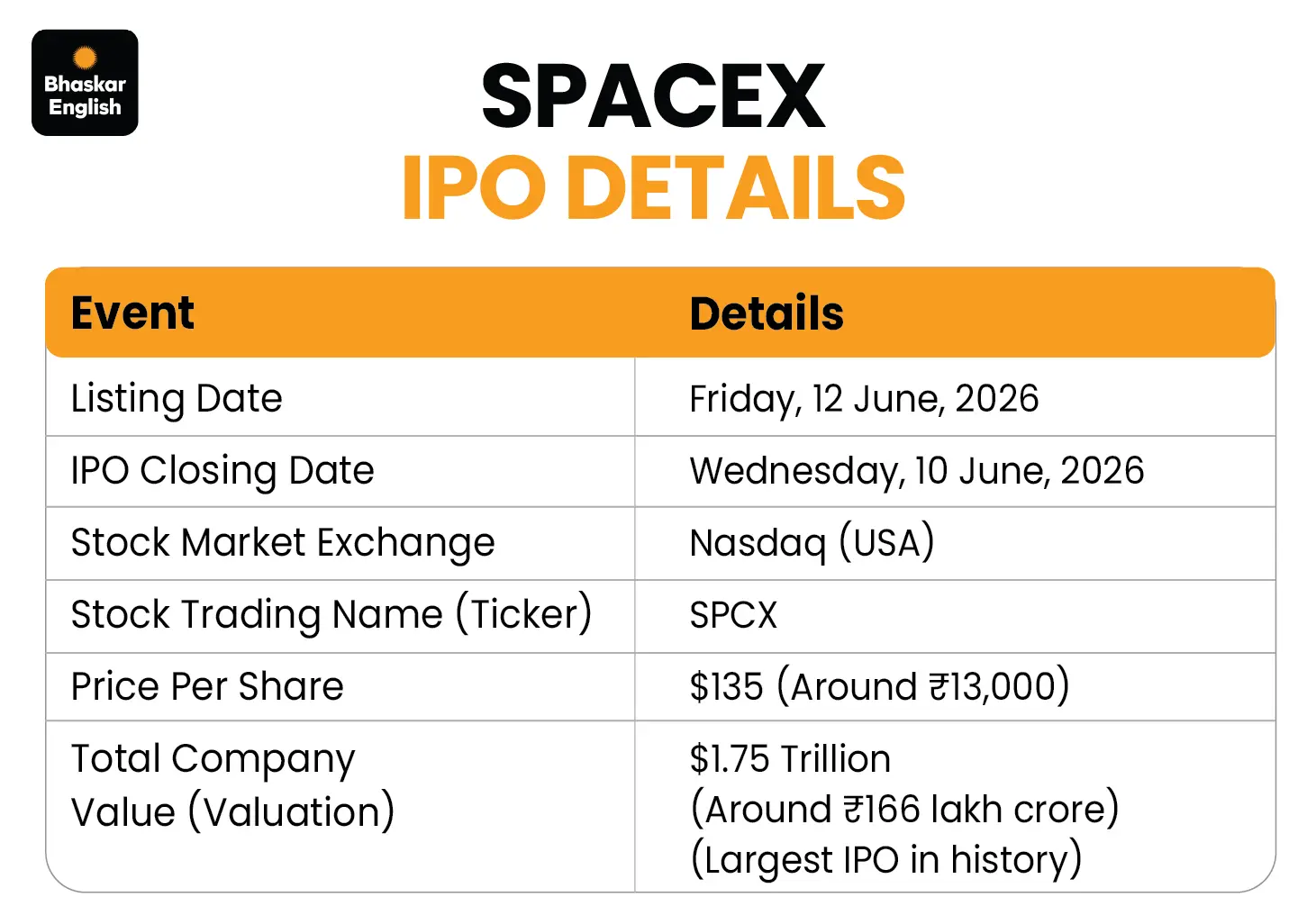
After it went public in a record-setting IPO on June 12, 2026, the listing made it mandatory for the company to disclose its entire crypto position on a public balance sheet for the first time ever and exposed the firm’s long-expected crypto treasury strategy to regulators as well.
What exactly happened with the SpaceX address?
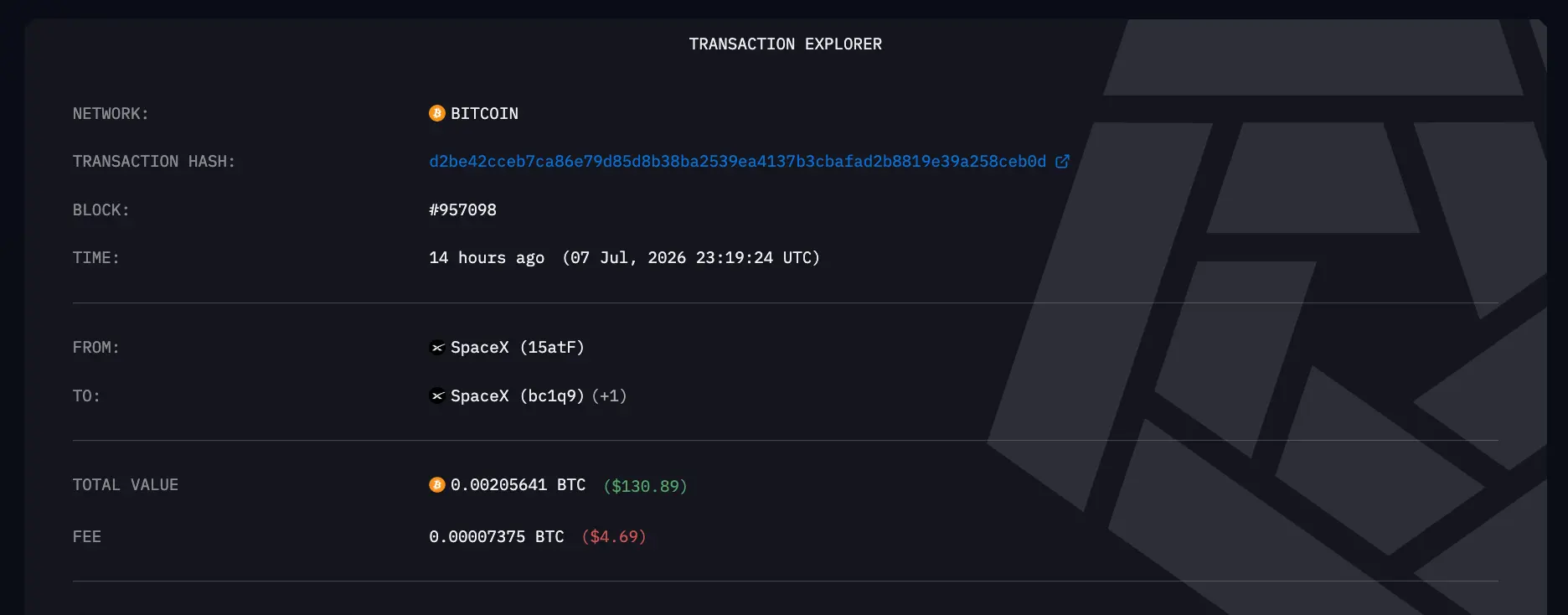
Arkham data shows a Coinbase Prime custody-tagged wallet sent roughly $88 worth of BTC to another internally controlled SpaceX address. Two more transfers ran on the same day, for a combined total of less than $300 moved across the firm’s own infrastructure.
The BTC never ended up at a known exchange deposit address and so nothing left the firm’s control. They were the first on-chain transactions from any of these labeled wallets since the end of 2025.
Why does SpaceX hold such a large BTC treasury?
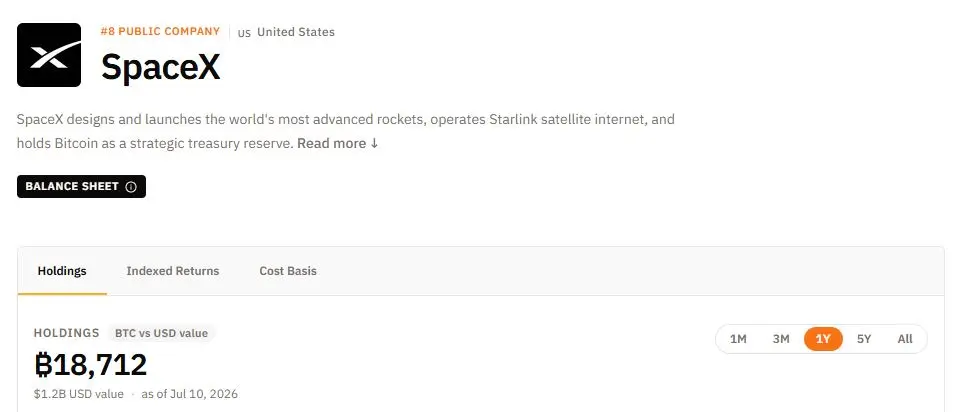
Per its SEC filing, the holding sits at roughly 18,712 BTC, valued at roughly $1.2 billion as of 10th July 2026 and making the firm one of the top 10 corporate holders worldwide of the asset. It was built up for roughly $661 million at an average price close to $35,000 to the coin. At the time of the firm’s IPO filing, on-chain wallets could only attribute roughly 8,285 coins to the firm before more than doubling what analysts at the time had seen attributed to the firm.
There are a few explanations for the size of the holdings:
- It’s quite likely that the firm has been building its positions quietly for a number of years before planning a public listing.
- Custody split between cold storage and Coinbase Prime services.
- Balance sheet diversification beyond cash and short-term securities.
- Growing scrutiny now that shares trade publicly on Nasdaq.
What could this small SpaceX address transaction actually mean?
Security researchers have reached a broad consensus that such tiny transfers are test or “dust” transactions, used to verify wallet access rather than to actually sell a position.
They’ve also noted that smaller wallet activity commonly precedes large movements such as prior transfers amounting to tens of millions of dollars routed through a custodial infrastructure. That context matters because it shows this kind of housekeeping isn’t unusual for large holders managing complex custody setups.
Common reasons treasuries run these checks include the following:
- Verifying keys remain accessible after months of inactivity.
- Confirming destination wallets before larger fund transfers occur.
- Testing connectivity between hot storage and cold storage systems.
- Preparing infrastructure ahead of a custodial policy update.
Did this BTC transfer impact the Bitcoin price?
Despite the buzz, the broader market’s price movement over the same period had little to do with this specific SpaceX address activity. The price drop in BTC over the days leading up to the transfer was close to 2%, but that represented far smaller macro-related influences in the market: renewed tensions in the U.S.-Iranian military sphere, higher oil prices and various individual institutional sales by companies such as Strategy, MARA Holdings and Nakamoto Holdings.
Given that the moved amount represented a tiny fraction of one percent of the total holding, and nothing was sent to an exchange, there was no direct sell-side pressure created by this event. Retail sentiment trackers even showed bullish leanings during this period, further underlining that it was geopolitical headlines rather than that one wallet that was the catalyst for the price rally.
Why is everyone watching the BTC transfer so closely now?
It’s all context. The company fast-tracked itself into the Nasdaq-100 index a day before the transfer happened, and analysts at JPMorgan think that could set off as much as $4.3 billion of passive fund buying in its shares.
Now that the same move is taking place in a publicly traded firm, the same level of analysis and burning-eye attention will now be expected on every wallet ping, report filing or boardroom budget review. Musk himself oversees more than 30,000 coins across this firm and Tesla combined, adding another layer of public interest to any treasury movement tied to his companies. So, yes, we should all be paying attention.
What should investors watch next?
The real signal to watch for isn’t another small internal transfer, it’s whether any coins move to a recognized exchange deposit address. That would be the first concrete indication of an actual sale rather than routine wallet maintenance.
Investors and analysts tracking corporate treasuries should also pay attention to quarterly filings, custody provider changes, and any statements the firm makes regarding its long-term digital asset strategy now that it operates under public shareholder scrutiny. Historical patterns suggest large holders often stay dormant for months before executing bigger moves, so continued monitoring through on-chain analytics remains the most reliable way to stay ahead of any real shift.
Final Thoughts
On normal days, an $88 Bitcoin transfer might not be newsworthy. But, for a public company with over a billion dollars in crypto assets like SpaceX, every on-chain transaction has meaning. That’s because, just weeks after a historic listing on the public markets, the entire episode is a reminder of how blockchain data has fundamentally changed institutional treasury management.
As more public companies disclose and manage digital holdings on-chain, this kind of real-time visibility will keep becoming more relevant for investors trying to separate genuine market-moving signals from routine housekeeping.
Is SpaceX about to sell its Bitcoin holdings?
Highly unlikely. Analysts from blockchain intelligence firms like Arkham state that these are routine internal custody or network fee tests rather than an impending liquidation. The transferred amount was less than $300, which is a drop in the ocean compared to the 18,712 BTC held by the company.
Where did the SpaceX address funds go?
The small BTC movements remained within wallets tagged as belonging to SpaceX, with zero Bitcoin sent to known exchange deposit addresses (where a sale would typically occur). One small incoming transaction was linked to Coinbase Prime, which is common for topping up wallets to cover network fees.
How much Bitcoin does SpaceX actually own?
SpaceX’s balance sheet accounts for 18,712 BTC, which is valued at roughly $1.16 billion. Between SpaceX and electric-vehicle maker Tesla, Elon Musk oversees over 30,000 BTC