

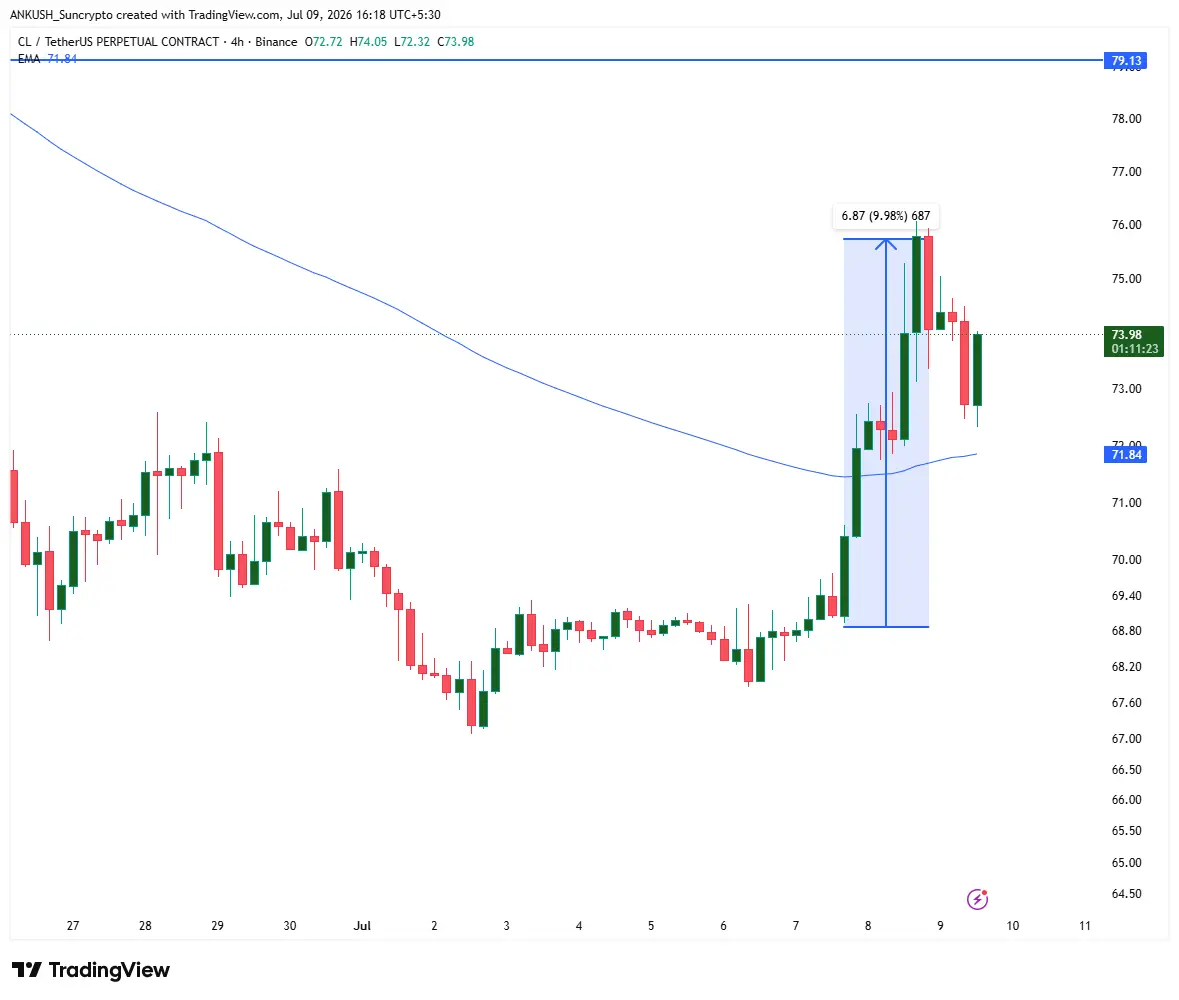
Crude oil prices surged by up to 6%, pushing Brent crude near $80 a barrel and WTI crude above $74 a barrel, following fresh U.S. military strikes on Iran. The military escalations effectively dismantled a fragile 60-day ceasefire. They triggered immediate supply anxieties, shipping gridlocks, and a return to strict economic penalties.
Crude oil and crypto markets have once again been rattled by the latest US Iran military strike, as it has reignited tensions in the Middle East and sent ripples through commodity and digital asset markets. For anyone tracking crypto or commodities, understanding how this event unfolded and why markets are behaving the way they are has become essential, not just for traders but for everyday investors trying to make sense of a volatile week.
How did Crude Oil price react to the US Iran military strike?
Energy markets rallied almost instantaneously to the US Iran military strike. Crude oil climbed for three consecutive sessions, touching roughly $78.02 a barrel by July 9, while US WTI crude also moved firmly higher. It’s no surprise. The strait is only 21 miles at its narrowest point and any activity there has always spiked worldwide energy prices and increased expectations of hardening supply.
Washington’s additional blow was to rescind Iran’s Crude oil export license and reimpose day-long sanctions on Iranian crude, cutting the country off from the legitimate Crude oil revenue stream that has made it a major player in global markets.
How did the crypto market react to the US Iran military strike?
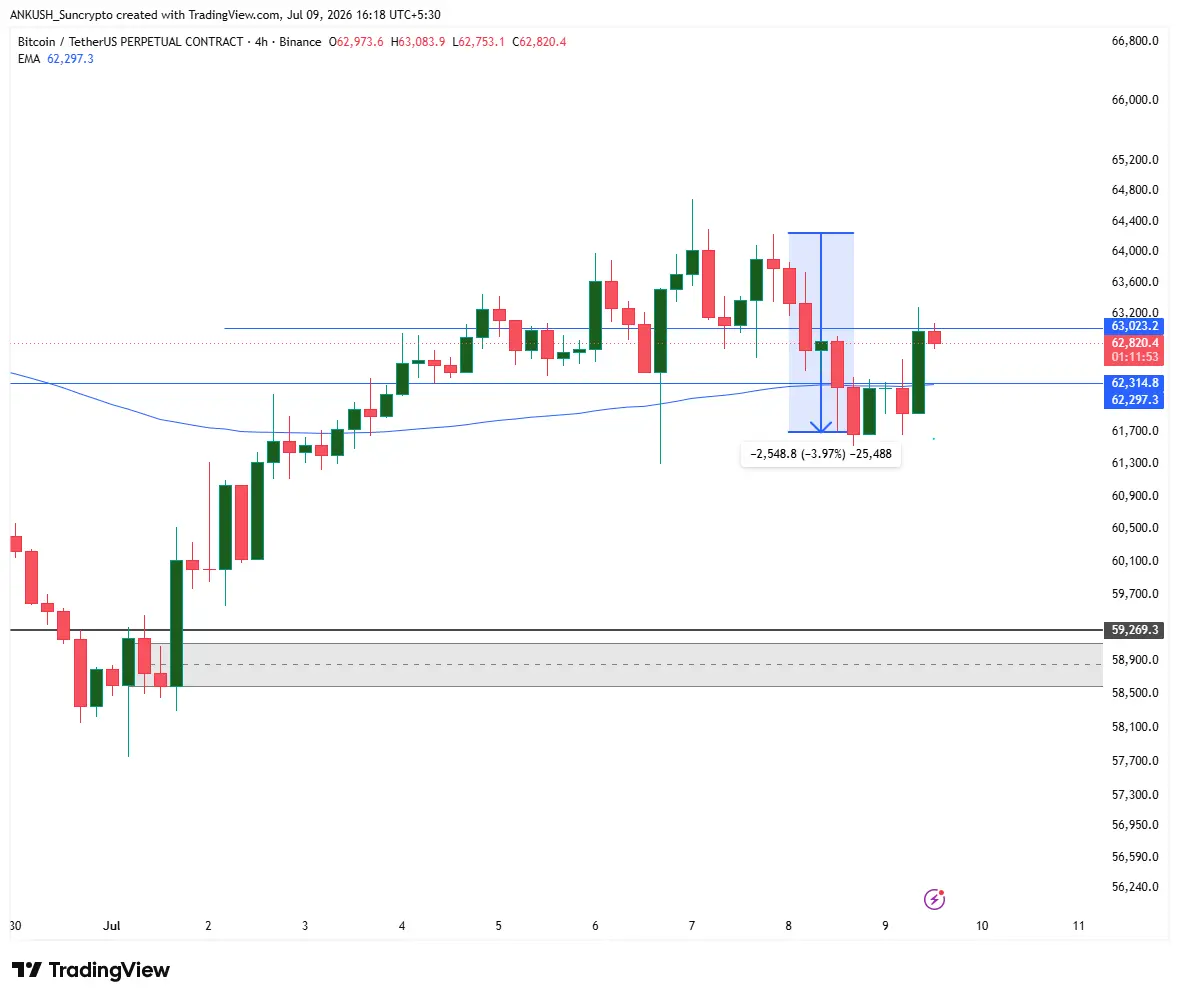
Crypto markets, true to form, moved first and moved hard in reaction to the US Iran military strike. Bitcoin price slid from levels near $64,500 down to as low as $61,442 in the hours following the escalation before stabilizing above the $62,000 mark by July 9. Market cap fell as much as 1.7% in a single day to $2.15 trillion, a bit less than a percent of the grand total of $330-450 billion at different measurement intervals.
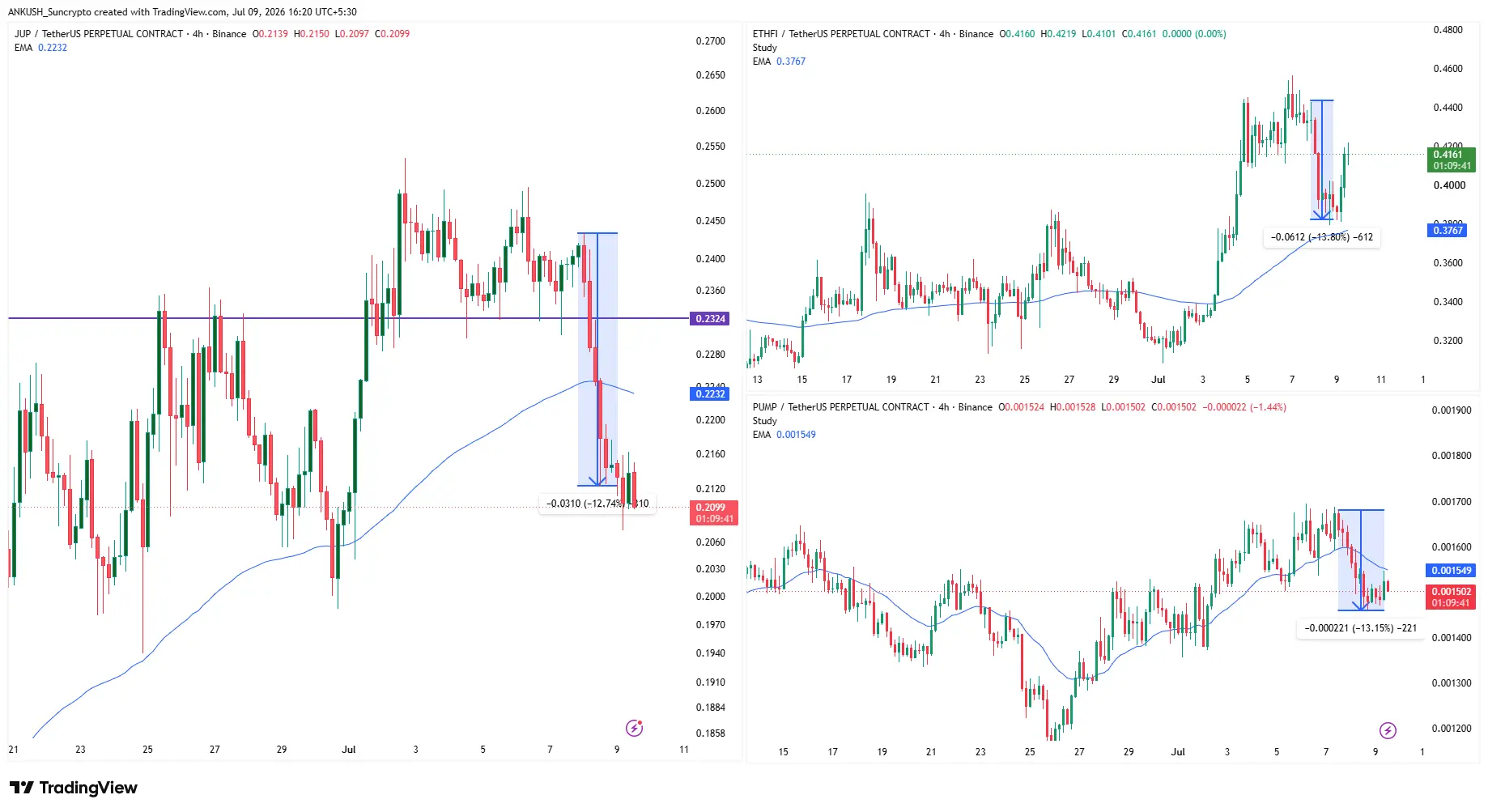
Altcoins have taken the primary hit with JUP, ETHFI and PUMP where each lost more than 5%. Solana (SOL) planked its entire July rally to trade around $77. Ethereum (ETH) was, by far, the best performer, trading between $1,730 and $1,776. What’s notable is that the pattern recovered almost as quickly as it was incurred: in the morning of July 9, news that Iran was considering a move towards open negotiations helped Bitcoin recover most of its losses, and the Fear and Greed Index rose to 27, moving out of the extreme fear area that it had once been in for 40 days in a row.
Why is Iran turning to Bitcoin amid the sanctions fallout?
With its conventional, dollar-based, payment rails effectively cut off, Tehran has allegedly begun to experiment with a crypto-based toll billing system for tankers filing through the Strait of Hormuz. Here’s why it matters:
- Iran is reportedly charging around $1 per barrel in Bitcoin for passage.
- Crypto rails bypass SWIFT and any US-supervised clearing systems entirely.
- US sanctions blocked Iran’s dollar-based Crude oil export channels completely.
- Regulators may use this as evidence that crypto enables rogue-state finance.
- This narrative risk could slow crypto’s regulatory acceptance in Washington.
What should Indian crypto investors track next amid the US Iran military strike?
Here are a few key structural points that matter more to Indian retail investors following the turbulent fallout of the US Iran military strike compared to price volatility:
- Federal Reserve rate expectations have shifted, now pricing in an October hike.
- Spot Bitcoin ETF flows briefly turned negative, ending a three-day streak.
- The VIX volatility index jumped over 4%, signaling broader risk aversion.
- Crude oil price trends will influence inflation expectations and rupee-denominated import costs.
- Bitcoin is increasingly trading like a rate-sensitive asset, not a hedge.
The last point that is worth highlighting. In the past, geopolitical shocks in the Middle East triggered a shift in investors from risk assets like Bitcoin to safe haven assets like Gold. This time gold has actually sold off for four straight sessions as tensions in the Middle East increased, whereas Bitcoin has displayed an unexpected amount of resilience, up close to 1.6% on the week despite the bandwidth of the recent trades.
Analysts are increasingly framing this as evidence that institutional capital now treats Bitcoin price movements as tied to interest rate expectations rather than purely geopolitical risk sentiment, a meaningful shift from how crypto behaved during past Middle East flashpoints.
Final Thoughts
The US Iran military strike has once again highlighted the deepening links between global energy and crypto markets. Crude oil reacted to the potential for supply disruption, and crypto fell on speculation of risk-off.
For investors, the key takeaway isn’t the day-to-day price swing but the underlying structural shift: bitcoin price is behaving less like a pure risk-off casualty and more like an asset shaped by rate expectations and institutional positioning. As this situation remains fluid, with both sides signaling openness to talks even amid continued strikes, tracking official CENTCOM updates, Federal Reserve commentary, and Crude oil benchmark movements will be more useful than reacting to any single headline.
How is the US Iran military strike impacting Crude Oil prices?
Crude Oil prices initially surged up to 8% before stabilizing. It climbed over [$77] per barrel and is experiencing continued volatility. Because about 20% of global Crude oil and liquefied natural gas supplies pass through the Strait of Hormuz, the conflict has injected a persistent war risk premium into energy markets.
What are analysts predicting for Crude oil prices over the next month?
Market analysts from institutions estimate that unless direct strikes hit Iran’s primary export terminal on Kharg Island, Brent crude oil will likely trade stably within a $75 to $85 per barrel range over the coming weeks.
Why did the crypto market fall in response?
Escalating geopolitical tensions historically drive investors away from risk-sensitive assets like cryptocurrencies and toward the U.S. Dollar. The combination of the U.S. airstrikes and a broader tech stock sell-off caused Bitcoin to drop and led to massive liquidations across digital asset platforms.