SunCrypto has expanded its derivatives lineup with a futures new listing covering three of the most actively discussed tokens of 2026: MarsCoin (MARSCOIN), FLock.io (FLOCK), and Pons (PONS). All three contracts are now live in the SunCrypto futures market, giving Indian traders leveraged long and short exposure to a BNB Chain meme asset, a decentralized AI infrastructure token, and the fastest-growing launchpad token on Robinhood Chain.
This article breaks down what each project does, why these three were selected for the new listing in the futures market, and how to trade them responsibly.
Why does a futures new listing matter for traders?
Spot trading only lets you profit when an asset rises. A futures contract lets you take a position in either direction and apply leverage to the margin you commit. That makes every future new listing an expansion of the strategies available to you, not just an expansion of the asset menu.
For newly listed and early-stage tokens in particular, futures offer three things the spot cannot:
- Two-way exposure. You can short a token you believe is overextended without owning it.
- Capital efficiency. A smaller margin controls a larger notional position.
- Hedging. Spot holders can offset downside risk without selling their holdings.
SunCrypto offers futures in both INR and USDT margined markets, with tiered maker and taker fees that reduce as your 30-day volume grows. That structure applies to every future new listing on the platform, including these three contracts.
MarsCoin (MARSCOIN) futures
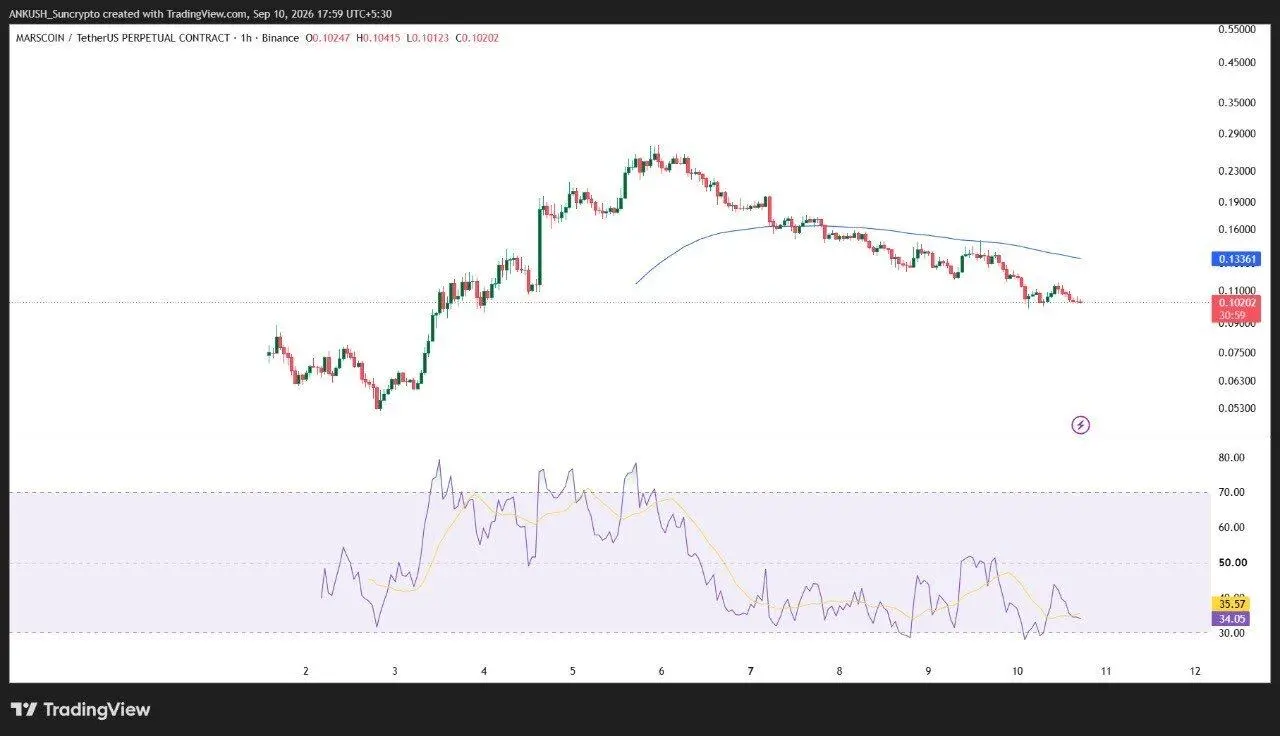
MarsCoin is a BEP-20 token on BNB Smart Chain with a fixed supply of 1,000,000,000 tokens. It first showed on-chain liquidity on 27 July 2026 and was added to Binance Alpha on 30 July 2026, which drove much of its initial attention.
What makes MARSCOIN unusual is its pairing structure. Rather than launching against a stablecoin, the project’s deepest liquidity pool is quoted against SPCXB, a tokenized SpaceX stock token, and the project describes a transaction tax that routes value into an SPCXB rewards vault distributed to holders. This has been marketed under a “stock memecoin” narrative that ties meme trading to tokenized equity exposure.
Traders should treat that narrative carefully. Independent analysis in early September 2026 found roughly 59% of MarsCoin’s observable on-chain liquidity sits in a single PancakeSwap pool quoted against SPCXB rather than a stablecoin, meaning MARSCOIN’s dollar price can move when SPCXB reprices even if nothing happens to MarsCoin itself. Several elements of the tokenised-equity mechanism remain unverified by independent market data.
The token has also been extremely volatile: it closed 4 September 2026 up more than 265% against its 28 August baseline. That volatility is precisely why traders sought a futures new listing for this asset, and precisely why position sizing matters here more than usual.
Best suited to: experienced short-term traders comfortable with high volatility and a non-standard liquidity structure.
FLock.io (FLOCK) futures
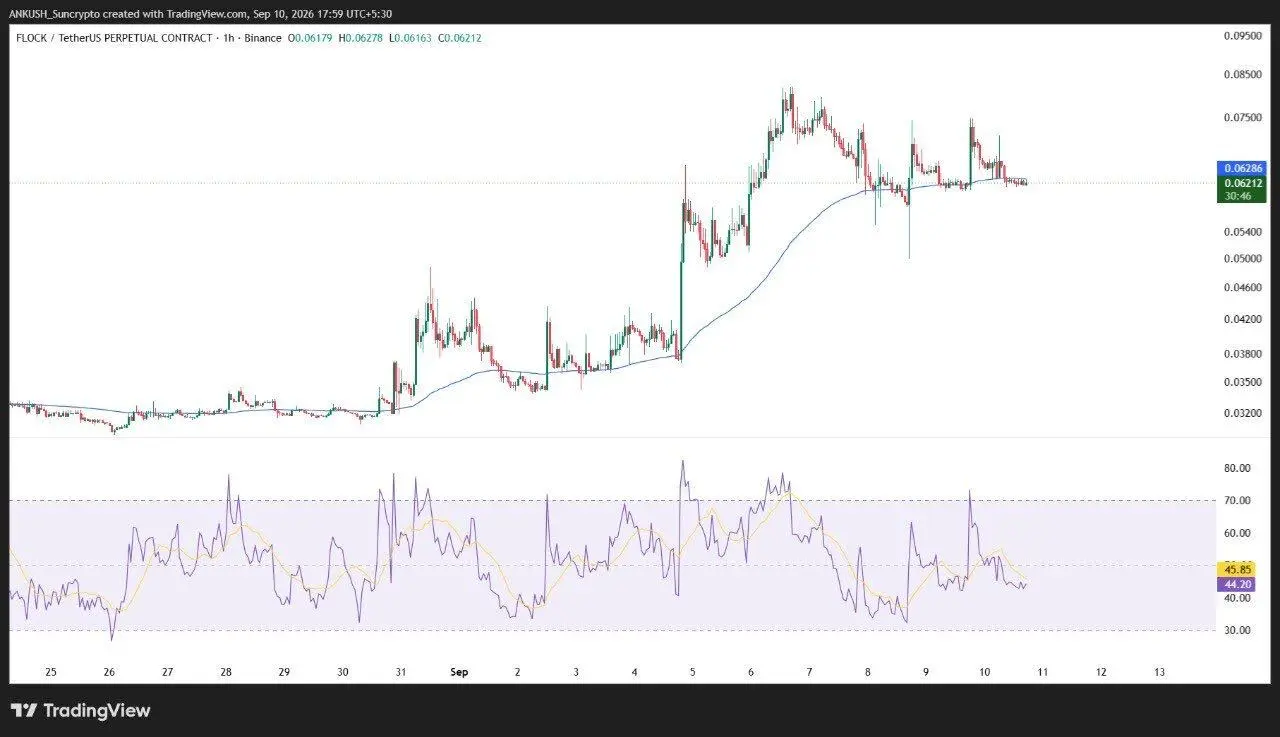
FLock.io is the most fundamentally developed of the three tokens in this new listing in futures market. Founded in 2020, it is a decentralised AI training platform that combines federated learning with blockchain verification, allowing organisations to train AI models collaboratively without moving raw data off their own infrastructure.
Its ecosystem has four core modules: AI Arena for competitive model training, FL Alliance for privacy-preserving collaboration, an API Platform, and Moonbase-FOMO for hosting and refining models. The FLOCK token has a maximum supply of 1 billion and is used for staking, incentives, governance and fee payment. Staking FLOCK generates gmFLOCK, a non-tradable participation credential for training nodes, validators and delegators.
The project’s credentials are substantive. CEO Jiahao Sun is an Oxford alumnus and former AI Director at the Royal Bank of Canada, named to the Forbes China 100 Most Influential Chinese 2024 list. FLock closed a strategic funding round led by Digital Currency Group in December 2024 and has worked with Animoca Brands, GSR and London’s Moorfields Eye Hospital. In 2026 it announced an integration with Qwen, Alibaba Cloud’s open-source LLM, was spotlighted by the World Economic Forum for NHS use cases, and became technical partner in a sovereign AI initiative for Sarawak.
Best suited to: traders taking a directional view on the decentralised AI (DeAI) sector with a medium-term horizon.
Pons (PONS) futures
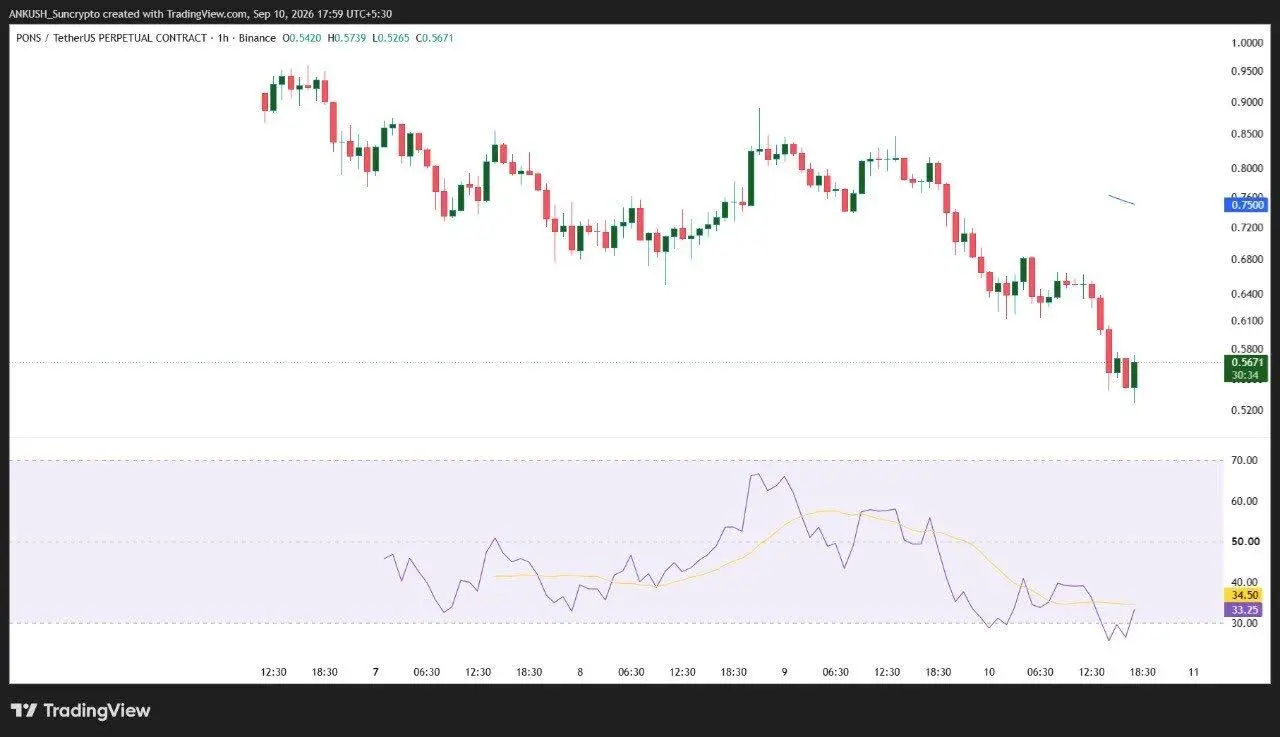
Pons is the dominant non-custodial token launchpad on Robinhood Chain, the Arbitrum Orbit network that reached public mainnet on 1 July 2026. Anyone can deploy a fixed-supply token in minutes with permanently locked Uniswap liquidity and no coding required.
The traction numbers are the reason PONS earned a place in this futures new listing. Since launch, Pons has hosted more than 167,000 token deployments, passed $4.5 billion in cumulative trading volume in under two months, and set a single-day volume record around $500 million. At its early-September peak it generated roughly $5.95 million in fees in 24 hours, ranking fourth among all protocols tracked by DefiLlama and out-earning both Pump and Robinhood Chain itself that day. PONS was added to Binance Alpha on 2 September 2026.
The token has a deflationary design: the platform charges a small fee per token creation plus a swap fee, and routes proceeds into buybacks and burns. Approximately 29% of the original 1 billion supply, around 288 million tokens, has been burned, leaving an effective supply near 712 million.
PONS has also proved it can survive competition. When Uniswap launched a rival launchpad on Robinhood Chain in early August, PONS fell sharply from its then-high before recovering to new highs in September. Pons v2, live from 4 August 2026, added bonding-curve pricing, graduation into Uniswap V4 and support for pairs beyond ETH.
One caution: because burns are funded by launchpad activity, a decline in token-creation volume directly reduces the deflationary pressure supporting the token. Wash-trading risk in launchpad volume figures is a known concern across the sector.
Best suited to: traders who want exposure to Robinhood Chain ecosystem activity rather than to any individual meme token launched on it.
How to trade this futures new listing on SunCrypto?
- Complete KYC and fund your SunCrypto account via UPI, IMPS, NEFT, or RTGS.
- Transfer margin to your futures wallet in INR or USDT depending on the contract you want.
- Open the futures market and select MARSCOIN, FLOCK, or PONS.
- Set your leverage conservatively. High leverage on a newly listed contract is the fastest route to liquidation.
- Place your order with a stop-loss attached before you enter, not after.
- Monitor funding rates, which on new contracts can swing sharply and erode a position held over several sessions.
Risk considerations for any new listing in the futures market
Newly listed futures contracts behave differently from mature ones. Order books are thinner, spreads are wider, and prices can gap through stop levels during volatile sessions. Three specific risks apply to this futures new listing:
- Liquidity depth. All three tokens are young. MARSCOIN in particular has liquidity concentrated in a single non-stablecoin pool.
- Leverage amplification. Leverage multiplies losses as readily as gains. Liquidation on a fast-moving new contract can occur within minutes.
- Narrative dependence. PONS depends on continued launchpad activity, MARSCOIN on an unverified tokenized-equity mechanism, and FLOCK on the broader DeAI sector cycle.
Indian users should also account for applicable virtual digital asset tax treatment, including TDS on specified transactions, and maintain complete records of all futures activity. Consult a qualified tax professional where required.
Conclusion
This futures new listing gives SunCrypto users leveraged access to three distinct 2026 narratives in a single update: tokenized-equity memes through MARSCOIN, decentralized AI infrastructure through FLOCK, and on-chain launchpad revenue through PONS. Each carries a different risk profile, and none should be traded on leverage without a defined stop and appropriate position size.
Check the live SunCrypto futures market for current contract specifications, available leverage, margin requirements, and applicable fees before placing your first order on any futures new listing.
What is a futures new listing?
It is the addition of a new perpetual or dated contract to an exchange’s derivatives market, allowing traders to take leveraged long or short positions on an asset that previously may have been available only for spot trading.
Which tokens are in this new listing in futures market on SunCrypto?
MarsCoin (MARSCOIN), FLock.io (FLOCK) and Pons (PONS).
Can I short these contracts?
Yes. Futures allow both long and short positions, which is one of the main reasons traders follow every futures new listing on an exchange.
What leverage is available?
SunCrypto offers tiered leverage across its futures market. Available leverage varies by contract and can differ on newly listed pairs, so check the live contract specification before trading.
Are futures riskier than spot trading?
Yes. Leverage magnifies both gains and losses, and positions can be liquidated. Newly listed contracts add liquidity and volatility risk on top of that.
Which of these three has the strongest fundamentals?
FLock.io has the most developed product and institutional backing of the three. That does not guarantee price performance, and traders should form their own view.