

The Federal Reserve does not trade crypto. But it moves crypto more than almost anything else. Every FOMC meeting is a macro event that ripples directly into Bitcoin, Ethereum, and the entire altcoin market, and the April 30, 2026, meeting is one of the most consequential in recent memory.
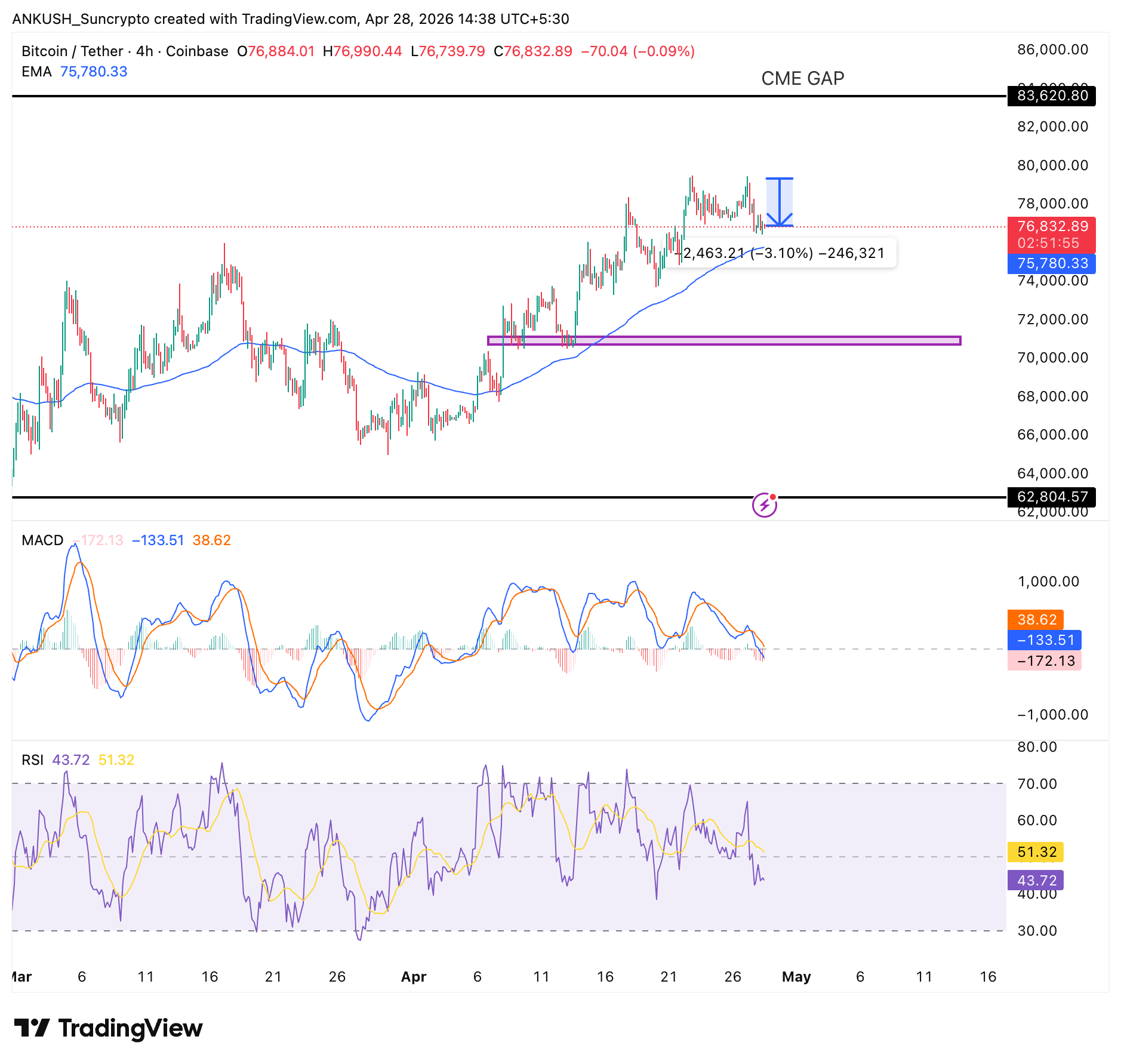
Bitcoin trades at $77,000, down 3% from recent highs in the past 24 hours while maintaining a bullish structure above its 100 EMA support. An unfilled CME gap at $80,000–$83,000 looms as a strong magnet, with BTC dominance steady at 60.63%, signaling capital rotation from alts into Bitcoin. After a 3.34% drop in BTC and altcoins, almost $200M was liquidated in long positions; the market looks extended, but the Federal Reserve’s upcoming FOMC meeting comments could dictate the next leg.
Rates are expected to stay unchanged at 3.5%–3.75%. Markets are pricing a 99% probability of a hold. So the rate decision itself is not the event. What matters is what Fed Chair Jerome Powell says at his press conference because this is his last one before his term expires on May 15, 2026. Every word will be parsed for signals on inflation, rate cuts, and the economic outlook. Those signals will either push BTC through $80,000 or pull it back to $70,000.
The Rate Decision holding at 3.5% to 3.75%
The Federal Reserve will hold interest rates at 3.5%–3.75% on April 29. This is not a surprise; CME FedWatch shows a 99% probability of no change. After three consecutive quarter-point cuts at the end of 2025, the Fed has been on pause for three straight meetings as inflation refuses to cooperate.
For crypto, a rate hold is a neutral-to-positive backdrop; it means no fresh tightening pressure on risk assets. But crypto markets have already priced the hold in. What they have NOT priced is the language, the tone, and the dot plot messaging that will accompany it. That is where the volatility will come from on April 29.
| Key context for crypto traders
The Fed began cutting rates in late 2025, and that rate-cutting cycle was a primary tailwind that helped Bitcoin rally significantly. Now the cuts are paused. The crypto market wants to know: when do cuts resume? Powell’s press conference on April 29 is the best clue available. |
Why is inflation keeping the Fed from cutting and crypto from flying?
The single biggest reason the Fed cannot cut rates right now and the single biggest macro headwind for crypto is that inflation is not under control. Here is the data that is keeping the Fed’s hands tied:
- US CPI jumped 0.9% month-on-month in March 2026, the biggest single-month increase since 2022.
- Annual CPI is running at 3.3% year-on-year, well above the Fed’s 2% target.
- Core PCE inflation, the Fed’s preferred measure, is tracking at 3.45% in March, up from 2.80% in February.
- Core and supercore inflation are running above 4% on a 3-month annualized basis.
- Tariffs are driving goods prices higher, with apparel, electronics, and computer equipment all showing elevated inflation.
Why does this matter for crypto?
Because rate cuts are the fuel that powered Bitcoin’s bull run in late 2025. When the Fed cuts rates, it reduces the opportunity cost of holding non-yielding assets like Bitcoin; money flows out of cash and bonds and into risk assets. When the Fed cannot cut because inflation is still above target, that fuel line is cut off. The crypto market is essentially waiting for inflation to cool enough to unlock the next rate cut.
Visibility is extremely important; invisible people do not get opportunities.
| The inflation-crypto connection
Every 0.1% drop in core PCE toward the Fed’s 2% target increases the probability of a rate cut, and historically, each rate cut expectation repricing has added 5–15% to Bitcoin’s price within weeks. Watch inflation data monthly. It is the most important macro variable for crypto in 2026 |
The Iran oil shock threatens crypto
The war in the Middle East has created a unique macro problem that hits crypto from two angles simultaneously. West Texas Intermediate crude oil futures rose approximately 50% between mid-February and mid-March 2026 alone, an energy price shock that is both inflationary and growth-negative.
For crypto, this is a double threat. High oil prices feed directly into inflation, which keeps the Fed from cutting rates, removing a primary bullish catalyst for Bitcoin. At the same time, if high energy prices begin to drag on economic growth and corporate earnings, we enter a risk-off environment where investors flee to cash and safe havens, dumping speculative assets including crypto.
The best case for crypto from the Iran situation is if oil prices begin to stabilize or fall, which would ease inflation, open the door to rate cuts, and remove the risk-off pressure simultaneously. Watch crude oil prices as a leading indicator for Bitcoin in 2026.
How are Oil prices and Bitcoin linked?
Crude oil has become one of the most important macro variables for BTC in 2026 because of the Iran conflict. |
4 Scenarios with direct implications to Crypto Market and Bitcoin
With the rate decision already priced in, the entire crypto market reaction on April 29 will come down to Powell’s tone and language. Here are the four scenarios and their direct implications for Bitcoin and crypto:
| Fed Scenario | What Powell Says | BTC Reaction | BTC Target | Signal |
| Hold + Dovish tone | Hints at neutral rate / cuts ahead | BTC push above $80K, CME gap in sight | $80K–$83K | Bullish |
| Hold + Neutral tone | No new signals, wait-and-see language | BTC consolidates in the $74K–$78K range | $74K–$78K | Sideways |
| Hold + Hawkish tone | Hints at possible hike if inflation stays high | BTC pullback to $70K–$72K EMA zone | $70K–$72K | Caution |
| Surprise hike signal | Powell flags rate increase coming | Sharp risk-off: BTC drops $65K–$68K | $65K–$68K | Bearish |
The most likely short-term scenario for BTC independent of the Fed is a healthy 7–10% pullback to the $70,000–$72,000 zone before the next leg higher. The CME gap at $80,000–$83,000 remains the upside magnet. A dovish Fed signal is the catalyst that could skip the pullback entirely and push BTC straight to the gap.
Impact of FOMC meeting on Bitcoin, Altcoins, and Stablecoins
The FOMC meeting does not affect all crypto assets equally. Where capital flows within crypto depends heavily on the macro signal. With BTC dominance already at 60.63%, a multi-year high, institutional capital is clearly in risk-consolidation mode, favoring Bitcoin over altcoins. Here is the full picture:
|
Asset |
Current Mood | Structure | FOMC Trigger |
Outlook |
| Bitcoin (BTC) | $74K–$78K | Hold zone | CME gap $80–83K magnet | 60.63% BTC dominance |
| Ethereum (ETH) | Pressure | ETH/BTC break | Watch ETH/BTC ratio bounce | BTC season, weak altseason |
| Solana (SOL) | Sideways | Range bound | Higher beta on any Fed pivot | Neutral mode, follows BTC lead |
| Altcoins | Risk-off | Underperform | Rotate back if Fed turns dovish | Capital fleeing to BTC |
| Stablecoins | Yield focus | USDT/USDC | Yield on hold: 8–12% DeFi APY | Safe haven in uncertainty |
The key signal to watch for altcoin traders is the ETH/BTC ratio. This ratio is currently breaking down, meaning Ethereum is underperforming Bitcoin. If the Fed delivers a dovish surprise and BTC breaks $80,000 with conviction, capital may begin rotating from BTC into ETH and high-beta altcoins, triggering a mini alt-season. But until that happens, this is Bitcoin’s moment, not alt-season.
What does Powell’s press conference mean to the crypto market?
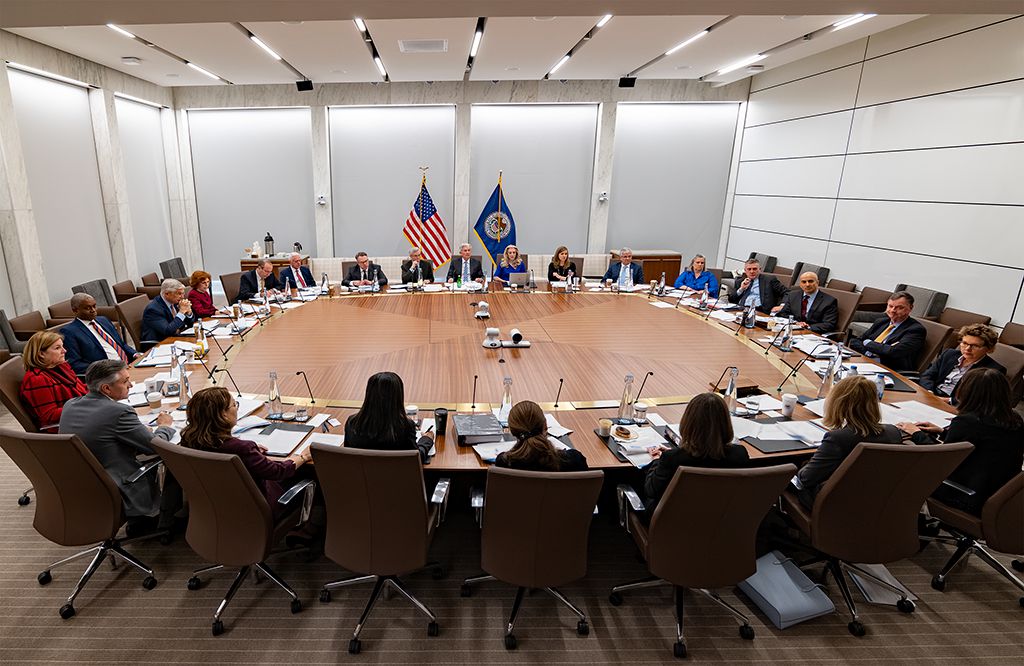
April 29 is Jerome Powell’s final press conference as Fed Chair. His term ends May 15, 2026. Kevin Warsh, former Fed Governor and Ben Bernanke’s right-hand man during the 2008 financial crisis, is expected to take over as Fed Chair from the June meeting onward.
For crypto, this leadership transition matters for one key reason: markets expect the incoming Warsh Fed to be more open to rate cuts than Powell has been. Morgan Stanley’s chief US economist Michael Gapen is already forecasting rate cuts in June and September 2026 once Warsh takes the chair. If that expectation holds, the second half of 2026 could see significant crypto tailwinds from a new, more dovish Fed leadership, a major structural positive for Bitcoin.
At this week’s press conference, watch specifically for:
- Any language around inflation being “transitory” this was bullish for crypto in 2021 and would be again in 2026.
- Any mention of rates approaching “neutral,” the single most bullish phrase Powell could use for crypto.
- Whether Powell signals he will stay on as a Fed governor beyond May 15, markets see this as a stability signal.
- Any reference to the Iran conflict as a “temporary shock” this would reduce the geopolitical risk premium in oil and benefit crypto indirectly.
The FOMC Meeting effect on DeFi and Stablecoins
The FOMC meeting also has a direct impact on DeFi yields and stablecoin strategies. With the federal funds rate at 3.5%–3.75%, money market funds in the US are offering around 4–5% annualized returns, creating competition for DeFi yields. If the Fed were to cut rates, those money market returns would fall, making DeFi yields of 8–15% on USDT and USDC comparatively more attractive and driving more capital into on-chain lending protocols like AAVE and JustLend.
For Indian crypto investors on platforms like SunCrypto, stablecoin yield strategies are particularly relevant. A prolonged Fed hold means the yield differential between TradFi and DeFi remains compressed, but any signal of future rate cuts is a medium-term positive for DeFi TVL and stablecoin yields. JUST (JST), which powers JustLend DAO’s $6.71 billion TVL, is one example of a DeFi protocol that would benefit directly from rate cut expectations.
Disclaimer: Crypto products & NFTs are unregulated and can be highly risky. There may be no regulatory recourse for any loss from such transactions.