

Key Takeaways
- Cryptocurrency trading means buying and selling digital assets on an exchange in order to profit from price movements.
- Getting started with cryptocurrency trading requires a trustworthy exchange, a verified account, and a working knowledge of trading pairs, order types, and spot markets.
- The most common cryptocurrency trading styles are day trading, swing trading, scalping, and long-term holding (HODLing).
- No cryptocurrency trading plan is complete without risk management position sizing and stop-loss orders in particular.
Digital assets have pulled in everyone from first-time retail investors to established financial institutions. For someone new to the space, though, the jargon, the sheer number of strategies, and the speed at which prices move can feel overwhelming.
This guide breaks down cryptocurrency trading from the ground up: what it actually is, how to set yourself up, the core concepts you’ll use every day, the main strategies traders rely on, and how to keep your risk under control.
What is cryptocurrency trading?
Cryptocurrency trading is the practice of buying and selling digital assets on an exchange with the goal of profiting from price changes. What sets these markets apart from traditional stock exchanges is that they never close cryptocurrency trading runs 24 hours a day, seven days a week. That’s a real advantage in terms of flexibility, but it also means prices can move sharply while you’re asleep.
Thousands of digital assets exist today, though bitcoin (BTC) and ether (ETH) remain the most heavily traded. Traders can take a long position (buying because they expect the price to climb) or a short position (selling because they expect it to fall). Some hold for weeks at a time; others are in and out within minutes. Which camp you land in depends on your strategy, your schedule, and how much risk you’re comfortable carrying.
You can trade digital assets against fiat currencies such as INR, USD, or EUR, or against other cryptocurrencies. The simplest form of cryptocurrency trading is spot trading, where one asset is swapped directly for another at the current market price.
Before You Begin Cryptocurrency Trading
- Build your foundation.
- Spend time understanding how these markets function before you commit any capital.
- SunCrypto’s educational articles and beginner courses are a practical place to start building that base knowledge reading a few guides costs you nothing, while learning through trial and error can be expensive.
- Pick a cryptocurrency exchange.
- Look for a platform with a solid track record, strong security infrastructure, and customer support that actually responds. For newcomers, a centralized exchange is almost always the sensible starting point.
- If SunCrypto operates in your region, that’s a good place to begin. Decentralized exchanges (DEXs) are worth exploring later, once you’ve got some experience behind you.
- Open and verify your account.
- Registration usually means providing an email address, choosing a strong password, and accepting the platform’s terms. Nearly every regulated exchange also runs Know Your Customer (KYC) checks, which exist to protect users and satisfy regulatory requirements.
- Expect to upload a government-issued ID and proof of address before your account is cleared for cryptocurrency trading.
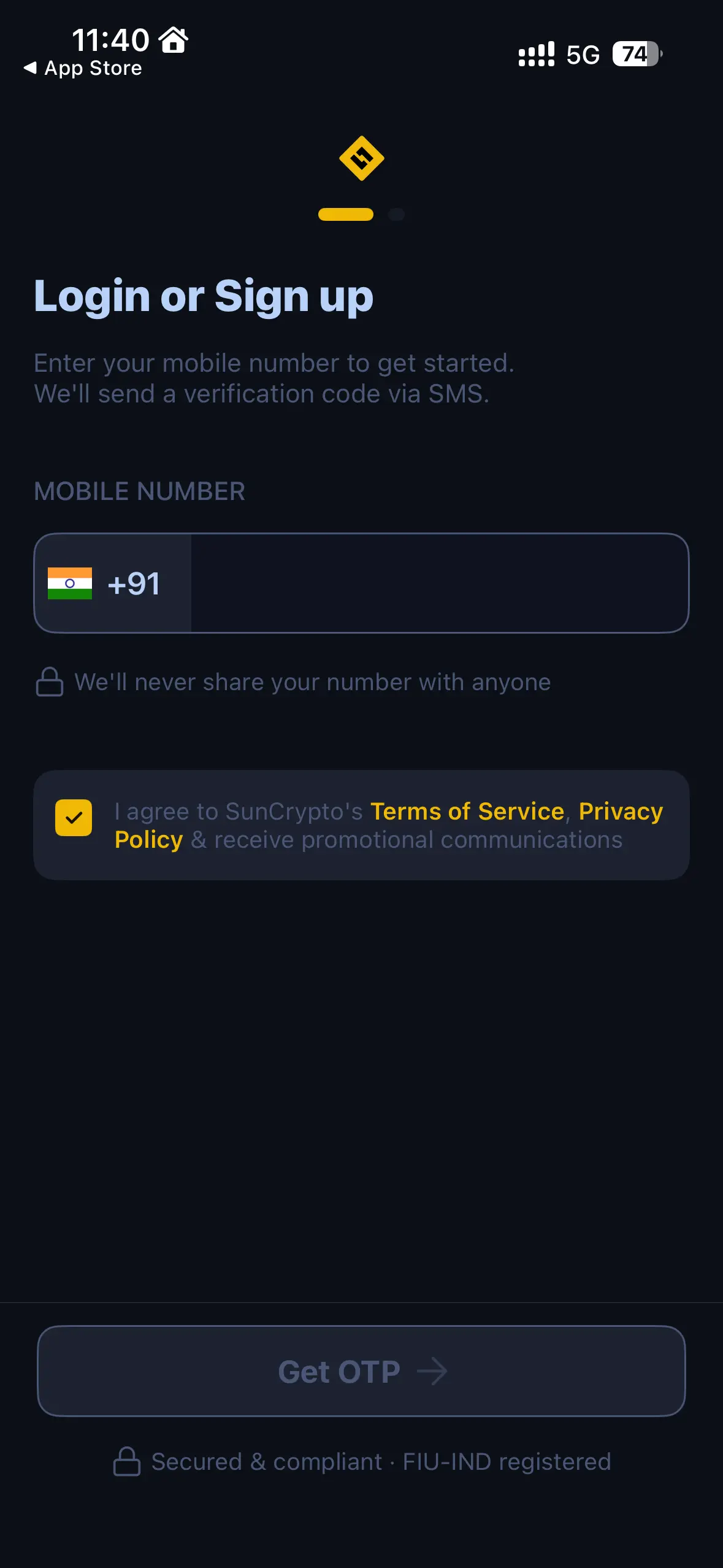
How to start cryptocurrency trading?
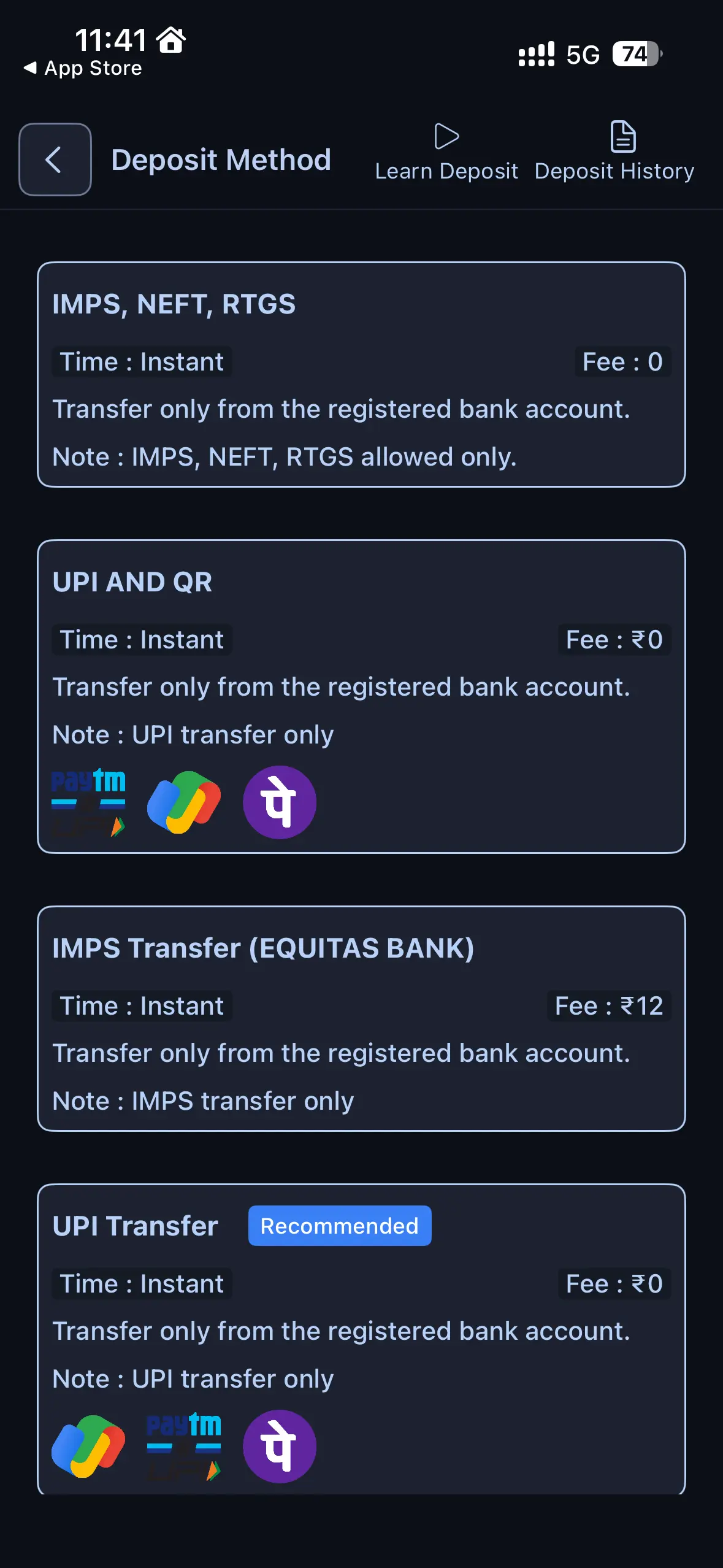
- Deposit funds
Once your account is live, you’ll need to fund it. Most centralized platforms accept fiat deposits through bank transfer, UPI, or other local payment rails. Already hold crypto? You can transfer it straight into your exchange wallet.
One critical warning here: always send each asset to the matching network address. Bitcoin goes to a Bitcoin address, ether to an Ethereum address, and so on. Send a coin to the wrong network, and it is usually gone for good.
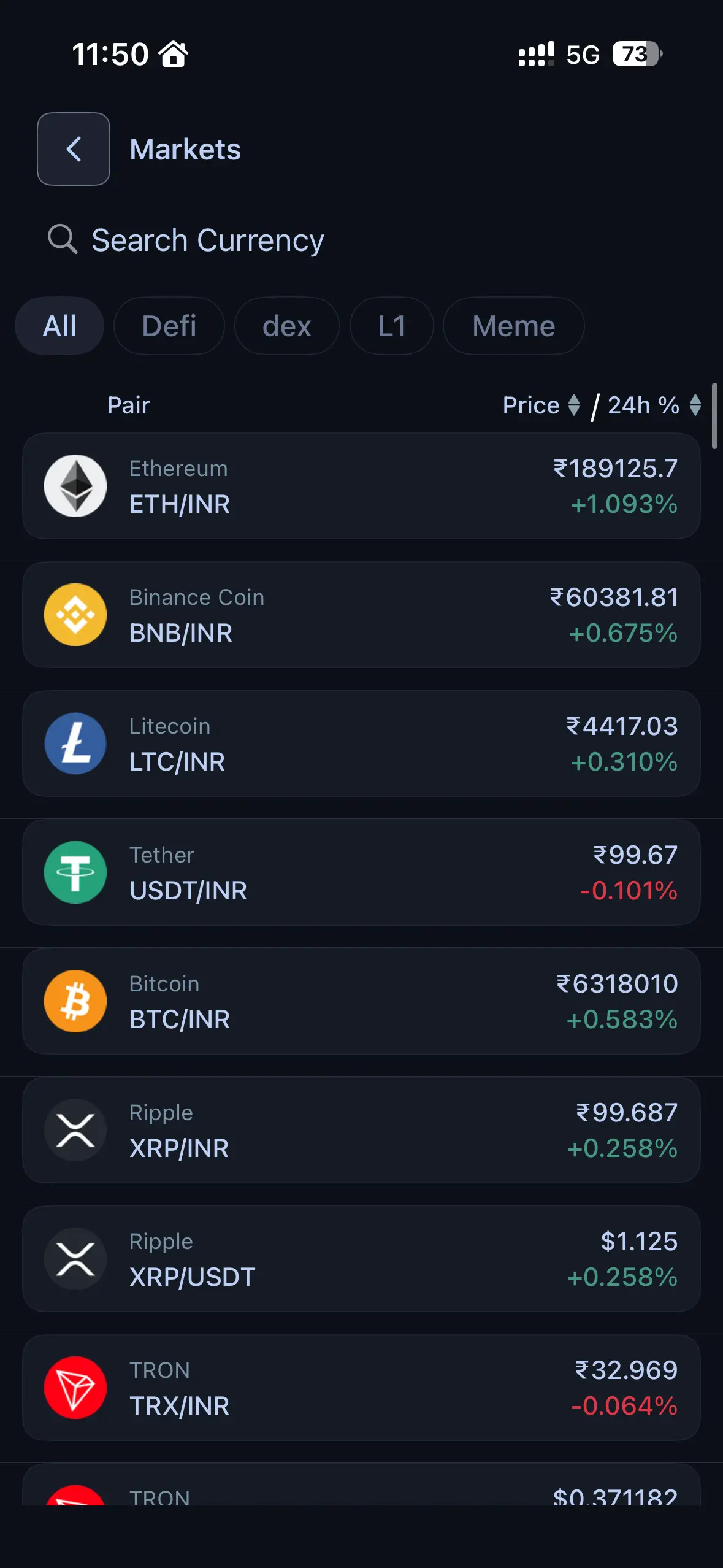
- Select a trading pair.
Digital assets are always quoted in pairs BTC/USDT and ETH/BTC, for example. The pair simply tells you which two assets are being exchanged.
- Crypto-to-fiat pairs (like BTC/INR) let you trade a digital asset against a traditional currency.
- Crypto-to-crypto pairs (like ETH/USDT) involve two digital assets.
- Many pairs use a stablecoin such as USDT as the quote currency, which gives you a consistent dollar-pegged reference point.
-
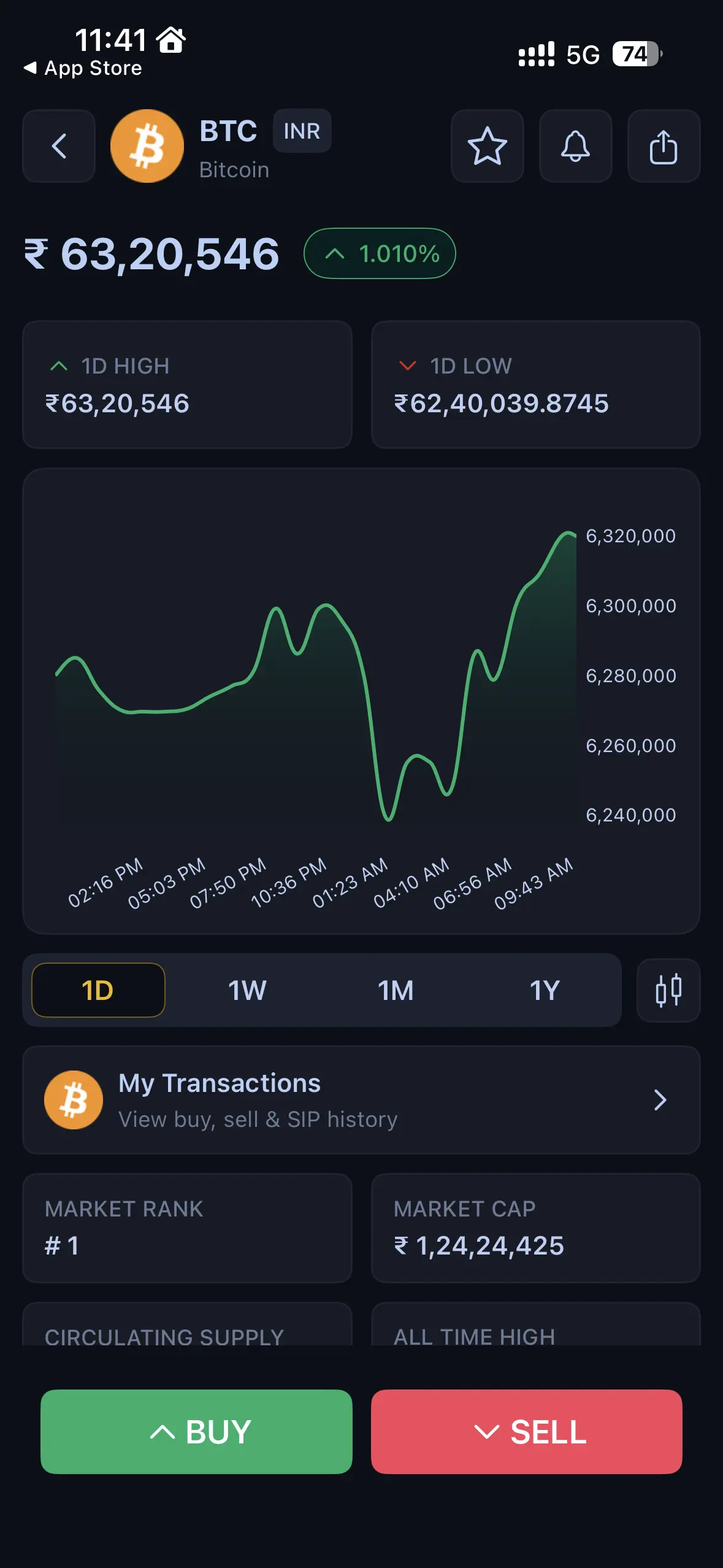
Check the live price before you commit
Every trade should start with a look at what the asset is actually doing right now. On SunCrypto, you see the exact live price quoted before you confirm a trade, so there’s no guesswork about what you’re paying, a useful thing when prices can shift within seconds.
Beyond the quoted price, spend a moment on the chart and recent market activity. Is the asset trending up, trending down, or moving sideways? How far has it travelled in the last 24 hours? Building a watchlist of the assets you care about makes this a five-second check rather than a research project, and it stops you from buying purely on impulse.
-
Understand how your trade gets executed
Instant buy and sell is the simplest route and the one most beginners start with. You enter the amount you want to trade, see the live price, and confirm; the transaction settles immediately at that price. You own the asset outright, with no leverage and no borrowed money involved. This is spot trading in its cleanest form, and on SunCrypto you can start with as little as ₹100.
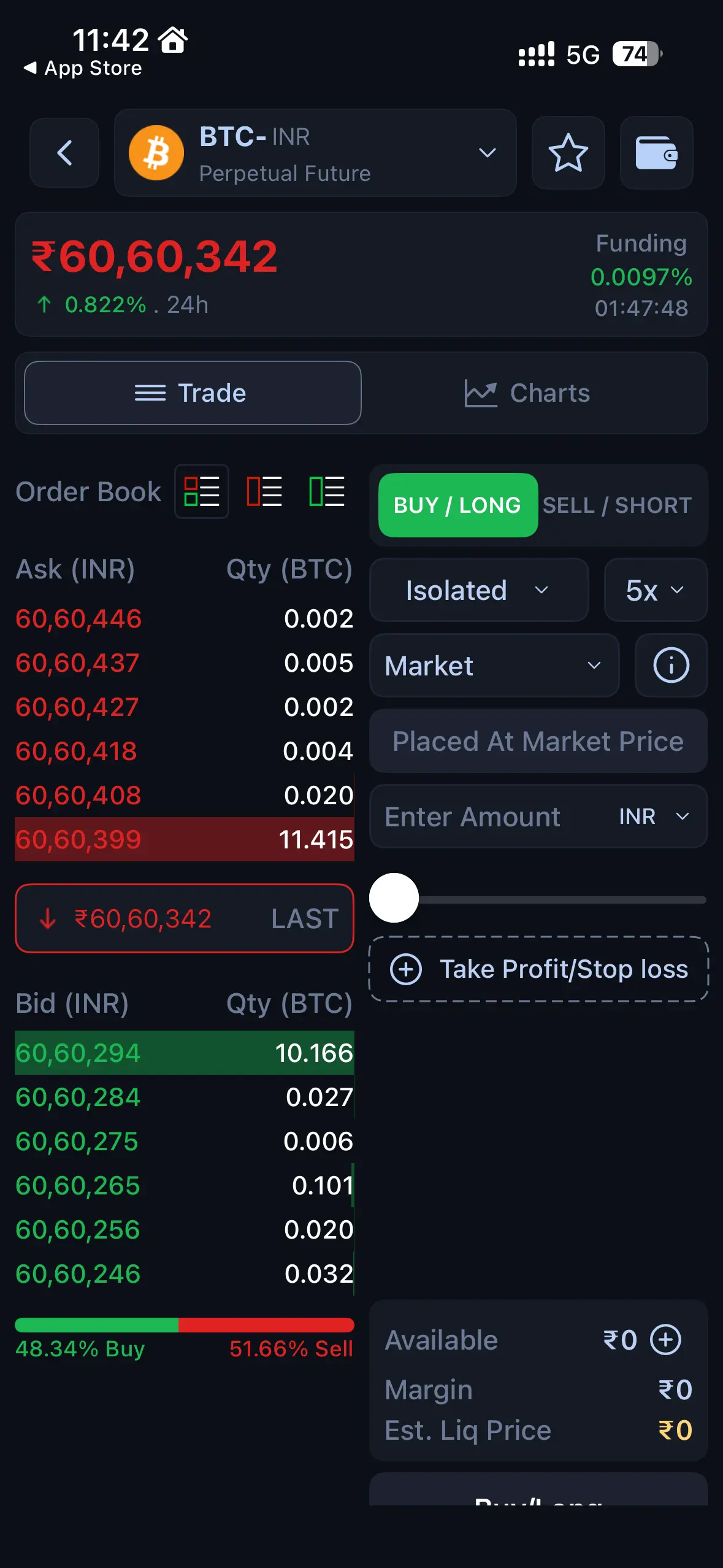
Limit orders work differently: instead of trading at the current price, you specify the price you’re willing to accept, and the trade only goes through if the market reaches it. You gain precision over your entry and exit, but there’s no guarantee it ever fills. On SunCrypto, limit orders are available in futures trading alongside market orders, worth exploring once you’ve got the basics down, though leverage adds significant risk and isn’t a beginner’s tool.
Crypto SIP is a third option that suits people who don’t want to time the market at all. You set a fixed amount to invest weekly or monthly, and the purchases happen automatically on schedule. It removes the emotional guesswork of picking entry points and spreads your cost over time.
-
Decide what kind of trader you want to be
Settle on an approach before you start clicking buttons. Keeping a trading journal, recording why you entered, why you exited, and what happened, is one of the most underrated habits in cryptocurrency trading. Over time, patterns in your own behavior become visible, and that’s where genuine improvement comes from.
Popular Cryptocurrency Trading Strategies
Every trading style carries a different time commitment, risk profile, and learning curve.
Day trading
Day traders open and close positions within a single day, leaning heavily on technical analysis. It’s demanding work that requires near-constant screen time, and it isn’t well suited to anyone with a full-time job.
Swing trading
Swing traders hold for several days or weeks, aiming to capture medium-term moves. It’s a far gentler pace than day trading and works well for people who can’t watch charts all day.
Scalping
Scalpers place a high volume of very short trades, often lasting only minutes, harvesting small price differences again and again. It demands sharp focus, fast execution, and low fees to be viable.
HODLing
Long-term holding, or HODLing, in crypto slang, means buying and simply sitting on an asset rather than actively trading it. It’s the lowest-stress option and needs no daily monitoring, though it carries the same market risk as any other position. Worth remembering: past price performance never guarantees future results.
Technical Analysis in Cryptocurrency Trading
Technical analysis (TA) means studying price charts and indicators to form a view on where price might go next. It’s the primary toolkit most traders use for timing entries and exits.
Candlestick charts
Each candlestick shows the open, high, low, and close (OHLC) for one time period: an hour, a day, or whatever you’ve selected. The body covers the distance between open and close; the wicks mark the extremes. Learning to read candlestick patterns is a foundational skill in cryptocurrency trading.
Support and resistance
Support is a price level where buying has historically been strong enough to halt a decline. Resistance is where selling pressure has repeatedly capped gains. Traders use both to map out likely entry and exit zones.
Technical indicators
Indicators add context to raw price data. Widely used ones include
- Moving averages: smooth out price noise to reveal trend direction
- Bollinger Bands: measure volatility around a moving average
- Relative Strength Index (RSI): signals when an asset may be overbought or oversold
- MACD: tracks momentum and shifts in trend
Each has blind spots, which is why most traders combine several rather than betting everything on one signal.
Fundamental Analysis in Cryptocurrency Trading
Fundamental analysis (FA) looks past the chart to the underlying value of a project, its technology, real-world use case, development team, tokenomics, and adoption curve. The core question FA asks is whether a project has genuine utility and staying power.
In crypto specifically, fundamental analysis often extends to on-chain metrics such as active address counts and transaction volume, alongside project roadmaps, developer activity, and how the project stacks up against competitors in its sector.
Risk Management in Cryptocurrency Trading
Risk management is the discipline of identifying what could go wrong and putting limits in place before it does. These are the practices that keep traders in the game.
Cap your downside
Only put money at risk that you can genuinely afford to lose. Use stop-loss and take-profit orders to define your exits in advance. A stop-loss closes your position automatically if the price moves against you by a set amount; a take-profit closes it once your target is hit, locking in the gain.
Have an exit plan before you enter.
Decide your price target and your maximum acceptable loss before opening the position, not after. Planning ahead strips a lot of emotion out of the decision. And once the plan exists, the hard part is following it rather than rewriting it mid-trade because the market spooked you.
Diversify
Spreading capital across several assets rather than concentrating it in one reduces the damage any single position can do to your portfolio. Reviewing and rebalancing periodically keeps your allocation aligned with the risk level you actually intended.
Hedging
More experienced traders sometimes offset risk in an open position by taking an opposing position in a correlated asset. Options contracts, for instance, can protect the downside of a long position. Hedging adds cost and complexity, so it’s better left until you’ve got the fundamentals solid.
What is the safest cryptocurrency trading strategy for beginners?
There’s no strategy that’s universally safe. That said, many beginners gravitate toward longer time frames for swing trading or HODLing because they demand far less active monitoring than day trading or scalping, which reduces the chance of costly impulsive decisions.
Whatever style you settle on, the risk management basics don’t change. Stop-loss orders and sensible position sizing apply to every approach in cryptocurrency trading.
Closing Thoughts
Cryptocurrency trading offers real opportunity, but it comes bundled with real risk. Understanding the fundamentals, choosing an exchange you can rely on, and applying disciplined risk management will let you navigate a volatile market with far more confidence.
Whether you begin with a simple long-term hold or work your way toward active strategies, consistency is what separates traders who last from those who don’t. Build the discipline first; the results tend to follow.
Disclaimer: Crypto products & NFTs are unregulated and can be highly risky. There may be no regulatory recourse for any loss from such transactions.