

The crypto market has had a brutal year. Bitcoin lost roughly a third of its value in the first half of 2026, and altcoins have fallen much further. That is painful for existing holders, but it has one side effect worth understanding: a large number of established, well-funded projects now trade below one dollar.
This has made the penny cryptos invest in one of the most searched crypto phrases in India right now. The logic feels intuitive: buy something cheap, wait for the market to recover, and make a large multiple.
The intuition is mostly wrong, and this guide will explain exactly why before it gets to any list. Understanding why is far more valuable than the list itself, because the same reasoning applies to every future cycle.
This is educational content, not investment advice. No one, including this article, can tell you which cryptos will rise. Every token listed here can lose most or all of its remaining value.
The unit price of illusion
This is the most important section of this guide. If you read nothing else, read this.
Beginners routinely think a token priced at $0.001 is “cheaper” than one priced at $50. It is not. Price per token is meaningless on its own. What matters is market capitalization, the price multiplied by the number of tokens in circulation.
Let’s take an example, imagine two projects.
Coin A: trades at $0.001. There are 1 trillion tokens. Market cap = $0.001 × 1,000,000,000,000 = $1 billion
Coin B: trades at $50. There are 1 million tokens. Market cap = $50 × 1,000,000 = $50 million
Coin A “looks” 50,000 times cheaper. In reality, the market values Coin A at twenty times more than Coin B. If you were buying a company, Coin A is the expensive one.
This is destroying the “100x” fantasy. Here is the reasoning that costs people money: “It’s at $0.007. If it just reaches $1, that’s 140x!”
Let’s test that with real numbers.
Take a token trading at $0.007 with 350 billion tokens in circulation. Its market cap is
$0.007 × 350,000,000,000 = $2.45 billion
For that token to reach $1, its market cap would need to become:
$1 × 350,000,000,000 = $350 billion
That is larger than Ethereum’s entire market cap. It would require hundreds of billions of dollars of new money flowing into one token. It is not going to happen because the price “looks small.”
The rule to remember: to double your money, the market cap must double. The unit price is irrelevant. A token at $0.001 doubling to $0.002 is exactly the same achievement as a token at $50 doubling to $100.
Why 2026 has made penny cryptos to invest in a popular search?
Three things converged this year.
The drawdown. Assets that traded at $3–$5 in 2024 now trade under $1. Tokens that were never “penny cryptos” have become them by falling, not by being small.
The narrative shift. AI, real-world asset tokenization, and stablecoin infrastructure are the dominant themes of this cycle, and several tokens in those categories happen to be cheap right now.
Loss recovery psychology. Investors sitting on heavy losses gravitate toward low-priced tokens, hoping for an outsized bounce. This is the most dangerous reason on the list, and it is worth being honest with yourself about whether it applies to you.
Top 10 penny cryptos to invest in August 2026
Every token below trades under $1 as of early August 2026 and has an identifiable product. Inclusion here is not a recommendation; it means the project is large enough and real enough to be worth researching. Each entry includes the specific risk, because that is the part most articles leave out.
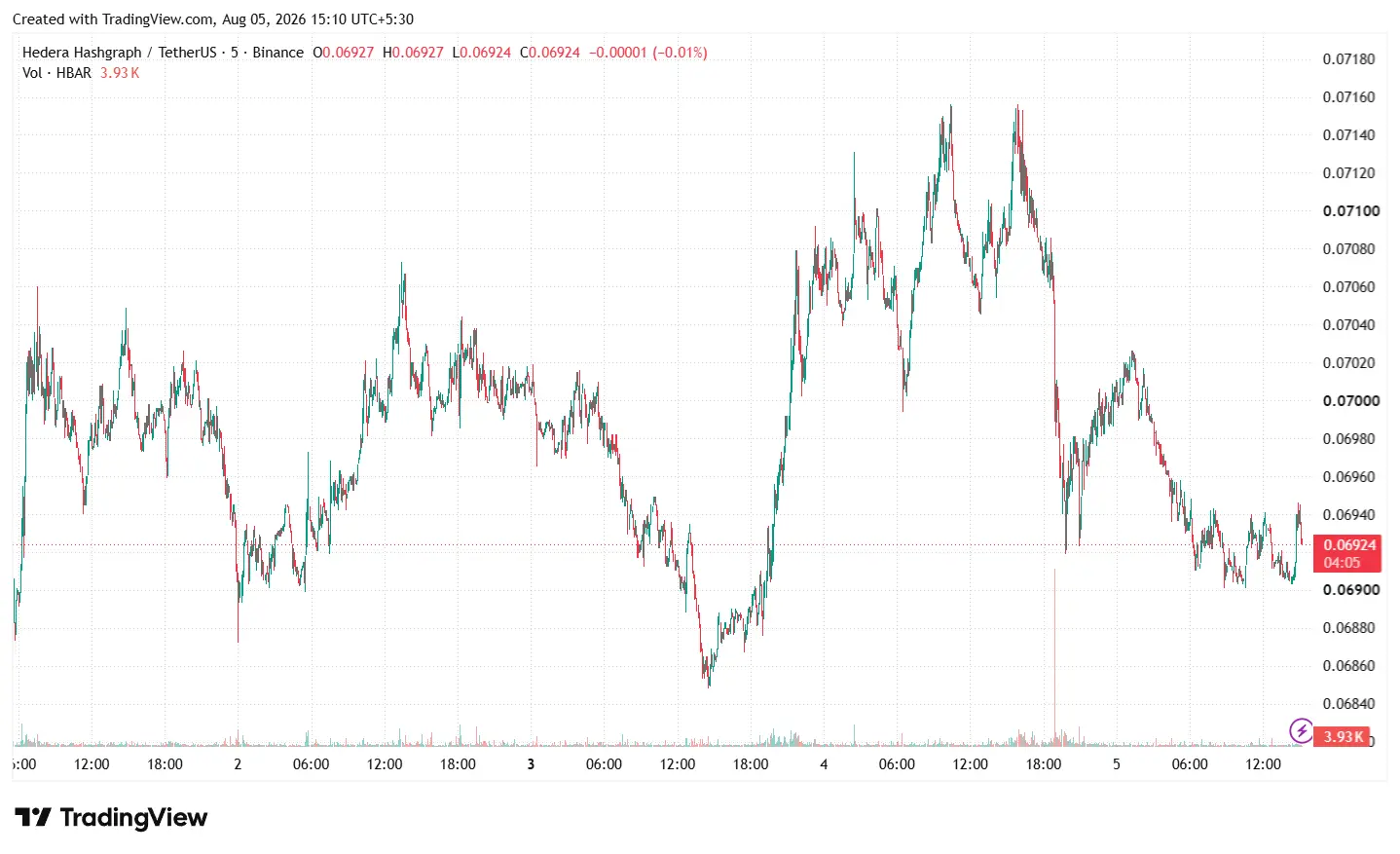
1. Hedera (HBAR) — approx. $0.069
Hedera is a network for businesses that want blockchain-style record-keeping without the slowness. Instead of a chain of blocks, it uses a different structure called a hashgraph that settles transactions in under a second.
Hedera is governed by a council of large corporations, including Google, IBM, and Boeing, which is unusual in crypto. In March 2026 it launched Agent Lab, a no-code platform for building on-chain AI agents, and its “Prove AI” framework creates audit trails for AI decision-making aimed directly at the EU AI Act’s traceability requirements. It has also moved into institutional tokenization, with Asseto Access launching in July 2026 for regulated token issuance.
HBAR has been trapped in a descending channel since May 2026, with key support around $0.065, and its 200-day moving average has been falling. ETF demand has been modest, around $3 million in July inflows, a fraction of what leaders like XRP attracted. Enterprise partnerships have historically not translated into token demand.
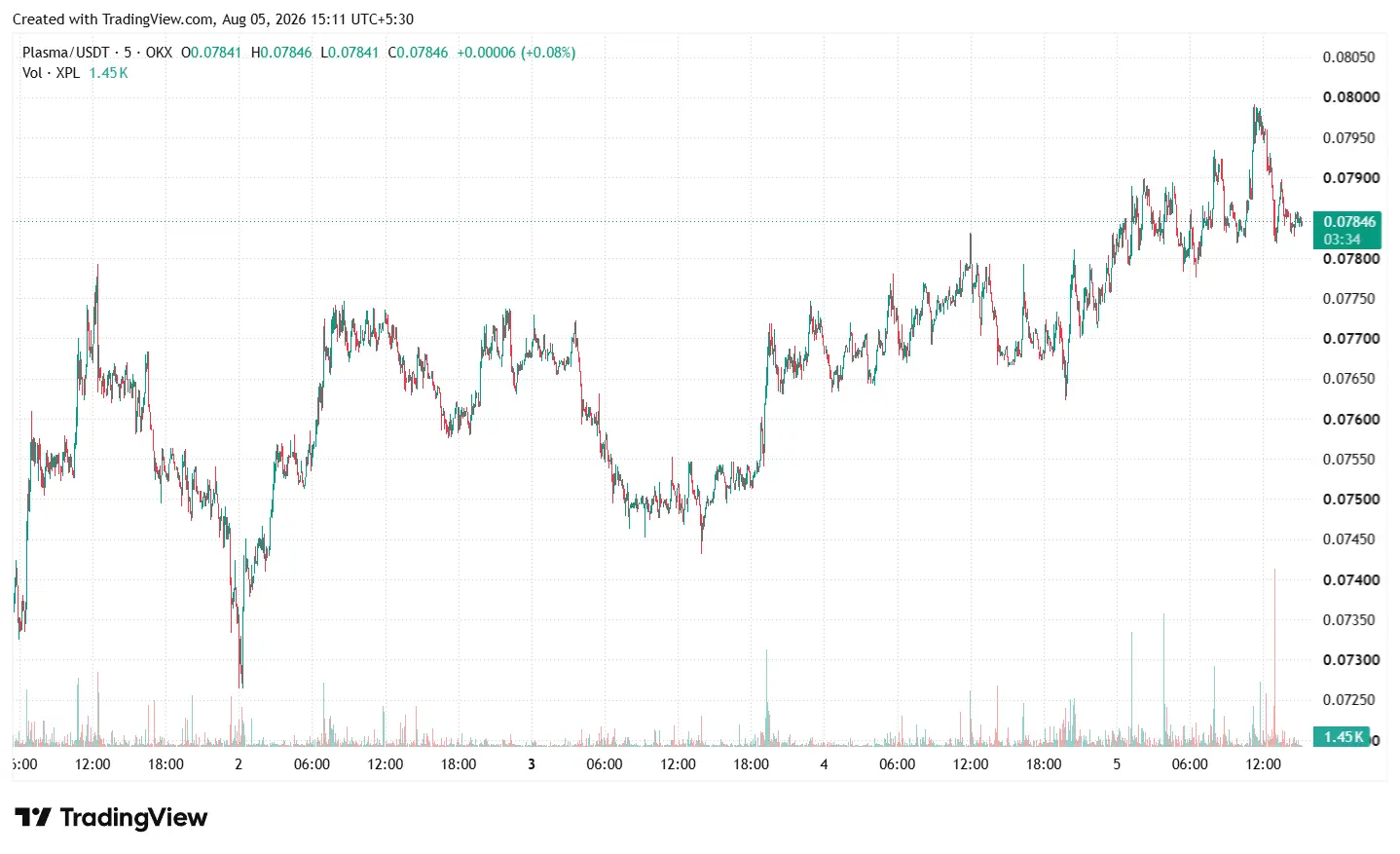
2. Plasma (XPL) — approx. $0.078
Plasma is a blockchain built specifically for stablecoin payments, moving digital dollars cheaply and quickly, rather than trying to be a general-purpose platform.
Stablecoin settlement is one of the few crypto use cases with obvious, demonstrable real-world demand. A chain purpose-built for it has a clear reason to exist.
This is a young token with a short trading history and significant unlock schedule ahead. It also competes directly with Tron, Solana, and every major chain for the same stablecoin volume, and those competitors have enormous head starts in liquidity and integrations.
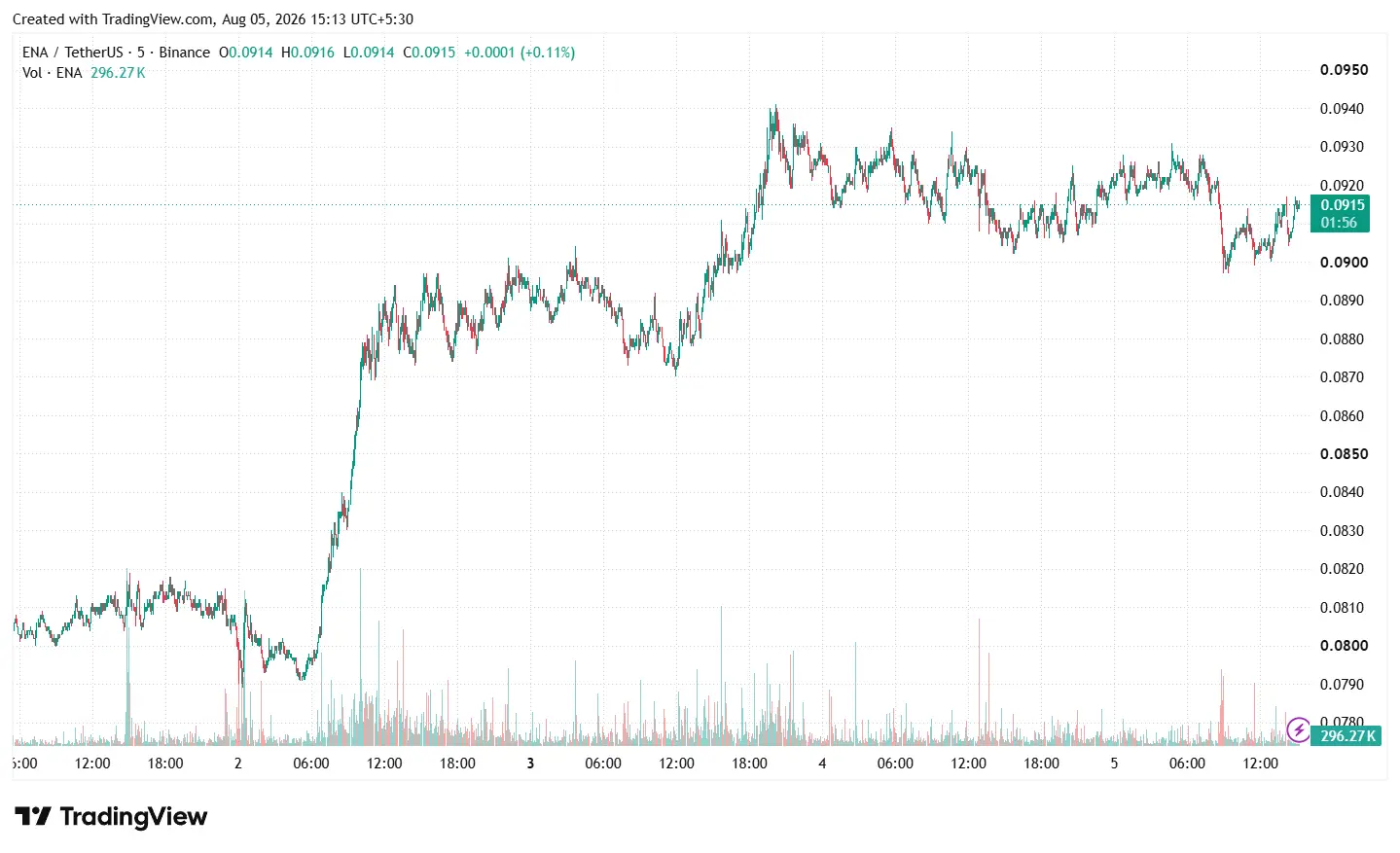
3. Ethena (ENA) — approx. $0.0915
Ethena creates a synthetic dollar. Rather than holding actual dollars in a bank like USDC does, it uses crypto collateral combined with hedging positions to keep its value near $1 and passes yield to holders.
It grew extremely quickly and offered yields that traditional stablecoins could not match, making it one of the most-discussed DeFi protocols of the cycle.
This is the highest-complexity project on the list. Its yield mechanism depends on positive funding rates in derivatives markets. In a prolonged bear market, which is exactly where we are, those funding rates can turn negative and compress or eliminate the yield. ENA is down heavily from its highs, and the model has not yet been tested through a full multi-year downturn.
4. Artificial Superintelligence Alliance (FET) — approx. $0.1523
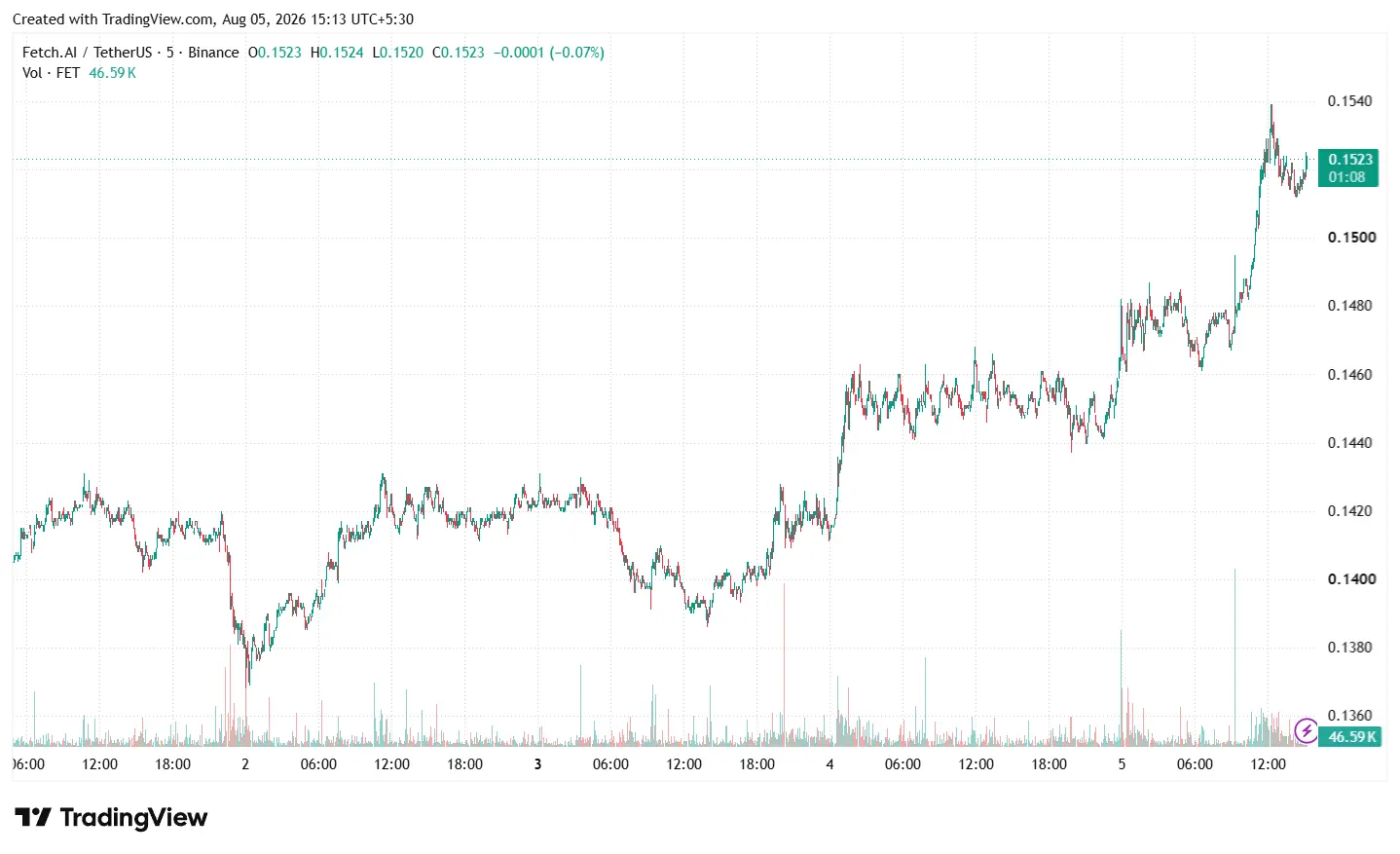
FET is the merged token of Fetch.ai, SingularityNET, and CUDOS, three AI projects that combined into one alliance. The goal is a decentralized infrastructure for AI agents that can negotiate and transact autonomously.
AI is the strongest narrative in technology, and FET is among the largest crypto tokens directly attached to it. The industry’s shift toward “agentic AI” maps closely onto what the project claims to be building.
FET peaked at $3.47 in March 2024 and has lost over 90% of its value, driven partly by forced treasury liquidations. It is down more than 10% in a week even against a weak market. AI-token prices have historically tracked sentiment around AI stocks far more closely than any actual usage of the networks themselves.
5. Worldcoin (WLD) — approx. $0.3204
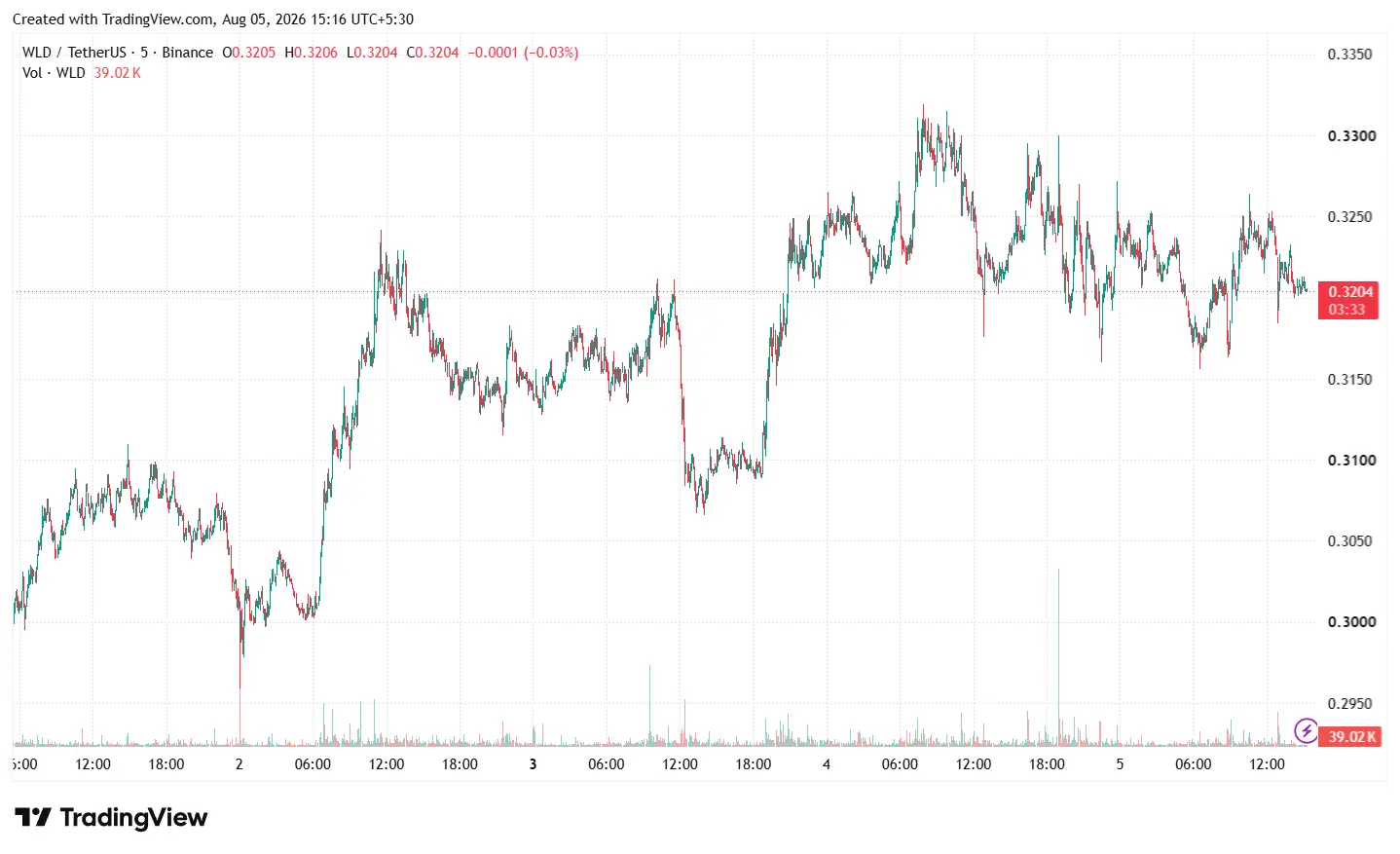
Worldcoin is building a global “proof of personhood” system. You verify you are a unique human by having your iris scanned by a device called an Orb, which produces a World ID without storing your identity.
As AI makes bots indistinguishable from people online, verifying humanness becomes a genuine problem worth solving. Nearly 18 million people had verified through Orbs across 160 countries as of April 2026, with over 30 million World App users. It was co-founded by OpenAI’s Sam Altman, and a Grayscale spot ETF filing has signaled institutional interest. The project also reduced daily token emissions by around 43% from 24 July 2026, cutting new supply pressure.
This is the largest regulatory risk on the list, by a wide margin. Worldcoin has faced biometric privacy investigations in multiple jurisdictions. Spain’s data protection authority issued a temporary ban in 2024, Kenya suspended Orb operations, and a court ordered deletion of collected biometric data in May 2025, with further investigations in Portugal and elsewhere. WLD trades roughly 97% below its all-time high of $11.74. Circulating supply is 3.6 billion against a maximum of 10 billion, meaning substantial dilution remains ahead.
6. Ondo Finance (ONDO) — approx. $0.3811
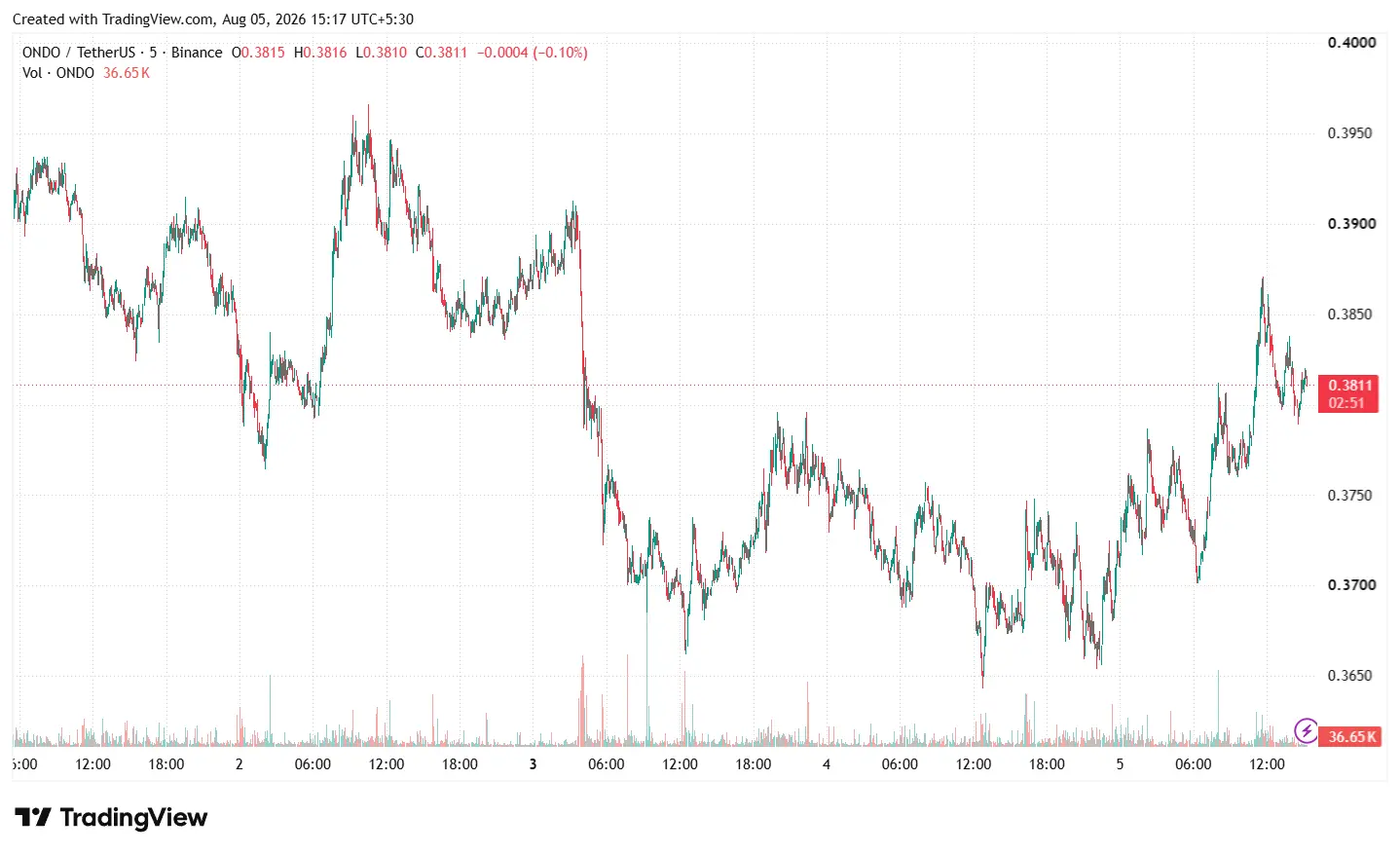
Ondo takes traditional financial assets like US Treasury bonds, stocks, and ETFs and issues them as tokens on a blockchain, so they can be traded and settled around the clock.
Real-world asset tokenization is arguably the strongest institutional narrative of this cycle. Ondo announced the Ondo Network in July 2026, a high-performance execution layer for tokenized assets supporting 24/7 minting and redemption of tokenized stocks and ETFs. Its Perps platform passed $300 million in trading volume within a month of launching.
The honest risk: Regulatory exposure is significant; tokenizing securities sits directly in the path of securities regulators worldwide. ONDO is down sharply from its $2.14 all-time high, and the sector faces well-capitalized competition from BlackRock and Franklin Templeton, who do not need a token at all.
7. Aster (ASTER) — approx. $0.604
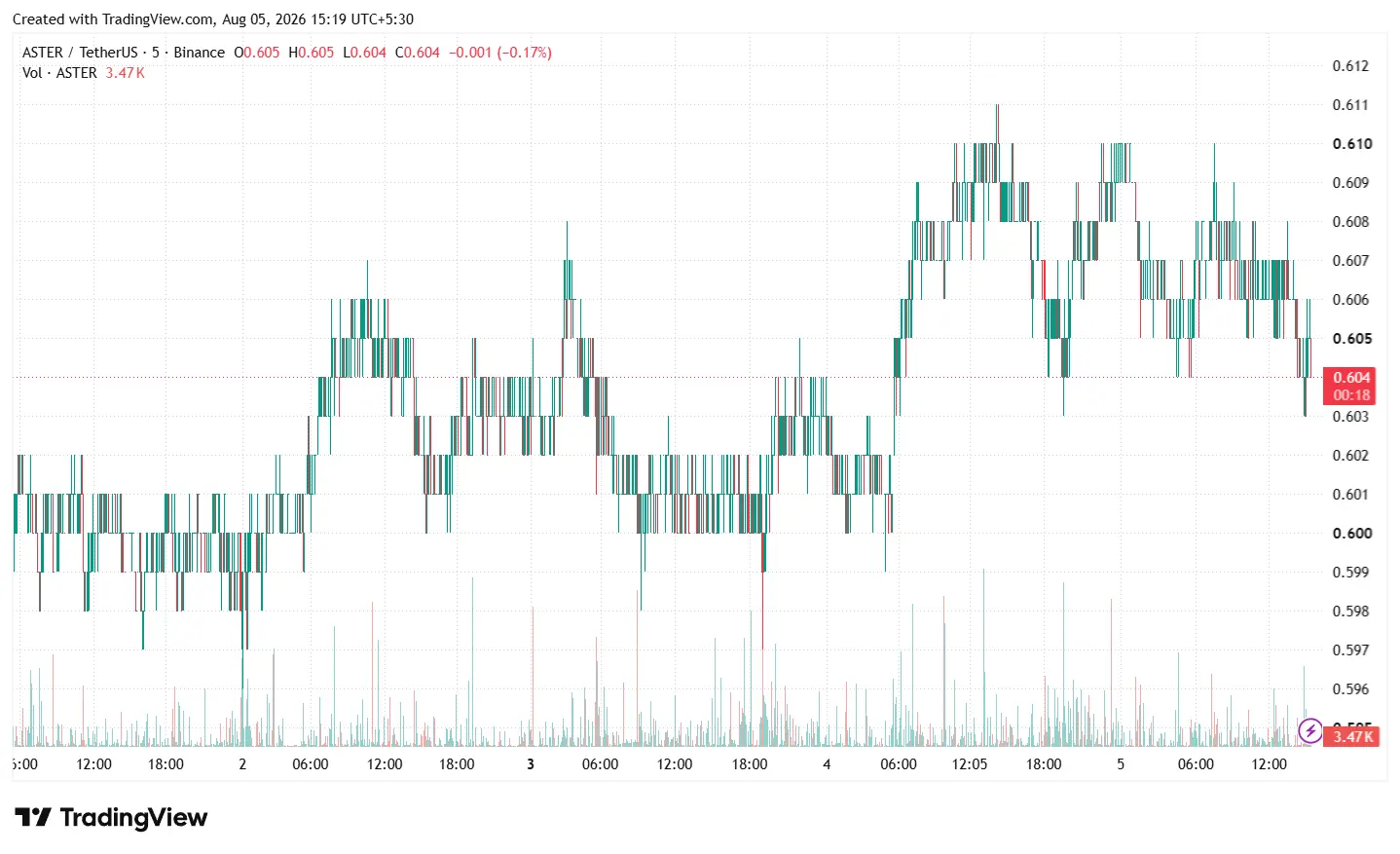
Aster is a decentralized exchange for perpetual futures leveraged crypto trading without a central intermediary holding your funds.
Decentralized perpetuals are one of the few crypto categories generating real, measurable revenue. Aster also operates a buyback-and-burn mechanism, which removes tokens from circulation using protocol income.
It competes against Hyperliquid, which dominates the category by a wide margin. Buyback programs sound attractive, but their actual effect on price is contested. Independent analysis of the 2025–26 buyback trend found mixed results across net emission, price performance versus Bitcoin, and valuation. Derivatives platforms also face growing regulatory attention globally.
8. Sui (SUI) — approx. $0.6932
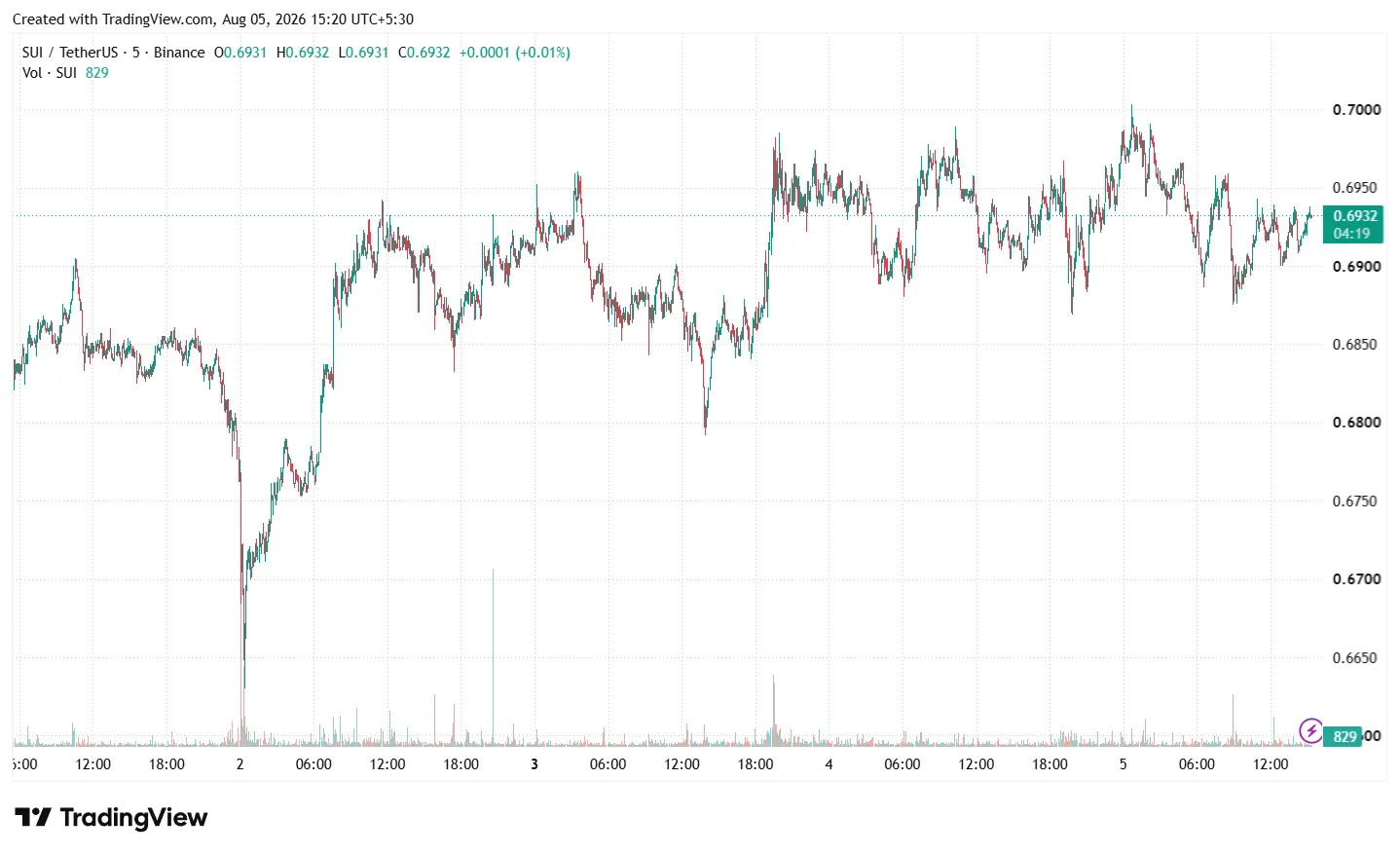
Sui is a Layer 1 blockchain designed for speed, using a programming approach that lets independent transactions process in parallel rather than one after another.
Usage metrics are genuinely improving. Sui has passed 4.53 billion cumulative transactions, daily active users topped 200,000 on three separate days in July 2026, Suilend crossed $10 million in USD-SUI deposits, and CME Group flagged the network in its Q2 2026 crypto snapshot with around $41.8 million in related futures and options volume. This is one of the few tokens here where activity is rising while price falls.
The supply overhang is the problem. Circulating supply is roughly 4.05 billion against a maximum of 10 billion, giving a market cap near $2.8 billion but an FDV close to $6.9 billion. SUI trades far below its January 2025 record high of $5.35 and has been stuck in a sideways range beneath a longer-term descending channel. Layer 1 competition is also relentless.
9. LayerZero (ZRO) — approx. $0.788
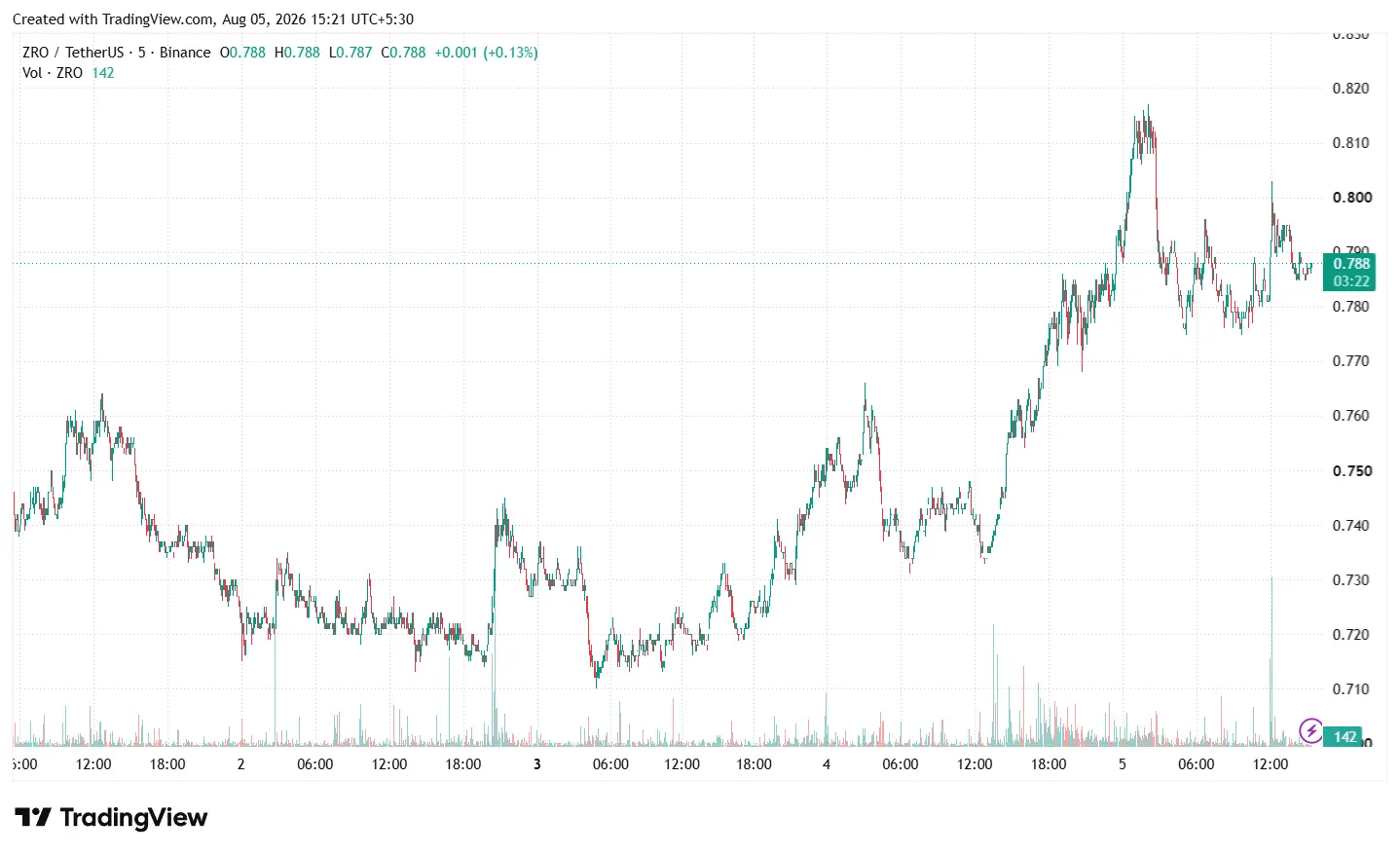
LayerZero lets different blockchains communicate with each other. Think of it as a translator sitting between networks that otherwise cannot talk.
It connects over 150 blockchains, has raised more than $318 million from investors, including A16z, Sequoia, Citadel Securities, and ARK Invest, and Stargate Finance has been merged into ZRO. The team is building an institutional Layer 1 called “Zero,” expected to launch in late 2026, after which ZRO would become the network’s gas and validator staking token, a meaningful change to what the token actually does.
ZRO trades roughly 90% below its $7.47 all-time high and only a few percent above its all-time low of $0.7082, meaning it is sitting near the weakest price it has ever recorded. Insiders hold a large allocation (32.2% strategic partners, 25.5% core contributors), and the project is in a phase of monthly linear unlocks continuing through mid-2027. It also has an August 2026 unlock worth around $19 million. Interoperability is a crowded, difficult category.
10. Pump.fun (PUMP) — approx. $0.0025
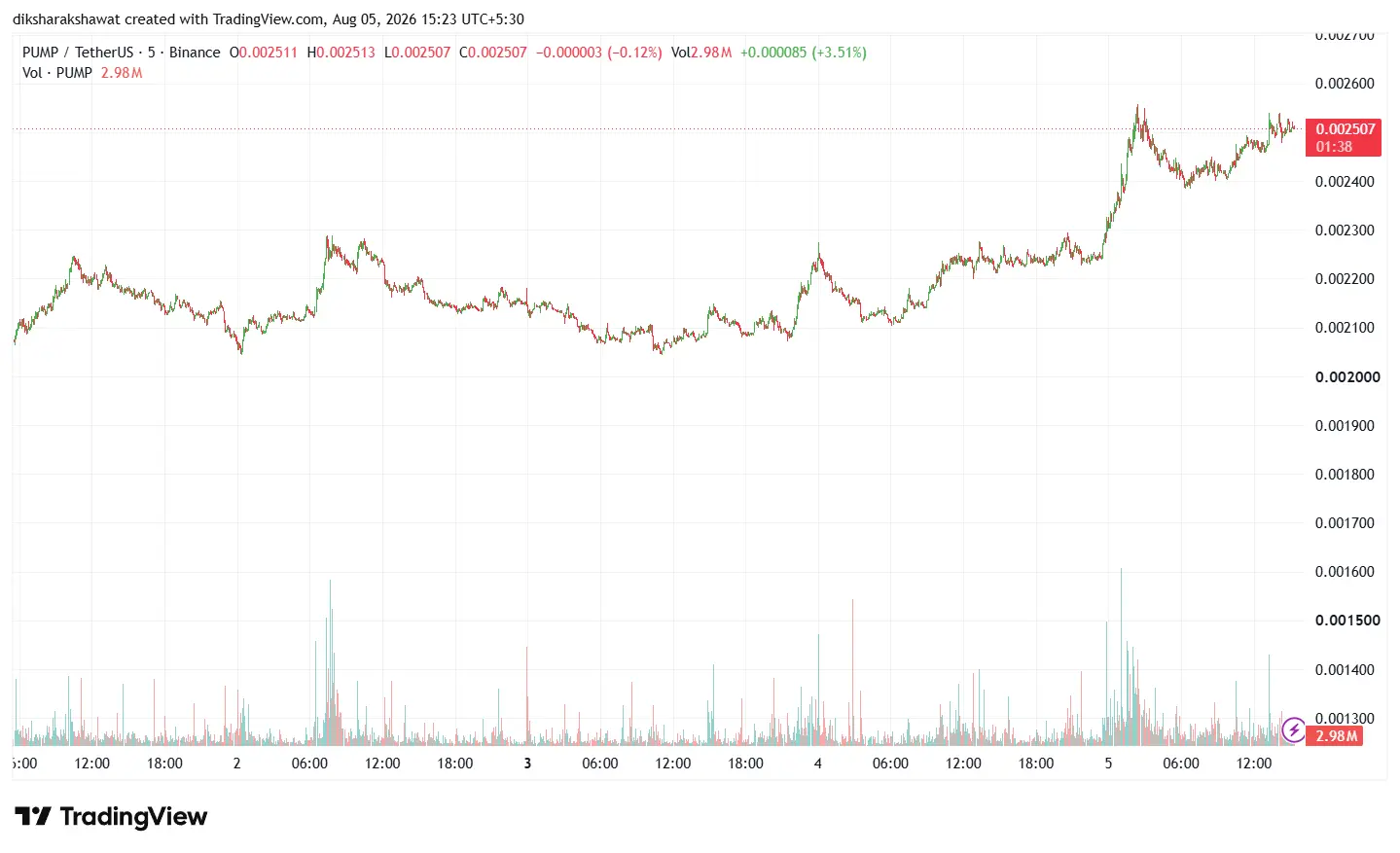
Pump.fun is a platform that lets anyone create and launch a memecoin in minutes. PUMP is its token, and the platform runs a buyback program funded by fees.
It generates genuine, substantial revenue, one of very few crypto projects that does because it earns fees on enormous volumes of token launches.
This is by far the highest-risk entry here, and it deserves a blunt assessment. Its revenue depends entirely on retail speculation in memecoins, which is the first activity to disappear in a bear market. The overwhelming majority of tokens launched on such platforms lose nearly all their value, meaning the business model is structurally tied to user losses. That carries obvious regulatory exposure, particularly in India, where the Promotion and Regulation of Online Gaming Act, 2025, has already demonstrated the government’s willingness to ban speculative real-money activity outright. If you are a beginner, this one is not for you.
11. Kaito (KAITO) — approx. $0.9122
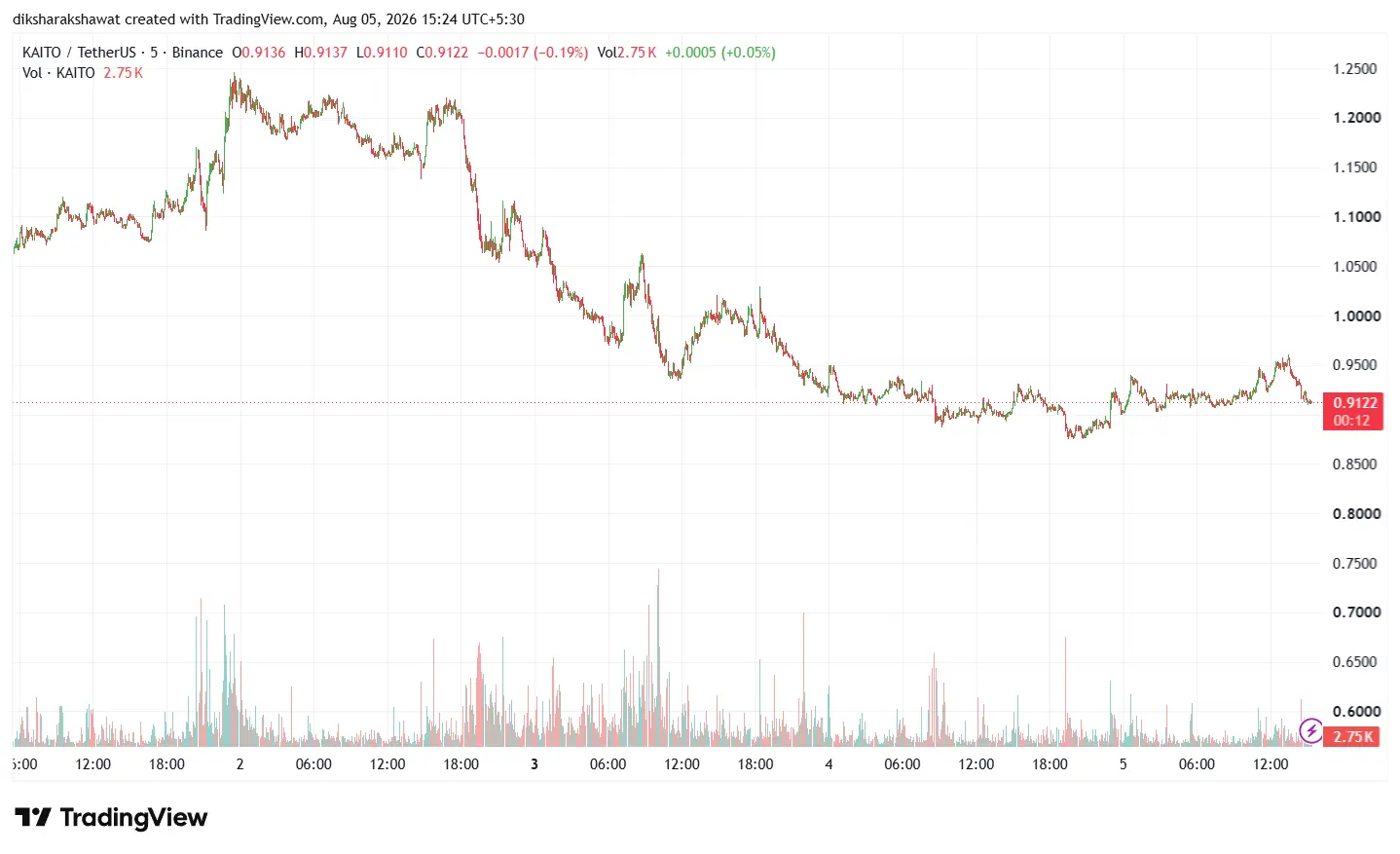
You may see KAITO on other “penny crypto” lists. Two days back, it was traded slightly above $1, so strictly speaking, it does not qualify, but it is worth knowing about.
Kaito is an AI-powered platform that analyzes crypto information and attention, essentially tracking what the market is paying attention to and rewarding people who create influential content.
KAITO has a large August 2026 unlock worth roughly $34.68 million against a market cap of about $257.30 million; that is 13.5% of its entire market cap entering circulation in a single month. That is one of the largest proportional unlocks scheduled this month and is a significant near-term supply event.
Risk management for penny cryptos to invest in
When it comes to penny cryptos to invest in, choosing tokens matters far less than sizing positions. Here is the practical version.
Position sizing, with a simple example
Suppose Anjali has ₹1,00,000 in total savings. She decides she can afford to lose ₹10,000 permanently without it affecting her life that is 10% of savings, and a reasonable ceiling for high-risk crypto.
She then splits that ₹10,000 across five tokens, ₹2,000 each.
Now consider the worst realistic case: three tokens go to near zero, one stays flat, and one triples.
- Three at zero: –₹6,000
- One flat: ₹2,000
- One tripled: ₹6,000
- Total: ₹8,000 from ₹10,000; a loss of ₹2,000
She lost money even with a 3x winner. That is normal, and it illustrates why concentration and position size matter more than picking one right.
Now consider if she had put the entire ₹1,00,000 into one token that went to zero. Same market, entirely different life outcome.
The rules
- Never invest borrowed money. Not a personal loan, not a credit card, not money from family.
- Never invest emergency savings or money needed within five years.
- Use limit orders, not market orders, on low-liquidity tokens. Spreads on small caps can be brutal.
- Set a stop-loss and a take-profit before entering, not after. Deciding while watching a live chart is how people hold losers and sell winners.
- Write down why you bought. If your reason was “it went up,” that is not a reason.
- Assume the worst case is total loss. For low-cap tokens this is not pessimism; it is the historical base rate.
Tax rules on penny cryptos to invest in
This catches beginners out constantly, so be clear on it before you trade.
- A flat 30% tax on gains: Profits from transferring virtual digital assets are taxed at 30%, plus applicable surcharge and cess. There are no slab benefits.
- A 1% TDS on transfers: This applies per transaction above the applicable threshold, regardless of whether the trade was profitable. It makes frequent trading structurally expensive, a strong argument for fewer, considered positions rather than constant activity.
- Losses cannot be set off: You cannot offset crypto losses against crypto gains or other income or carry them forward. If you make ₹50,000 on one token and lose ₹50,000 on another, you still owe tax on the ₹50,000 gain.
- Only acquisition cost is deductible. Exchange fees, gas fees, and other expenses are not.
- Reporting requirements have tightened. Budget 2026 retained this structure while adding penalties for non-filing and inaccurate reporting from April 2026, and crypto assets are now included in financial account reporting. All transactions must be declared in Schedule VDA of your ITR.
Consult a chartered accountant for your specific situation; these rules continue to change.
Common mistakes when choosing penny cryptos to invest in.
- Judging by unit price instead of market cap. Covered above, and worth rereading.
- Ignoring token unlock schedules. Free data exists for this. Check it before buying.
- Buying because of a Telegram or YouTube “call.” Paid promotion in crypto is rampant and frequently undisclosed.
- Averaging down without a thesis. Adding to a losing position because it is cheaper is not a strategy.
- Confusing a good product with a good token. They are separate questions.
- Using unregistered offshore platforms to avoid TDS. This creates legal and recovery risks far exceeding the tax saved.
- Expecting a bear market to end on your schedule. Recoveries have historically taken years, not weeks.
The bottom line
The genuine opportunity with penny cryptos to invest in during a bear market is not that tokens are numerically cheap. It is that quality projects and worthless ones fall together, which occasionally lets patient, informed investors buy real things at depressed valuations.
But the tokens listed here are down for reasons: heavy supply overhangs, regulatory pressure, brutal competition, or narratives that have not converted into usage. Some may recover strongly. Others will not recover at all. That is the honest distribution of outcomes, and no article can tell you in advance which is which.
Whichever penny cryptos to invest in you end up researching, do the work on market cap, FDV, and unlock schedules. Size positions so that being wrong is survivable. And treat anyone promising certainty as the biggest risk in the room.
What are penny cryptos?
Cryptocurrencies trading at a low unit price, usually under one US dollar. The term describes price only; it says nothing about the project’s size, quality, or safety.
Are penny cryptos to invest in a good idea for beginners?
They are among the highest-risk assets available. Beginners are generally better served by learning with established large-cap assets first and only allocating a small, genuinely disposable amount to smaller tokens.
Can a penny crypto really give 100x returns?
It is mathematically possible but historically rare, and it requires the market cap to grow 100 times, not the price to “reach $1.” Most low-priced tokens trend toward zero over long periods.
Which are the best penny cryptos to invest in right now?
No one can answer this honestly, including this article. Anyone claiming certainty about future crypto prices is either guessing or selling something.
Is crypto legal in India?
Yes. Crypto trading is legal and taxed, though not regulated as a financial product. Buy through FIU-IND-registered exchanges. Note that this is separate from real-money gaming and betting apps, which are banned.
How much should I put into penny cryptos to invest in?
Only an amount you could lose entirely without it affecting your life. For most people, that is a small single-digit percentage of savings at most.
What is a token unlock, and why does it matter?
Projects release tokens gradually to team members, investors, and the community on a schedule. When a large batch unlocks, supply increases and prices often come under pressure. August 2026 has over $323 million in scheduled unlocks across the market.
Why does market cap matter more than price?
Because market cap reflects what the market actually values the project at. A token at $0.001 with a trillion tokens is worth far more than one at $50 with a million tokens.
Should I buy during a bear market?
Historically buying during downturns has produced better outcomes than buying during euphoria, but bear markets can extend for years, and many tokens never recover. Systematic accumulation over time suits most people better than trying to time a bottom.
How do I avoid crypto scams?
Use registered exchanges, never share your seed phrase, ignore guaranteed-return promises, and treat any unsolicited “opportunity” on Telegram or WhatsApp as fraudulent by default.