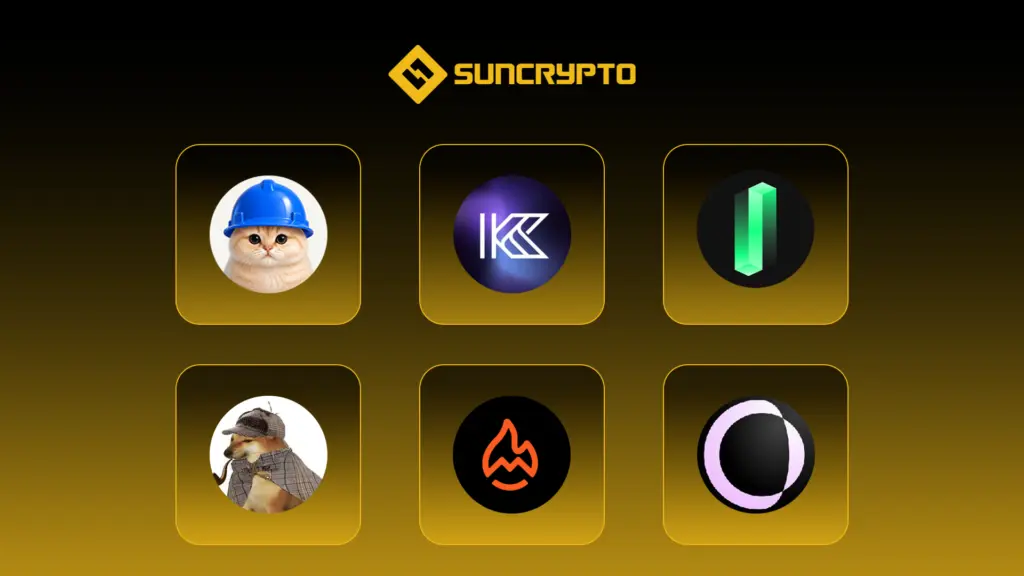
SunCrypto, one of the prominent FIU-compliant crypto exchanges in India, has announced a new spot listing on its Spot Market, adding six distinct tokens spanning Base and Robinhood Chain meme culture, real-world asset infrastructure, Ethereum ZK tooling, Sui DeFi, and RWA-backed stablecoins: Basecat (BASECAT/INR), KiiChain (KII/INR), Aligned (ALIGN/INR), Pipedog (PIPEDOG/INR), Magma Finance (MAGMA/INR), and Usual (USUAL/INR).
This latest addition gives Indian traders direct INR trading pairs across six of the most actively traded new listings of the past month. Here’s a closer look at each one.
Understanding this spot market expansion
Unlike SunCrypto’s leveraged futures rollouts, this new spot listing is focused entirely on the spot market, meaning traders are buying and holding the actual underlying tokens rather than derivative contracts.
The six assets do not share a theme, and that is worth stating plainly rather than glossing over. They fall into two clearly separate groups with very different risk profiles.
Group one: community meme tokens. Basecat and Pipedog have no stated utility, no roadmap and no development team in the conventional sense. Their value is driven entirely by community attention and trading momentum. Both have already produced extraordinary moves in short windows, and both have retraced significantly from their peaks.
Group two: infrastructure and DeFi. KiiChain, Aligned, Magma Finance and Usual are working projects with disclosed tokenomics, published vesting schedules, security audits and, in most cases, live products. They carry conventional project risk rather than pure attention risk.
All six are small-to-mid-cap tokens with concentrated liquidity. That combination produces sharp moves in both directions and makes limit orders and defined risk levels considerably more important than they would be for large-cap assets.
SunCrypto new spot listing: The 6 tokens
Basecat (BASECAT/INR)
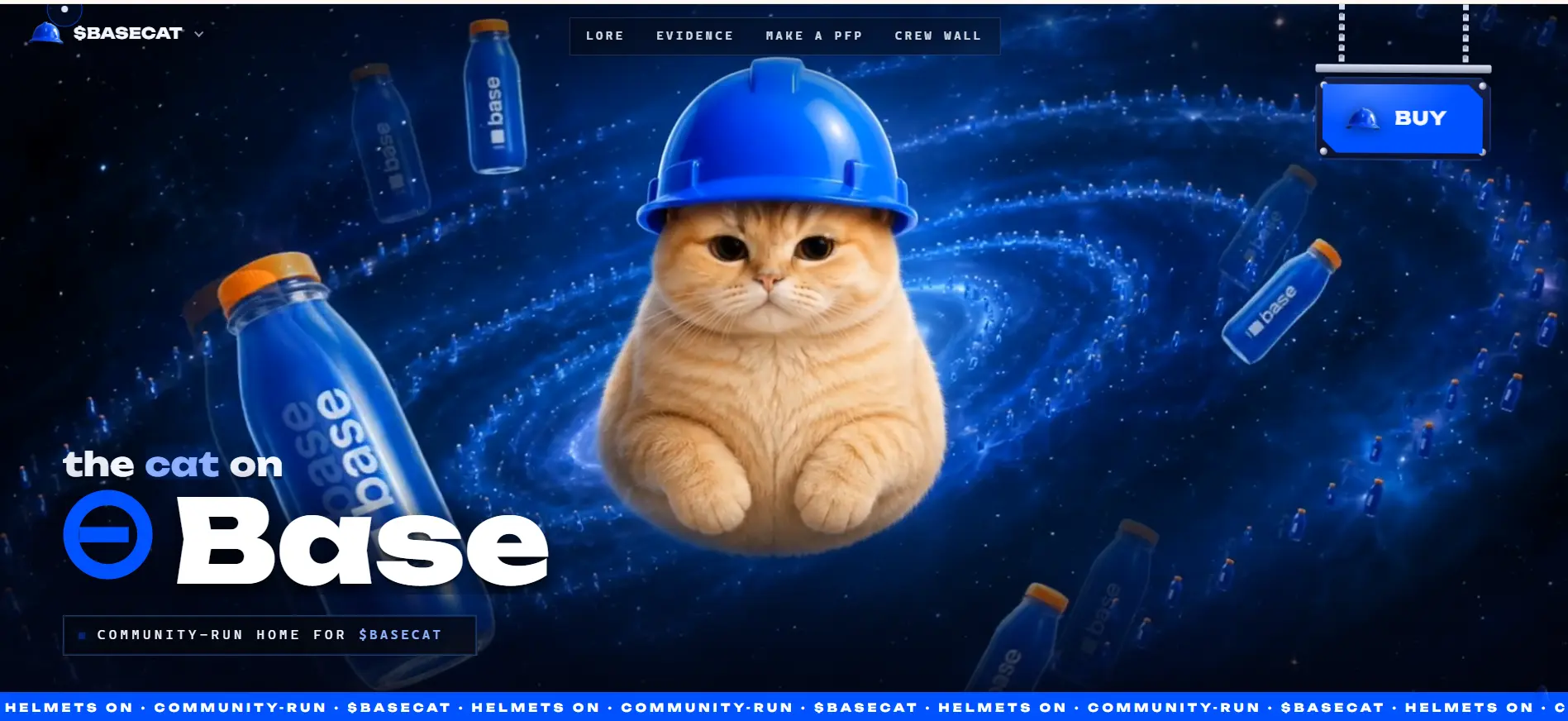
Basecat is a cat-themed meme coin on Base, Coinbase’s Ethereum Layer 2, built around a cartoon cat wearing a blue construction hard hat. The project makes no claims about utility or product development whatsoever. Its own community website describes it in plain terms as a meme token on Base with no invented utility, and the branding logic is deliberately simple: see the blue hardhat, see the cat, think Base.
Trading opened on Uniswap V4 on 15 August 2026. On 16 August the market value jumped from under $1 million to a peak above $20 million, and the token subsequently surged 2,034% in a single 24-hour period to a $17.2 million market cap, extending gains since launch beyond 12,000%. The rally accelerated after listings on Gate and Coinbase Wallet. Community discussion has linked the surge to a series of cat-themed posts from the official Base App account.
Two things traders must understand before entering. First, Basecat is not an official Base or Coinbase token. The community website itself states the project is not affiliated with Base, Coinbase, or even the token’s original deployer. Social posts about cats are not an endorsement. Second, liquidity has been reported at roughly $539,700 against a market cap in the $13–17 million range, which is extremely thin and creates severe slippage risk on larger orders. A community takeover was announced on 17 August, meaning direction now rests with holders rather than any founding team. BASECAT/INR is live through this new spot listing for traders who understand they are buying attention, not a product.
KiiChain (KII/INR)
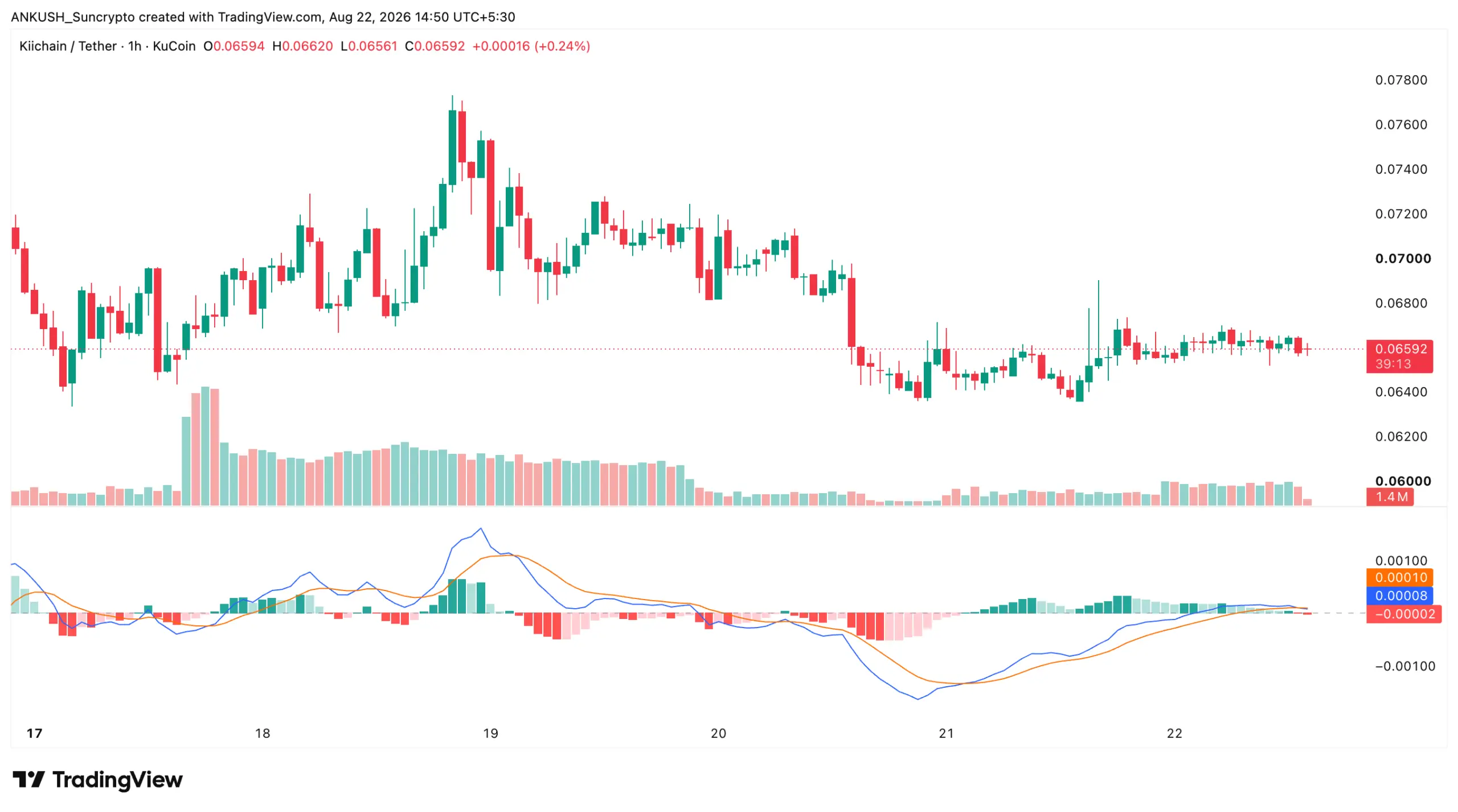
KiiChain is a Cosmos-based Layer 1 blockchain focused on financial infrastructure for emerging markets. Its core use cases are on-chain foreign exchange, stablecoin payments, cross-border settlement and real-world asset tokenisation, with compliance built into the protocol layer rather than added afterwards.
Technically, the Kii RWA Protocol standardises asset tokenisation using the T-REX (Token for Regulated EXchanges) standard through CosmWasm smart contracts, simultaneously mirrored to ERC tokens for Ethereum compatibility. The protocol defines on-chain KYC, KYB and asset verification natively. Kii has also built a unified API suite bundling centralised and decentralised functionality into a single integration point.
KiiChain’s tokenomics are among the most conservative in this batch. Maximum supply is fixed at 1.8 billion KII, with roughly 312 million currently circulating. More than 72% of supply (1,326,300,000 KII) sits across Community and Foundation allocations. Private investors hold 14.15% (254.7 million KII) — and every one of those tokens was locked at TGE, behind a twelve-month cliff followed by a 24-month unlock. The 219 million KII allocated to contributors carries an even longer schedule: the team allocation has a two-year cliff followed by two-year vesting, with contractors and advisors on a one-year cliff plus two-year vesting.
One disclosure traders should note: the project’s own sale documentation confirmed that at the time of its August token sale, KiiChain mainnet had not yet commenced public operation, running instead on testnet and private mainnet, with token delivery dependent on a successful mainnet launch. The issuer, KiiGlobal S.A.S., is a Colombian company and a wholly-owned subsidiary of El Salvador’s EMF Group. KII/INR is now tradable in rupees.
Aligned (ALIGN/INR)
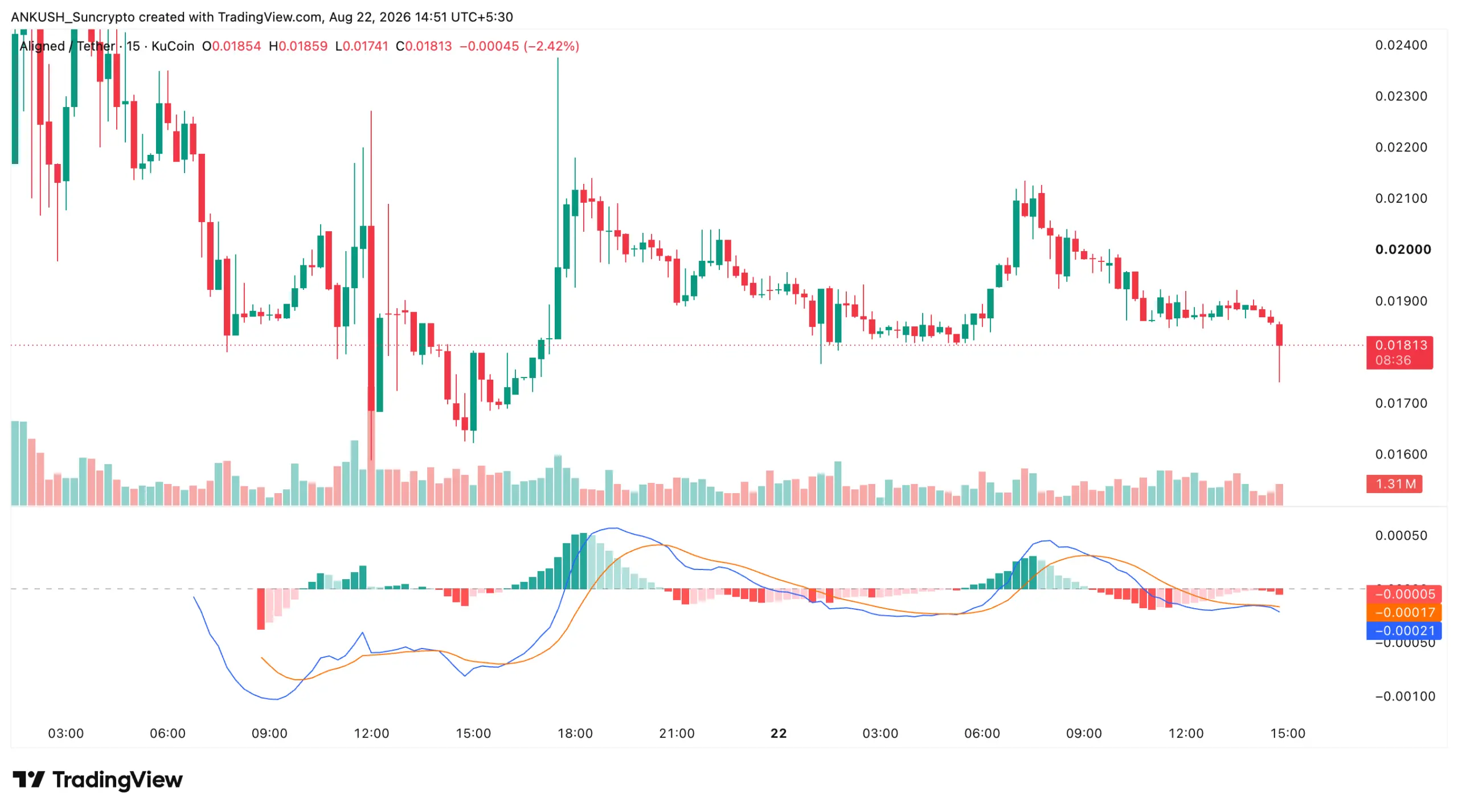
Aligned is a full-stack Ethereum infrastructure project that launched its native $ALIGN token on 21 August 2026 making it the newest token in this new spot listing by a wide margin. The project is headquartered in Montevideo, Uruguay.
The problem Aligned targets is integration friction. Less than one percent of the world’s assets are on-chain, and most of what has moved sits on Ethereum as stablecoins, tokenised treasuries and wrapped assets. A fintech going on-chain today typically signs with multiple vendors one for wallets, another for scalability solutions including rollups and proving systems then spends months wiring them together and keeping them synchronised. There is no standard way to ship a financial product on Ethereum. Aligned positions itself as the single integration layer that fintechs, institutions and enterprises use instead, spanning Proof Aggregation through Wallet-as-a-Service.
$ALIGN has a fixed supply of 10 billion tokens with roughly 16% circulating at launch. The project is explicit that ALIGN is a utility token not equity, not a share, not a claim on revenue or dividends, with no promised yield. The Genesis airdrop was distributed across several waves covering developers and researchers, Discord and Galxe communities, notable Ethereum and ZK contributors including Protocol Guild, L2BEAT, ZachXBT and ZK Podcast, and holders of ecosystem tokens including Starknet, Mina, zkSync, Polygon, Scroll, Taiko and EigenCloud.
As a token barely one day into price discovery at the time of writing, ALIGN carries the highest uncertainty of the six. Newly launched tokens typically take weeks for liquidity and price to settle, and airdrop recipients selling into early order books is a normal and expected dynamic. ALIGN/INR is now live.
Pipedog (PIPEDOG/INR)
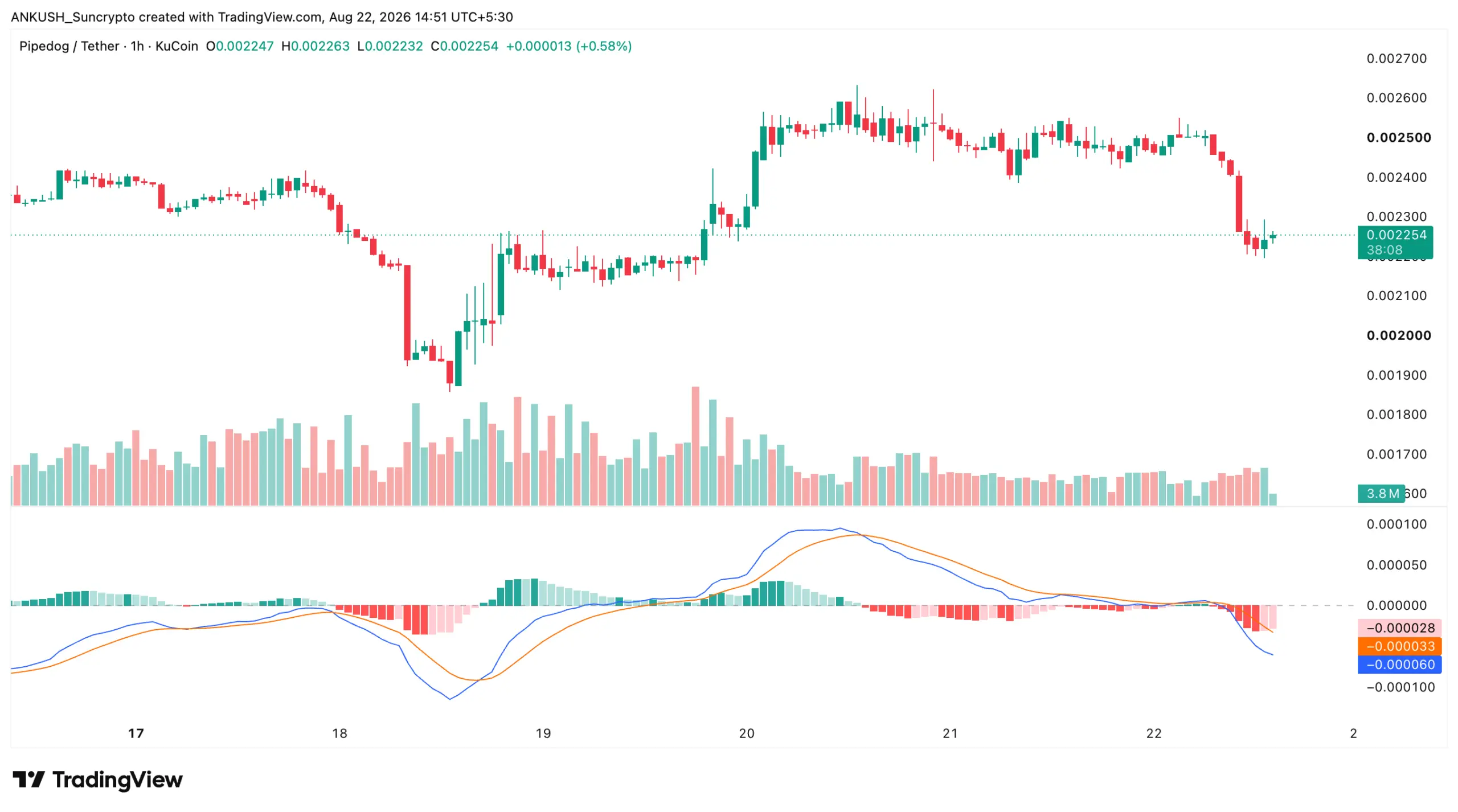
Pipedog is a dog-themed meme coin native to Robinhood Chain, the Arbitrum-based Ethereum Layer 2 that launched its public mainnet on 1 July 2026. Its stated concept ties internet meme culture to questions about how value attaches to digital symbols in the first place the idea being that belief, not utility, drives what a meme coin becomes worth.
The launch on 28 July 2026 was extraordinary. PIPEDOG climbed from roughly $400,000 in market capitalisation to more than $40 million in about an hour, surpassing $70 million within roughly four hours and peaking near $73.7 million an intraday gain exceeding 140x. Community discussion linked the deployment to an AI-agent narrative, with a figure associated with “Wock” reportedly stating an AI agent had deployed the token, later warning about copycats.
It has since cooled substantially. PIPEDOG currently trades near $0.0025 with a market cap around $31 million, ranked roughly #625, sitting about 53% below its all-time high of $0.005298 and around 33% above its all-time low of $0.001876. Circulating supply is approximately 12 billion tokens, and because that equals total supply, market cap and fully diluted valuation are identical there is no future unlock overhang. Over the past seven days it declined roughly 11.9%, underperforming both the broader market and the meme category. Its deepest venue is KuCoin, with additional liquidity on Gate, LBank, Bitrue and MEXC’s Meme+ zone. A permissionless launchpad, PipePad, now issues PIPEDOG-paired token markets on Robinhood Chain. PIPEDOG/INR is now available through this new spot listing.
Magma Finance (MAGMA/INR)
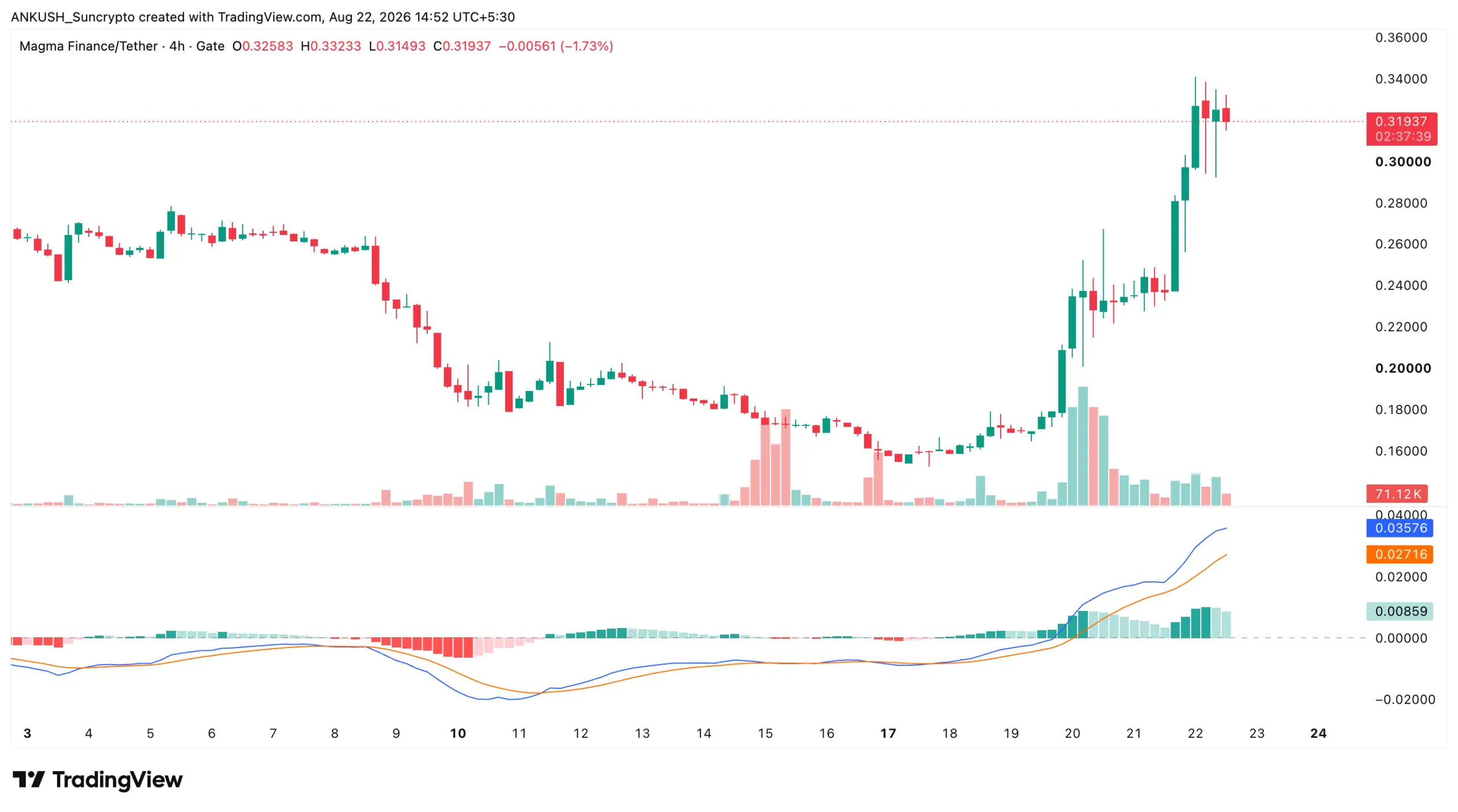
Magma Finance is a decentralised trading and liquidity hub on the Sui blockchain, with mainnet and token launched in December 2025. It operates as both a DEX and a liquidity layer, using an Adaptive Liquidity Market Maker (ALMM) that programmatically adjusts liquidity parameters, alongside concentrated liquidity that lets providers deploy capital within specific price ranges for higher fee efficiency.
Its governance uses the ve(3,3) model popularised by Velodrome and Aerodrome, where users lock tokens for governance rights, fee sharing and rebase rewards. Pool creation is permissionless anyone can open a market for any asset. The protocol also issues ioUSD, a decentralised stablecoin fully collateralised by liquid staking tokens with potential real-world asset integration over time. Revenue comes from ioUSD minting and redemption fees plus AMM trading fees.
On transparency, Magma sits in the middle of this batch. Its codebase has been audited by MoveBit and Zellic, two established firms, and governance is intended to transition to a DAO. However, individual team members are not prominently disclosed on the official website or through public search, and detailed funding information remains limited. The project describes itself as built by an experienced team without naming that team. Traders comfortable with anonymous-but-audited DeFi will weigh that differently to those who require named accountability. MAGMA/INR is now tradable in rupees.
Usual (USUAL/INR)
Usual is a decentralised stablecoin protocol built around a straightforward critique of the existing market: traditional stablecoin issuers capture the yield generated by user deposits and keep it. Usual issues USD0, a stablecoin fully backed by real-world assets such as US Treasury Bills, and routes 100% of the value generated by that underlying collateral back to token holders through the USUAL token. The design is explicitly bankruptcy-remote, limiting exposure to commercial bank deposits.
Usual is the most institutionally backed name in this batch, appearing in the portfolios of Coinbase Ventures, YZi Labs (formerly Binance Labs) and Galaxy Digital. It has also been recognised in third-party stablecoin infrastructure research.
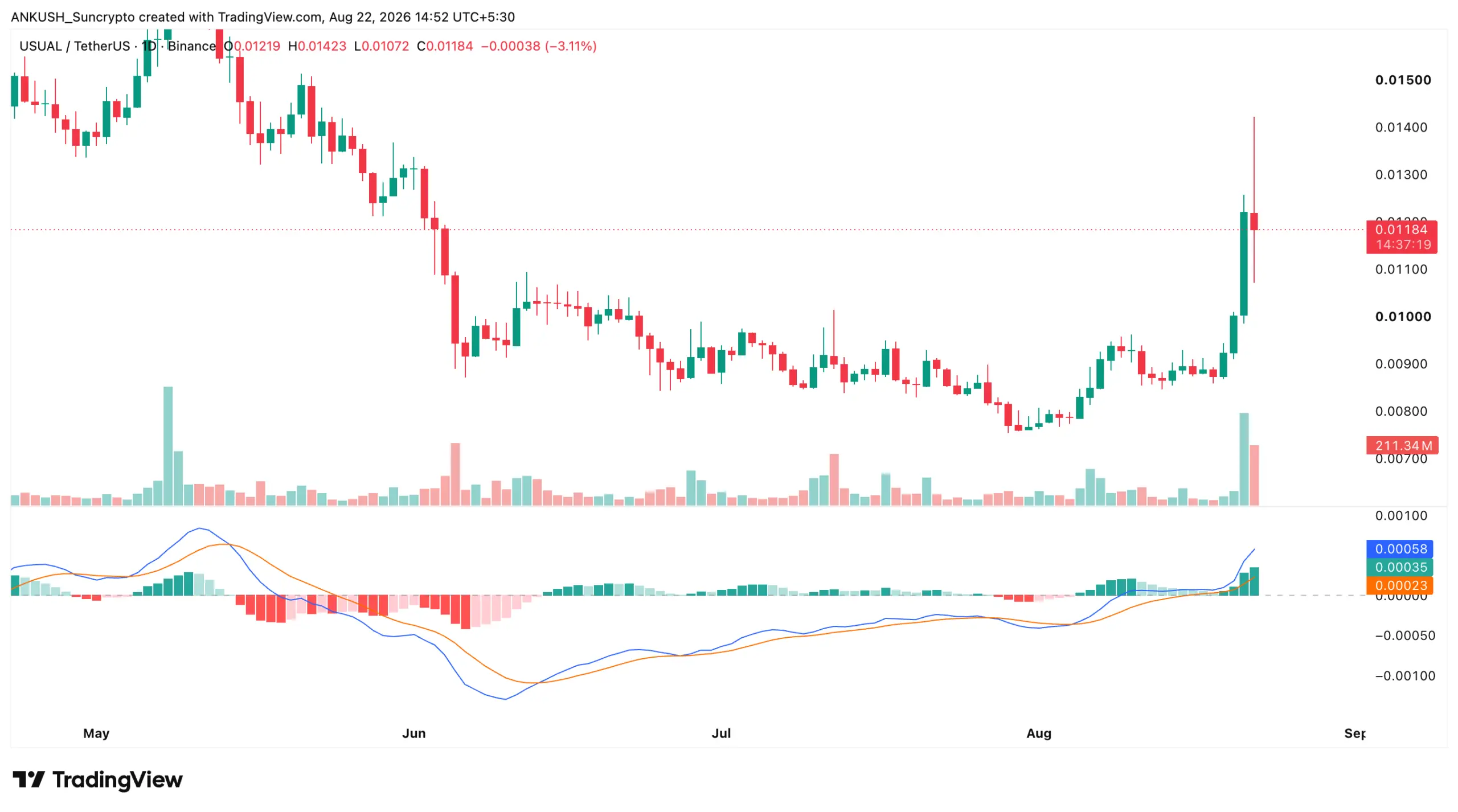
It is also the most beaten-down. USUAL currently trades near $0.0102 with a market cap around $19.3 million on a circulating supply of roughly 1.9 billion tokens the smallest market cap in this batch despite arguably the strongest institutional backing. Recent momentum has turned positive, up roughly 11.7% in 24 hours and 16.5% over seven days. For traders, the question is whether a heavily discounted RWA-stablecoin protocol with real Treasury backing represents value or a value trap. That depends on USD0 supply growth and fee generation, which are verifiable on-chain rather than matters of opinion. USUAL/INR is now live.
How to trade in cryptocurrency?
Phase 1: Account Setup
- Download the App: Install the SunCrypto app from the Google Play Store or the Apple App Store.
- Register & Verify: Create an account using your mobile number and complete your KYC verification for regulatory compliance in India.
- Link Bank Account: Add your banking details inside the application.
Phase 2: Funding Your Account
- Deposit INR: Add Indian Rupees (INR) to your SunCrypto wallet via UPI, IMPS, or Bank Transfer (RTGS/NEFT). This INR balance acts as your trading capital.
Phase 3: Placing a Spot Trade
- Choose a Market: Navigate to the Spot or Market section of the app and select your desired trading pair (e.g., BASECAT/INR, KII/INR, ALIGN/INR, PIPEDOG/INR, MAGMA/INR, USUAL/INR, or an altcoin of your choice).
- Buy or Sell: Tap the BUY or SELL button based on your preference.
- Select Order Type: Choose either a Market Order (to buy/sell instantly at the current best price) or a Limit Order (to set a specific price target for your transaction). For thin-liquidity tokens like the two meme assets in this batch, limit orders are strongly recommended to avoid unfavourable fills.
- Enter Amount & Confirm: Type in the amount of INR you wish to spend or the amount of tokens you wish to trade. Tap PAY and confirm the transaction using your MPIN. Your newly purchased asset or INR will be credited instantly to your portfolio.
Why does this matter for Indian traders?
A key advantage of this new spot listing is native INR trading pairs across all six tokens. Rather than needing to first convert INR to USDT and then trade against a USDT pair, a process that often involves extra fees and, on some platforms, reliance on P2P desks, Indian traders can buy and sell BASECAT, KII, ALIGN, PIPEDOG, MAGMA and USUAL directly against the rupee. This keeps the entire transaction on a single, KYC-compliant, regulated platform, simplifying both execution and tax record-keeping.
That last point carries real weight given India’s VDA framework. Gains from transferring virtual digital assets attract a flat 30% tax plus applicable surcharge and cess, with a 1% TDS on transfers above the applicable threshold, and all transactions must be reported in Schedule VDA of your income tax return. Trading through a single FIU-compliant platform with INR pairs produces a cleaner, more auditable record than fragmenting activity across multiple venues and conversion steps.
There is a second benefit that applies with unusual force to this particular batch. Four of these six tokens are native to newer ecosystems: Base, Robinhood Chain and Sui, where contract-address confusion and lookalike tokens are a documented and active risk. Both meme tokens here have already attracted copycat warnings from their own communities. Accessing them through a regulated Indian platform removes the need to verify contract addresses independently before every transaction, which is a genuine safety benefit rather than a convenience one.
Conclusion
This new spot listing is the most varied batch SunCrypto has added in recent months, spanning pure meme speculation on Base and Robinhood Chain through to RWA infrastructure, Ethereum ZK tooling, Sui DeFi and Treasury-backed stablecoins.
The risk is emphatically not uniform, and traders should size positions accordingly. Basecat and Pipedog have no utility by design Basecat’s own community materials state as much and both trade on thin liquidity where a single large order moves price substantially. KiiChain, Aligned, Magma Finance and Usual are working projects, but each carries its own qualifier: KiiChain’s mainnet was still pre-launch at its token sale, Aligned is one day into price discovery, Magma has audits but an undisclosed team, and Usual trades at a heavy discount to its funding pedigree.
Position sizing, limit orders and defined exit levels matter more with this batch than with established large caps. Every token in this new spot listing is now tradable in INR through a single regulated platform.
Disclaimer: Crypto products and NFTs are unregulated and can be highly risky. There may be no regulatory recourse for any loss from such transactions. Nothing in this article constitutes financial, investment, or tax advice.