
Silver price fell about 6% on Wednesday, 14 October 2026, after US inflation data came in hotter than expected. Spot silver price slipped to around $55.6 an ounce, its weakest level in about ten weeks.
Silver price falls 6% in a day: what happened on 14 October
Silver price dropped roughly 6% and gold slid below the $4,100 mark. The reason was the US inflation report, which showed prices rising at 3.7% against the 3.6% that markets had expected.
The gap looks small, but it was enough to waver the market. Silver price is now down about 12.6% over the past month. It is also far below its all time high of about $121.64, which it touched in January 2026. In simple words, silver has lost more than half of its peak value in nine months.
Gold fell by roughly 1.3%. Silver dropped about four times as much, which says a lot about how this metal behaves when the market turns uneasy
How Silver price reacted after the CPI data news
Silver price was already under some pressure before the data came out. It opened near $59.42 an ounce on Wednesday and slipped towards $58.72 in the morning, its weakest level of the week, as high US fuel prices kept inflation worries alive.
Then the CPI report arrived, and the selling got much heavier.
- Sharp fall after the release. As soon as the higher than expected number was out, silver and gold both dropped in early US trading.
- Deeper losses through the day. By the afternoon, spot silver was trading around $55.4, down about $3.48 on the day. By late US trading the loss was close to 6%.
- A 10-week low. The fall took silver to its lowest level since August 2026.
- Silver-linked stocks and funds also fell. The SLV silver fund lost about 6.1%, and Pan American Silver, a large silver miner, dropped nearly 5%. Gold miners fell about 4.4%.
- Gold fell less. Gold slipped below $4,100 but lost only around 1.3%, so silver clearly took the bigger hit.
The move shows how quickly the market reacts to inflation news. One data point changed the Fed outlook, and silver was repriced within hours.
By early Thursday, silver had bounced slightly to around $55.8. Kitco described such moves in metals as short-term relief, not a confirmed change in direction, so the next inflation data and the Fed meeting remain the real tests.
Why higher interest rate fears push silver down
Silver pays no interest, but safe investments like US government bonds do. For example, if a bond pays 5% a year and silver pays nothing, many investors will choose the bond. The income you give up by holding silver is called the opportunity cost.
On 14 October, three things pushed silver price down at the same time:
- Bond yields went up. A yield is the interest you earn on a bond. When traders expect rate hikes, yields rise and money moves from silver price to bonds.
- The US dollar got stronger. Silver is priced in dollars, so a stronger dollar makes it costlier for buyers in other countries. Demand falls.
- Oil stayed expensive. Costly oil keeps inflation high, and high inflation makes more rate hikes likely.
In short: hot inflation led to more rate-hike fears, which meant higher yields and a stronger dollar, and that meant less demand for silver.
Why Silver price fell faster than Gold
Both metals are hurt by higher rates, but silver prices usually swings much harder. There are a few reasons.
- Two roles. Gold is mainly a store of value. Silver is both a precious metal and an industrial metal used in solar panels and electronics, so worries about the economy hit it from two sides.
- A smaller market. Silver trades in a much smaller market than gold, so large selling can move the price faster.
- Gold is seen as a safe place for money. When there is tension in the Gulf region, some investors buy gold to stay safe, even when prices are falling. Silver gets less of this support, so it falls more.
This is why a 1.3% fall in gold came with a 6% fall in silver price. Traders often describe silver as gold’s more volatile cousin, and 14 October was a good example.
Silver price analysis: 1-Day timeframe
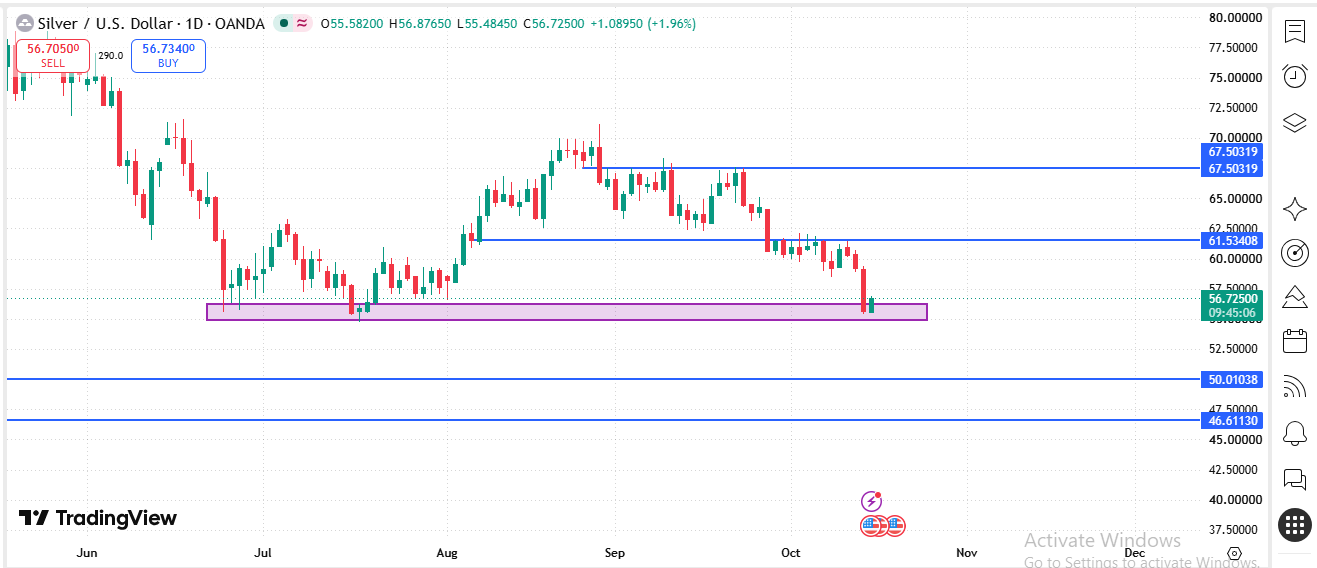
Silver (XAG/USD) was trading around $56.73, up about 1.96% in the last 24 hours. Since late August, silver price has dropped around 20%. After the CPI data, it fell about 5.9% in a single session and slid to its major support area near $55. Buyers stepped in at this level, and the price bounced back.
Source: Silver(XAG/USD) price over 1-D timeframe by TradingView
Silver price has defended the $55 support for now, which is why the price moved up. The first hurdle for buyers is the resistance near $61.5. If silver moves above this level, it can extend to the next resistance level of $67.50.
Conversely, if sellers break below the $55 support, the price can drop to the immediate support level of $50. A daily close below $50 would raise the chances of further selling, and the next support after that is around $46.6.
Conclusion
Silver price 6% fall on 14 October came from one thing: US inflation data that was hotter than expected. It raised fears that the Federal Reserve may raise interest rates again, which pushed yields and the dollar up and silver down. The price has now bounced from the $55 support, but the move is not settled yet. Silver’s next direction depends on whether $55 keeps holding and on what the Fed does at its 27-28 October meeting.
Why did silver price fall more than gold?
Silver is both an investment metal and an industrial metal, and its market is smaller than gold’s, so its price swings more. On the same day, gold fell only about 1.3% while silver fell around 6%. Gold also gets some safe-haven buying during global tensions, which gives it extra support.
What are the key levels to watch for silver now?
On the daily chart, $55 is the major support. If it breaks, the next supports are around $50 and $46.6. On the upside, resistance is near $61.5, followed by $67.5. These levels can change as the price moves, and this is not investment advice.
What is CPI, and why does it affect silver price?
CPI (Consumer Price Index) measures how much the prices of everyday goods and services have risen. When CPI is higher than expected, traders expect the Fed to raise interest rates. Higher rates make silver less attractive, because silver pays no interest.