

The Asian stock market is going through one of its most turbulent stretches in years, with repeated multi-percent single-day plunges hitting Tokyo, Seoul, and Taipei over the past several weeks. What began as an AI-and-semiconductor-fueled rally has flipped into a violent unwind, wiping out hundreds of billions of dollars in market value across the region in a matter of sessions. Here’s a detailed look at what’s driving the current Asian stock market turmoil, which countries are being hit hardest, and what analysts are watching next.
What’s happening in the Asian stock market right now?
On July 17, 2026, the Asian stock market extended its recent losing streak as chip-related shares came under fresh pressure. Tokyo’s Nikkei 225 sank more than 5% to around 63,357, trading near its lowest levels in over a month, with chip-equipment maker Tokyo Electron sinking 9.3%, chip-testing equipment maker Advantest tumbling 10.5%, and SoftBank Group shedding over 11%. Taiwan’s Taiex fell nearly 6%, a day after TSMC, the world’s largest contract chipmaker, announced plans to spend an additional $100 billion building fabrication plants in the US. South Korean markets were closed that day for a public holiday, but the broader region’s tech-heavy indices continued sliding in sympathy.
This followed an already brutal stretch just days earlier. On July 16, 2026, South Korea’s Kospi index fell 6.4%, led by sharp drops in SK Hynix and Samsung Electronics, while Japan’s Nikkei 225 declined nearly 3% and Taiwan’s Kioxia-linked chip names skidded double digits. A day before that, the Kospi had already sunk 7.9% to 7,648.09, with memory chipmaker SK Hynix losing 14.6% and Samsung Electronics tumbling 9.1% in a single session.
Zooming out further, the scale of the damage across the Asian stock market this cycle has been extraordinary: South Korea’s Kospi more than doubled in the first six months of 2026 on the back of the AI and memory chip boom, only to lose roughly a third of its value since hitting a record high in June, one of the sharpest boom-to-bust reversals seen in a major index in years.
Why is the Asian stock market falling so sharply?
Several interlinked forces are driving the current Asian stock market rout:
- An AI valuation reckoning: After explosive gains fueled by AI infrastructure demand throughout 2026, investors are increasingly questioning whether the lofty valuations behind chip and AI-linked stocks can be sustained. The US-based Philadelphia Semiconductor Index has lost roughly 19% from its June peak, and that repricing has spilled directly into the Asian stock market, given how central companies like Samsung, SK Hynix, TSMC, and SoftBank are to the same global AI supply chain.
- Concentrated exposure to a handful of mega-cap chip stocks: Much of the Asian stock market’s recent volatility traces back to just how heavily weighted regional indices are toward semiconductor names. In South Korea, Samsung Electronics and SK Hynix alone carry outsized influence over the entire Kospi; in Japan, SoftBank, Tokyo Electron, Advantest, and Kioxia play a similarly dominant role on the Nikkei. When these stocks move sharply, they drag the whole index with them.
- Leveraged ETF amplification: As covered in earlier Kospi-specific coverage, the explosive popularity of leveraged single-stock ETFs tracking Samsung and SK Hynix has amplified moves in both directions, forcing South Korean regulators to halt new leveraged product listings and triple minimum deposit requirements in an effort to cool the mechanism.
- AI capex jitters from major tech names: Sentiment took a further hit after Alphabet delayed the release of its flagship Gemini 3.5 Pro AI model, stoking fresh concern over the pace and payoff of AI-related capital spending even as chipmakers themselves have posted strong quarterly earnings and raised revenue guidance, creating a confusing mix of strong fundamentals against fading investor patience.
- Profit-taking after an extraordinary run: Some strategists frame the move less as a fundamental breakdown and more as overdue profit-taking, noting that investors may be locking in gains from richly valued semiconductor names and reallocating capital toward sectors offering steadier earnings visibility after an unusually strong first half of the year.
Country-by-Country Breakdown
South Korea
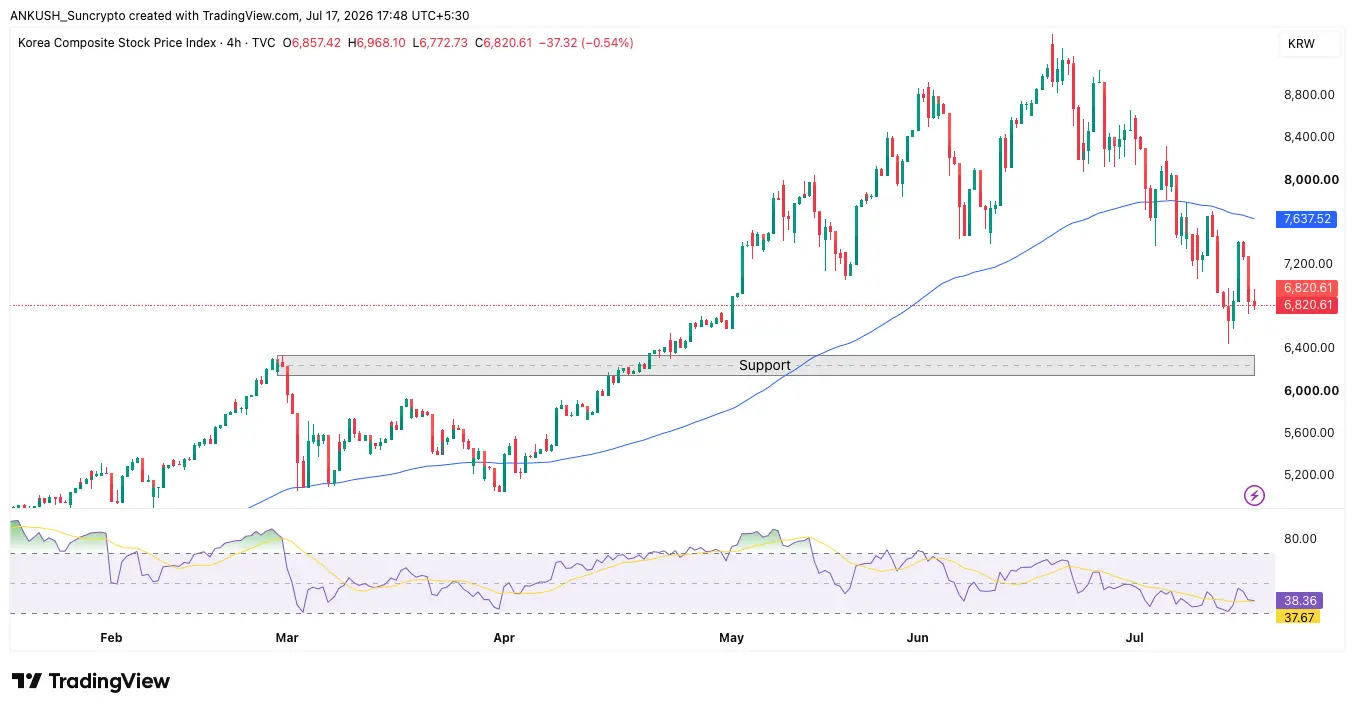
The hardest-hit market in this cycle. The Kospi has swung from being one of the world’s best-performing major indices in the first half of 2026 to one of its most volatile, with repeated single-day drops in the 6-8% range, multiple circuit-breaker and “sidecar” trading halts, and sharp declines concentrated in SK Hynix and Samsung Electronics.
What makes South Korea’s case especially dramatic is the sheer speed of the reversal: the Kospi more than doubled in the first six months of 2026, driven almost entirely by surging memory-chip demand tied to the global AI buildout, only to lose roughly a third of its value in the weeks since hitting a record high in June. This isn’t just a market cooling off; it’s one of the sharpest boom-to-bust reversals seen in a major index in years.
Compounding the volatility, the explosive popularity of leveraged single-stock ETFs tracking Samsung and SK Hynix has amplified every swing in both directions, forcing regulators to step in with emergency measures, including halting new leveraged product listings and tripling minimum deposit requirements, in an effort to cool the mechanism driving so much of the instability.
Japan
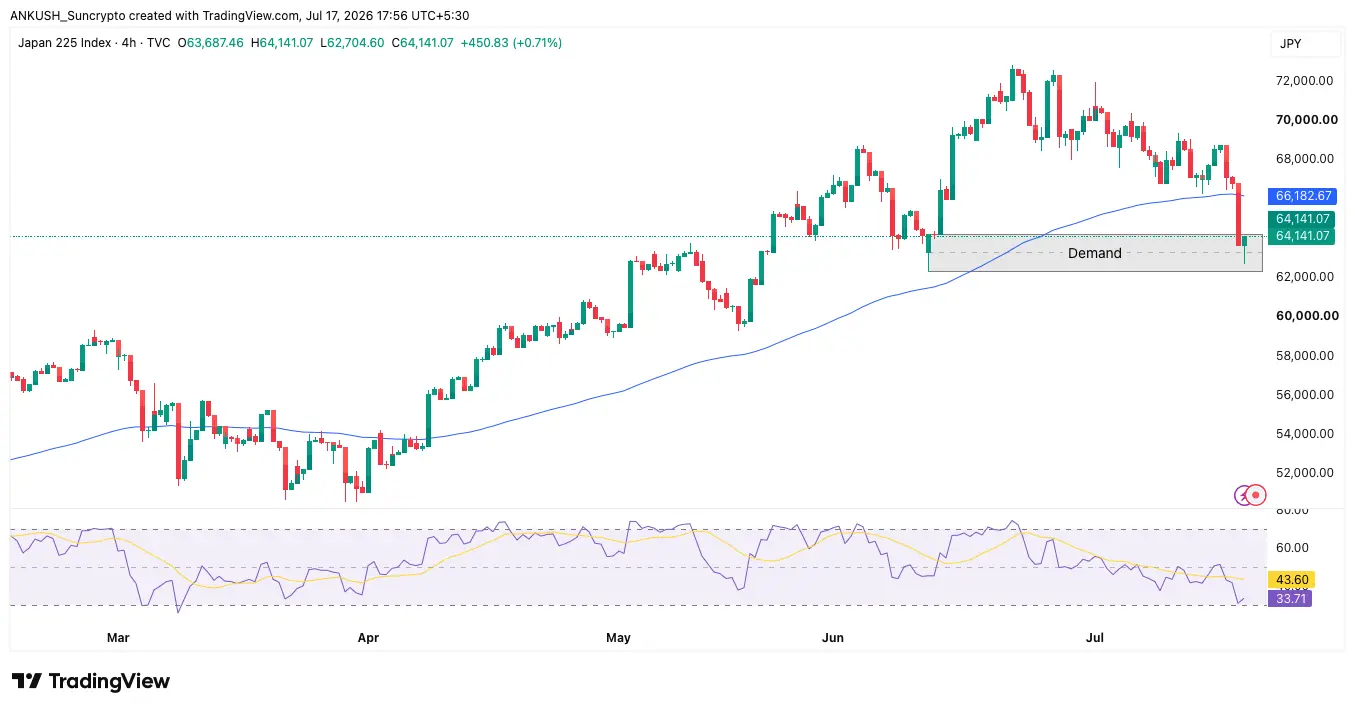
The Nikkei 225 has repeatedly posted 3-5%+ single-day declines, with chip-equipment names like Tokyo Electron and Advantest, along with SoftBank Group and memory-chip maker Kioxia, among the hardest-hit stocks. Kioxia alone has lost more than half its value since becoming Japan’s biggest company by market capitalization just weeks earlier, a striking fall given how briefly it held that title.
What’s notable about Japan’s version of this sell-off is how broad it’s been across the semiconductor supply chain, not just chipmakers themselves. Equipment makers like Tokyo Electron and Advantest, which supply the machinery used to manufacture chips rather than the chips directly, have been hit nearly as hard as the memory-chip producers, suggesting investors are repricing the entire AI infrastructure buildout rather than punishing a single company’s specific news.
SoftBank’s heavy exposure to AI investments through its various holdings has also made it a lightning rod for sentiment swings, with its stock acting almost as a barometer for how the market feels about AI valuations on any given day.
Taiwan
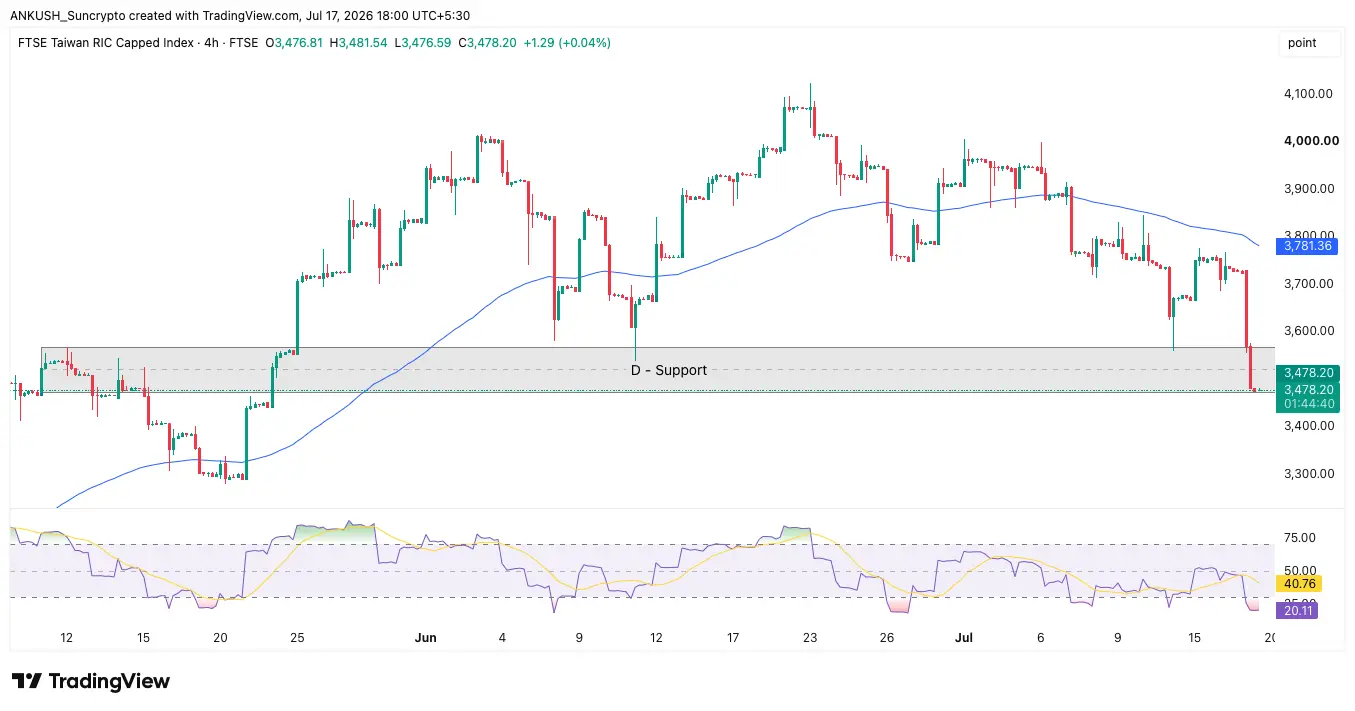
The Taiex has been highly sensitive to TSMC-specific news, falling sharply even as TSMC itself posted record quarterly earnings and raised its 2026 revenue growth guidance to above 40%, illustrating how disconnected some of the current Asian stock market selling has become from individual company fundamentals.
This disconnect is one of the more curious aspects of the broader rout: TSMC, the world’s largest contract chipmaker and arguably the single most important company in the global AI hardware supply chain, delivered genuinely strong results and an optimistic outlook, yet its stock and the wider Taiex still dropped in sympathy with regional weakness.
Part of the explanation lies in TSMC’s own announcement of an additional $100 billion in US fabrication investment, which some investors read as a signal of elevated near-term capital expenditure rather than pure growth, meaning even good news carried a caveat that gave profit-takers a reason to sell into strength.
Hong Kong and China
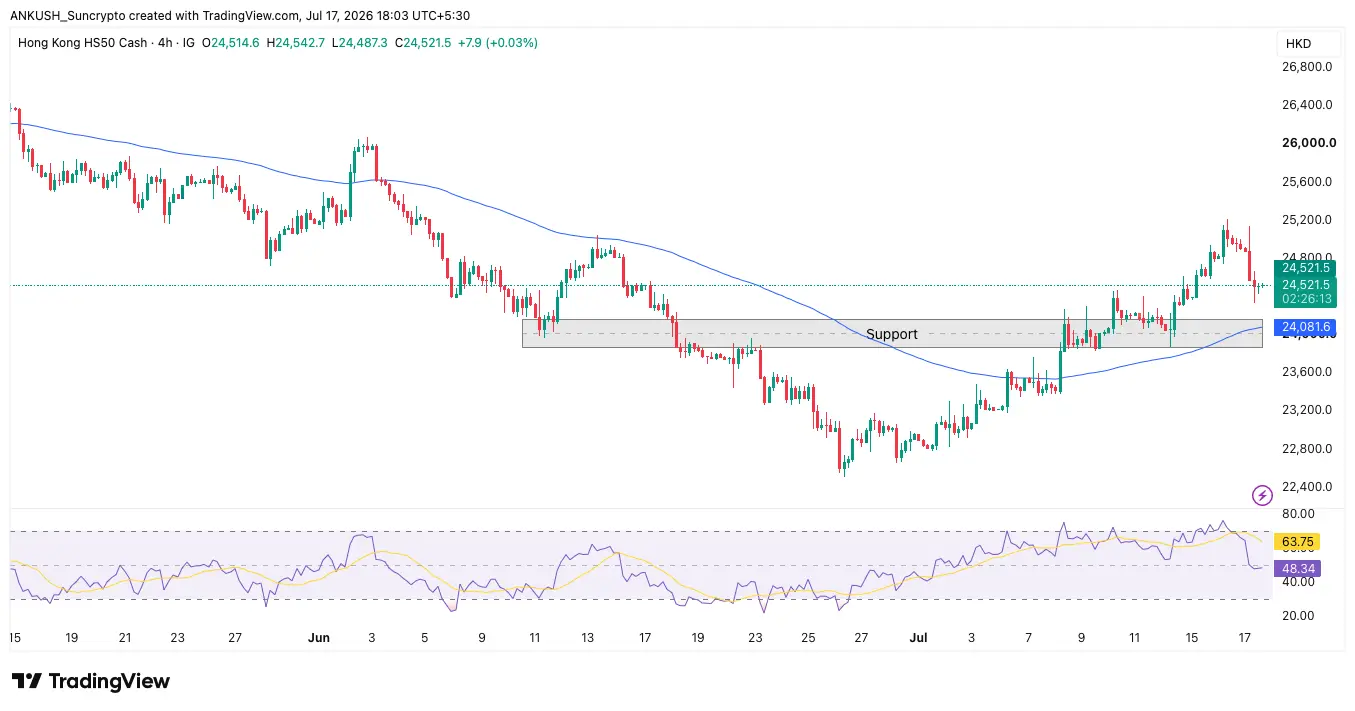
These markets have been comparatively more resilient during the latest leg of the sell-off, with the Hang Seng and Shanghai Composite posting smaller moves than their Japanese, Korean, and Taiwanese counterparts and even posting gains on some days when Alibaba and Baidu rallied on AI-related partnership news.
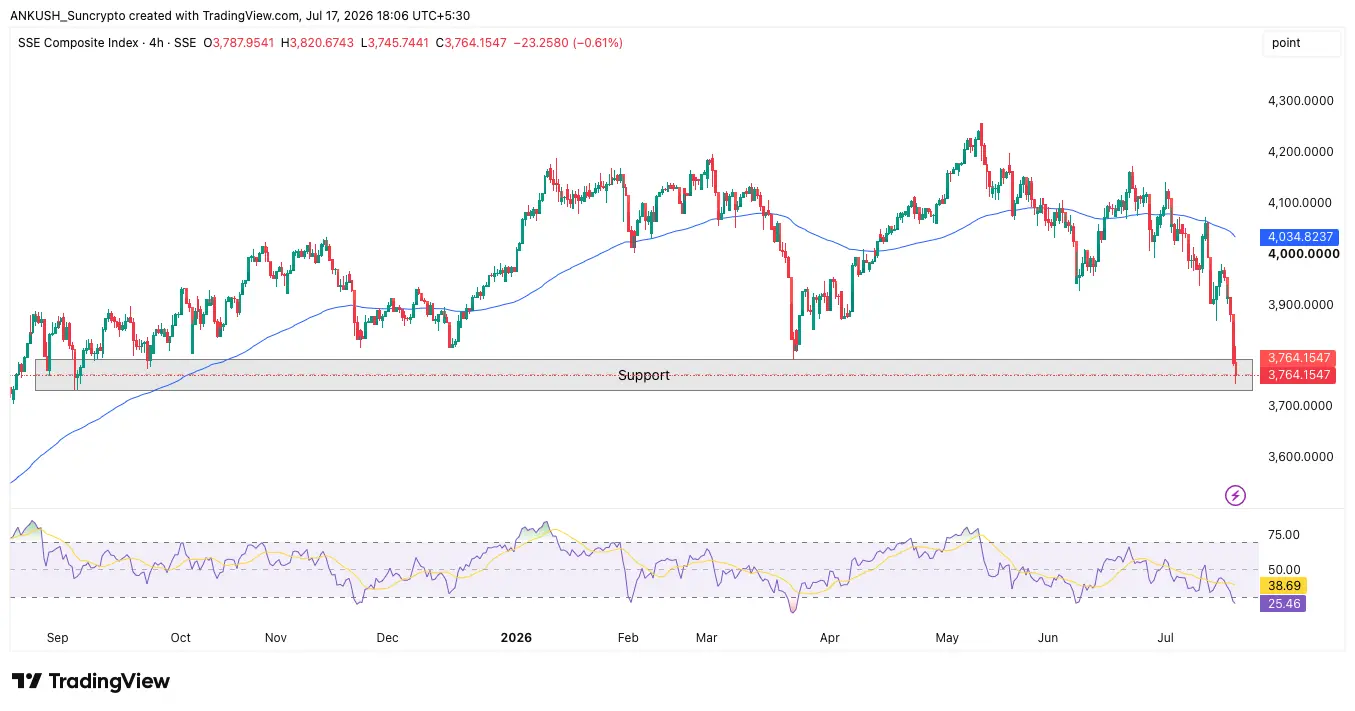
This relative resilience is largely structural: unlike the Kospi, Nikkei, and Taiex, which are all heavily concentrated in semiconductor manufacturing and equipment names, the Hang Seng and Shanghai Composite carry more diversified exposure across sectors like real estate, consumer goods, and domestic technology platforms.
That diversification has acted as a partial buffer against the chip-specific repricing hitting Northeast Asia. In fact, positive company-specific news such as Alibaba and Baidu’s AI tool partnerships with Apple has been enough to lift these markets on days when the rest of the region was falling, underscoring how much of the current turmoil is a narrow, semiconductor-sector story rather than a broad regional or economic crisis.
Australia
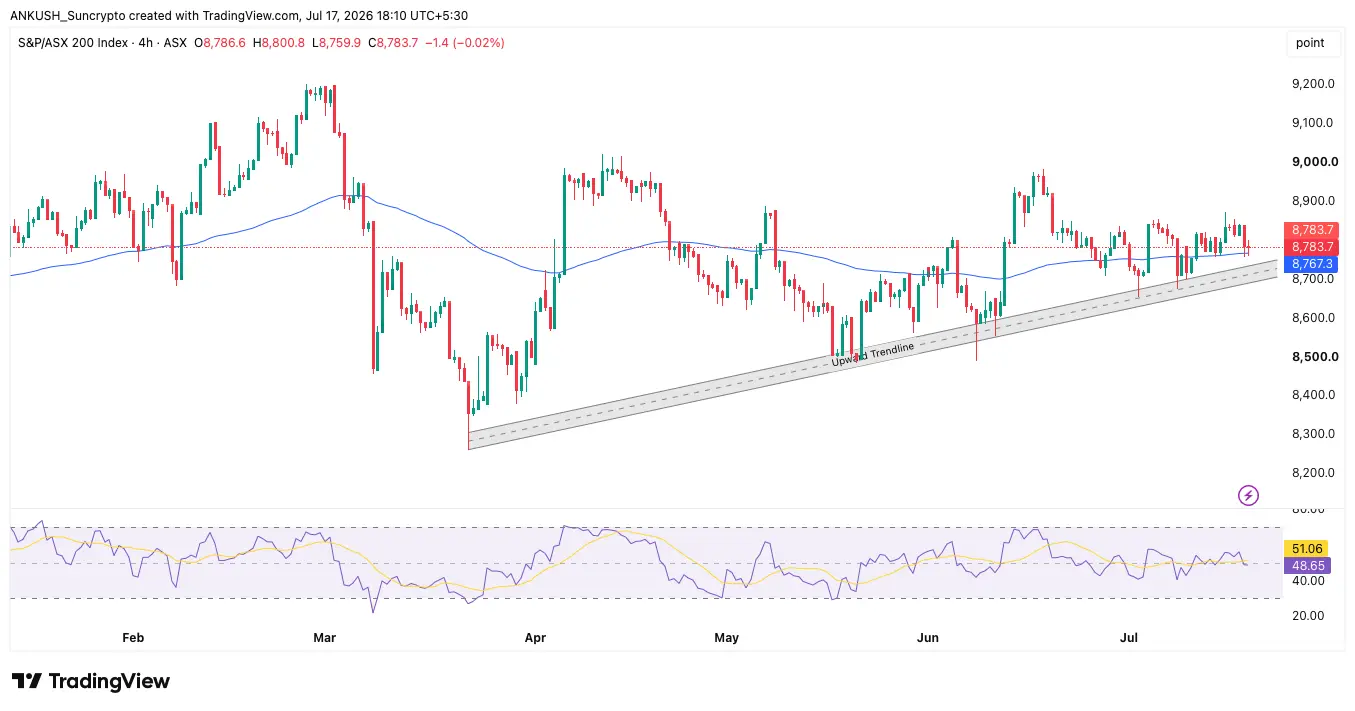
The ASX 200 has generally seen milder swings than the more tech-concentrated Northeast Asian markets, reflecting its more diversified sector mix. Australia’s benchmark index carries substantially less weight in semiconductor and AI infrastructure names compared to Japan, South Korea, or Taiwan and instead leans more heavily on sectors like financials, mining, and resources.
This structural difference has largely insulated the ASX 200 from the sharpest shocks hitting the region’s chip-heavy indices, even as global risk sentiment has occasionally dragged it lower alongside broader market weakness.
Australia’s experience in this cycle serves as something of a natural control case; it demonstrates that the current sell-off is fundamentally a sector-specific unwind centered on AI and semiconductor valuations, rather than a systemic collapse in Asia-Pacific equities as a whole. Markets with less exposure to that specific narrative have simply not experienced anywhere near the same degree of turbulence.
Is the AI boom over for the Asian stock market?
This is the question increasingly being asked by analysts covering the region. The current Asian stock market turbulence represents a notable reversal for markets like South Korea, where the Kospi had been one of the year’s top-performing major indices thanks to surging memory-chip demand for AI servers and applications.
Whether this marks the end of the AI-driven rally or simply a sharp, healthy correction within a longer bull run remains hotly debated bulls point to still-strong chipmaker earnings and raised guidance, while bears point to stretched valuations, the speed of the reversal, and the disproportionate role leveraged products have played in amplifying the swings.
What investors are watching next?
Analysts tracking the Asian stock market are focused on several key signals in the days and weeks ahead:
- Whether chipmaker earnings can stabilize sentiment, with several major semiconductor companies reporting quarterly results in the coming weeks, strong guidance could help calm nerves, while any disappointment could accelerate the sell-off.
- Regulatory responses to leveraged products, particularly in South Korea, where new deposit requirements and listing halts are set to phase in through August, potentially reducing (or, in the short term, exacerbating) volatility as positions unwind.
- Read-through from Wall Street moves in US tech and AI-linked names, particularly Nvidia and other chip bellwethers, have consistently set the tone for the following day’s Asian trading session.
- Broader macro conditions including oil prices tied to ongoing geopolitical tensions and signals from central banks on interest rate policy, both of which continue to influence risk appetite across the region.
Conclusion
The current Asian stock market sell-off is best understood as a sharp, AI-valuation-driven correction concentrated in a handful of dominant semiconductor and technology names rather than a broad-based economic crisis. Markets across Japan, South Korea, and Taiwan all heavily weighted toward chip stocks have borne the brunt of the damage, while Hong Kong, China, and Australia have been comparatively more insulated. Whether this proves to be a temporary, healthy repricing or the start of a more sustained downturn will likely hinge on chipmaker earnings, regulatory responses to leveraged trading products, and the broader trajectory of the global AI investment narrative.
Disclaimer: This article is for informational and educational purposes only and does not constitute financial or investment advice.
Why do stock market crashes happen?
Stock market crashes typically occur when a rapid, sentiment-driven repricing follows a period of overvaluation, often triggered by concerns over corporate earnings, interest rates, geopolitical shocks, or (as in the current Asian sell-off) doubts about whether a hyped sector’s growth can justify its valuations. Leveraged trading products can amplify these moves, turning an ordinary correction into a sharper, faster decline.
Which Asian countries are most affected by the stock market crash?
South Korea (Kospi) has been hit hardest, with repeated single-day drops of 6-8%, followed by Japan (Nikkei) and Taiwan (Taiex), both heavily weighted toward semiconductor and chip-equipment companies. Hong Kong, China, and Australia have been comparatively resilient, since their markets carry less direct exposure to AI hardware stocks.
What’s the difference between a stock market crash and a market correction?
A market correction is generally defined as a decline of 10% or more from a recent high, while a crash refers to a much sharper, faster drop often several percentage points in a single session typically driven by panic selling rather than a gradual reassessment. Corrections are common and often considered a healthy part of market cycles; crashes are rarer and tend to trigger circuit breakers and broader investor concern.
How long do stock market crashes typically take to recover from?
Recovery timelines vary widely depending on the cause. Sentiment-driven crashes tied to a specific sector or valuation concern (rather than a broader economic crisis) have historically recovered faster, sometimes within months, while crashes linked to deeper structural or economic problems can take years. Analysts generally watch corporate earnings, policy responses, and whether the original trigger resolves as key signals for recovery speed.
How much money has been lost in the Asian stock market crash?
Estimates vary by day and source, but cumulative losses across multiple sessions in July 2026 have run into the hundreds of billions of dollars, with some single-session estimates for the region approaching or exceeding $1 trillion when Korea, Japan, China, Hong Kong, Taiwan, and Australia are all counted together.
Great explanation of how volatility across Asian markets can influence investor sentiment. It’s also interesting to see how movements in regional markets often impact the ASX 200, especially during periods of global uncertainty. Thanks for sharing such an informative analysis.