

India stands at the forefront of an economic transformation, with the Reserve Bank of India (RBI) spearheading efforts to integrate a Central Bank Digital Currency (CBDC), the digital rupee, into its financial ecosystem. Outgoing RBI Governor Shaktikanta Das, during his farewell speech on December 10, shared a vision of a CBDC-driven future that could permanently reshape India’s economy.
A Visionary Path for the Digital Rupee
Shaktikanta Das emphasized the importance of technological innovation during his tenure, which included initiatives like establishing the RBI Innovation Hub and a regulatory sandbox for fintech advancements. India’s CBDC launched as a pilot project, positions the country as a global pioneer among central banks.
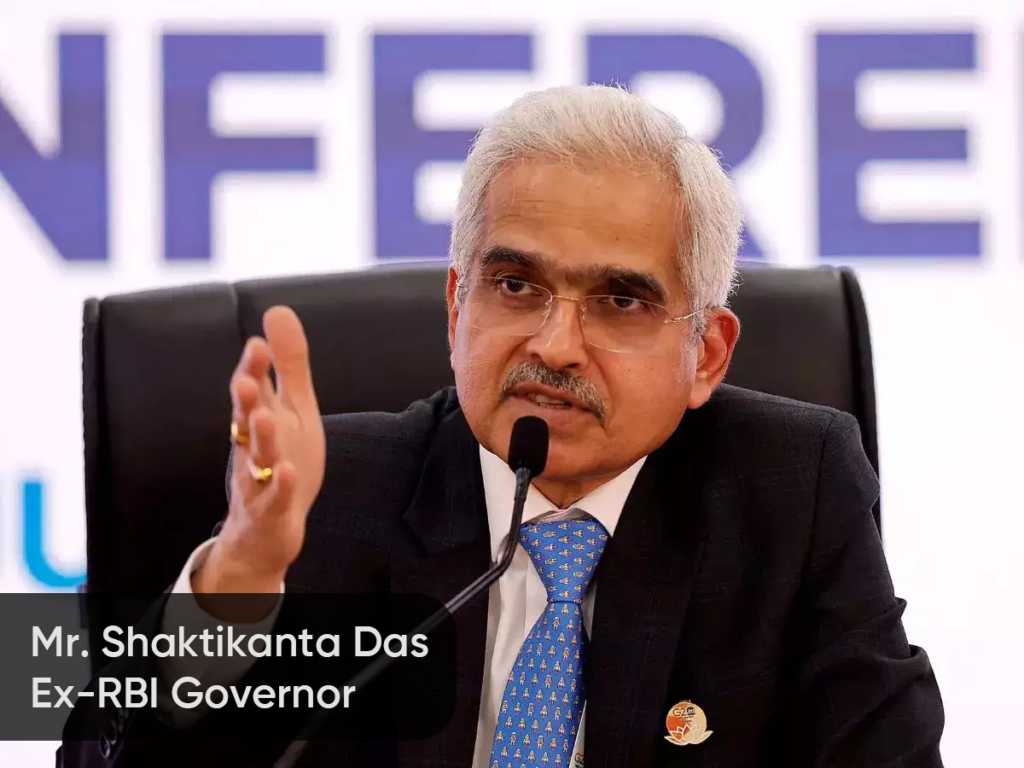
Unlike nations still grappling with discussions and early experimentation, India has already demonstrated tangible progress. “As I see it, CBDC has a huge potential in the coming years. In fact, it is the future of currency,” Das remarked, signalling the transformative role the digital rupee could play in the Indian economy.
While optimistic about CBDC’s potential, Das cautioned against a hasty system-wide rollout. He underscored the importance of a phased approach to ensure a thorough understanding of the technology’s impact on users and monetary policy. Early pilots have been instrumental in gathering data and refining the framework, paving the way for a measured expansion.
India has also been exploring the use of CBDCs for cross-border payments, with the platform already operational in neighbouring countries like Sri Lanka, Bhutan, and Nepal. The RBI’s ambition to integrate more trading partners in Asia and the Middle East showcases the broader vision for the digital rupee in facilitating instant settlements.
Public-Private Partnerships: The Way Forward
Building on these foundations, India is leveraging partnerships to accelerate CBDC adoption. DC Wallet, in collaboration with AFC India Limited, has launched initiatives targeting key sectors such as agriculture, education, and travel. With the potential to reach over 200 million users, this partnership aims to integrate DC Wallet with public and private sector banks to serve India’s unbanked and underbanked population.
A significant milestone came in November when the RBI tested the digital rupee on Ripple’s XRP ledger. This experiment validated the CBDC’s security and efficiency for institutional use cases, marking a step closer to widespread adoption. “The strategy spans providing closed-loop wallet solutions and cost-effective cross-border payments,” DC Wallet stated in a press release, highlighting the expansive scope of the project.
Despite these advancements, the digital rupee has yet to achieve widespread acceptance. The challenges lie in converting a broad user base, particularly among unbanked and underbanked populations, who may require significant education and infrastructure support. The partnership between DC Wallet and AFC India Limited aims to address these gaps with targeted strategies and ambitious goals.
A Global Shift in Digital Currencies
India’s pursuit of a CBDC echoes global trends, where central banks increasingly collaborate with private entities to explore digital currency solutions. For instance, Brazil’s recent partnership with crypto firms for its CBDC development mirrors India’s public-private model.
However, India’s regulatory stance on traditional cryptocurrencies like Bitcoin and Ethereum remains stringent, with financial regulators advocating for the digital rupee as a safer, government-backed alternative. This regulatory clarity strengthens the case for CBDC adoption, ensuring alignment with the nation’s monetary policies.
Conclusion
As India advances toward a CBDC-driven economy, the digital rupee stands poised to redefine the financial landscape. Its potential to streamline domestic and international payments, reduce dependency on physical cash, and bring financial services to underserved populations is immense.
With a cautious yet ambitious approach, India is paving the way for a new era of digital finance, setting an example for nations worldwide. The digital rupee is not just a currency of the future; it is a testament to India’s commitment to innovation and inclusivity in its economic journey.
To learn more about Indian Digital Rupee, go check out SunCrypto Academy.
Disclaimer: Crypto products and NFTs are unregulated and can be highly risky. There may be no regulatory recourse for any loss from such transactions. All content provided is for informational purposes only, and shall not be relied upon as financial/investment advice. Opinions shared, if any, are only shared for information and education purposes. Although the best efforts have been made to ensure all information is accurate and up to date, occasionally unintended errors or misprints may occur. We recommend you do your own research or consult an expert before making any investment decision. You may write to us at help@suncrypto.in.
Sahmat hoo
Sahmat hoo
Legalising crypto currency and also basing the Indian rupee to the gold/us dollar will not perhaps be a bad idea. What’s necessary are stringent laws to protect the traders, buyers and users of crypto currencies from frauds, swindlers, conmen and also from technical glitches such as ‘server down’ or, ‘no internet’ syndromes which may go against the user/owner of the crypto currency which might bring him financial losses, must be first formulated before announcing the legalization of crypto currency as a fiat/legal tender.
Your comment highlights key points about cryptocurrency legalization in India. As the government moves towards legal adoption for trade, implementing strong laws to protect users from fraud, scams, and technical issues is essential for trust and smooth transactions. Former RBI Governor Mr. Das’s emphasis on Central Bank Digital Currency (CBDC) reflects the focus on secure and regulated digital advancements. CBDCs can complement cryptocurrency growth while maintaining financial stability.
We’re optimistic about India’s progress with CBDC and hope the framework for cryptocurrency legalization as a legal tender is introduced soon, driving innovation and strengthening India’s global digital economy standing.
Legalising crypto currency and also basing the Indian rupee to the gold/us dollar will not perhaps be a bad idea. What’s necessary are stringent laws to protect the traders, buyers and users of crypto currencies from frauds, swindlers, conmen and also from technical glitches such as ‘server down’ or, ‘no internet’ syndromes which may go against the user/owner of the crypto currency which might bring him financial losses, must be first formulated before announcing the legalization of crypto currency as a fiat/legal tender.
Your comment highlights key points about cryptocurrency legalization in India. As the government moves towards legal adoption for trade, implementing strong laws to protect users from fraud, scams, and technical issues is essential for trust and smooth transactions. Former RBI Governor Mr. Das’s emphasis on Central Bank Digital Currency (CBDC) reflects the focus on secure and regulated digital advancements. CBDCs can complement cryptocurrency growth while maintaining financial stability.
We’re optimistic about India’s progress with CBDC and hope the framework for cryptocurrency legalization as a legal tender is introduced soon, driving innovation and strengthening India’s global digital economy standing.
This will only complicate day to day issues for the illiterate people paving ways for cyber thugs to make more money. First try to understand the citizens of this country. Still many vendors can’t use digital payment services and even if they tried were looted by literate thugs preying upon these people.
Your concerns are valid, especially regarding the challenges faced by less tech-savvy citizens. However, CBDC has the potential to bring positive change by introducing a secure, government-backed digital currency that can reduce reliance on third-party payment services prone to misuse.
The key lies in ensuring widespread education, user-friendly platforms, and strong safeguards against fraud. By addressing these issues effectively, CBDC can promote financial inclusion and empower all sections of society, including vendors and those less familiar with digital systems.
This will only complicate day to day issues for the illiterate people paving ways for cyber thugs to make more money. First try to understand the citizens of this country. Still many vendors can’t use digital payment services and even if they tried were looted by literate thugs preying upon these people.
Your concerns are valid, especially regarding the challenges faced by less tech-savvy citizens. However, CBDC has the potential to bring positive change by introducing a secure, government-backed digital currency that can reduce reliance on third-party payment services prone to misuse.
The key lies in ensuring widespread education, user-friendly platforms, and strong safeguards against fraud. By addressing these issues effectively, CBDC can promote financial inclusion and empower all sections of society, including vendors and those less familiar with digital systems.
Indians beware about digital rupee. No matter how much you have in your digital wallet.govt.will be free to block your finances at will, like on the lines of 2016 note ban, 2020 lockdown both at the fall of hammer. A nation where not even the cji, p.m., president,rbi, banks, carry zero trust.
Your concerns reflect the skepticism many feel toward new government initiatives, but it’s important to remember how innovation has consistently driven progress despite initial fears. The introduction of digital payments, UPI, and Aadhaar faced similar apprehensions but eventually transformed India’s economy and accessibility.
CBDC, like the digital rupee, aims to modernize the financial system and increase transparency. While trust in governance is a broader issue, it’s essential to evaluate innovations on their merits. By addressing concerns through robust policies, safeguards, and public trust-building measures, India can embrace CBDC as a step forward in global financial development.
Indians beware about digital rupee. No matter how much you have in your digital wallet.govt.will be free to block your finances at will, like on the lines of 2016 note ban, 2020 lockdown both at the fall of hammer. A nation where not even the cji, p.m., president,rbi, banks, carry zero trust.
Your concerns reflect the skepticism many feel toward new government initiatives, but it’s important to remember how innovation has consistently driven progress despite initial fears. The introduction of digital payments, UPI, and Aadhaar faced similar apprehensions but eventually transformed India’s economy and accessibility.
CBDC, like the digital rupee, aims to modernize the financial system and increase transparency. While trust in governance is a broader issue, it’s essential to evaluate innovations on their merits. By addressing concerns through robust policies, safeguards, and public trust-building measures, India can embrace CBDC as a step forward in global financial development.
Super
Super