
In the dynamic environment of crypto, the comparison of Cloud Mining vs Staking becomes a crucial one, especially to individuals interested in earning passive income. With the further popularization of digital property, investors are more and more attracted to such forms of money that enable them to obtain profit without serious trading.
Cloud Mining vs Staking are two different directions: on one hand, there is mining with the focus on hardware-intensive processing, and on the other hand, staking involves network validation using token locking.
What Are the Key Differences in Cloud Mining vs Staking?
The prime distinction that comes in the discussion of Cloud Mining vs Staking is the difference in their mechanisms to produce crypto rewards. Cloud mining involves leasing remote virtual machines to mine cryptocurrencies such as Bitcoin, without the need to own a machine, while staking involves committing tokens to support proof-of-stake (PoS) blockchains for validation purposes.
In the debate of Cloud Mining vs Staking, the former is likely to offer rapid installations, but with greater operational risks, including platform reliability, whereas staking will result in more predictable returns by participating in the network. This difference is of utmost importance in 2025, as cloud mining returns an average of 5%-10% APR on ecosystems such as ECOS, whereas staking offers 3-12% APY on protocols such as Ethereum or Solana.
Finally, Cloud Mining vs Staking highlights a trade-off between technological barriers and sustainability, with staking gaining favor for its eco-friendly model.
How Does Cloud Mining Work?
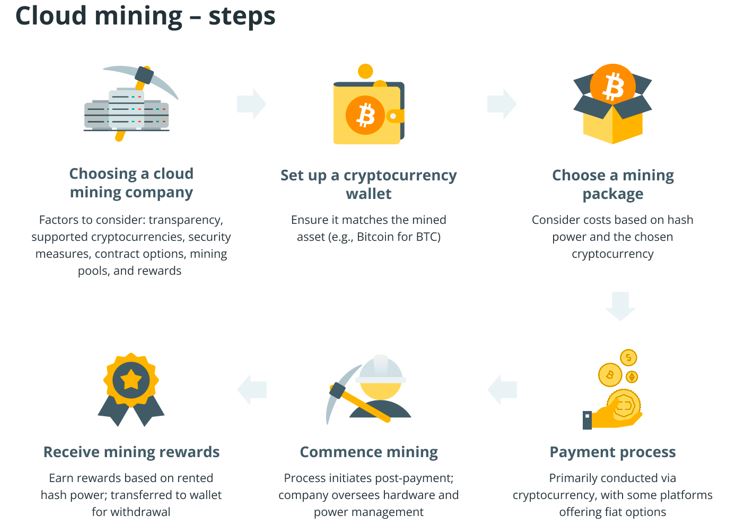
When exploring Cloud Mining vs Staking, understanding both their operational framework becomes essential. A cloud mining service allows users to rent mining hardware offered by an online data mining center that delivers the mining effort, and the user receives a proportionate reward without any fees.
In the Cloud Mining vs Staking comparison, this field is dominated by the likes of MiningToken and its AI-powered allocation and renewable energy focus, ECOS and its low-entry contracts starting at $50. This is done quite easily: choose a contract, make an upfront payment, and receive daily payments following the output that was mined.
However, in Cloud Mining vs Staking, risks like speculative XRP-linked schemes promising 100%-800% APR often mask Ponzi-like structures, underscoring the need for caution. Innovations like Arctic-cooled farms in Iceland reduce costs, but centralization and environmental concerns persist in Cloud Mining vs Staking debates.
How Does Staking Work?
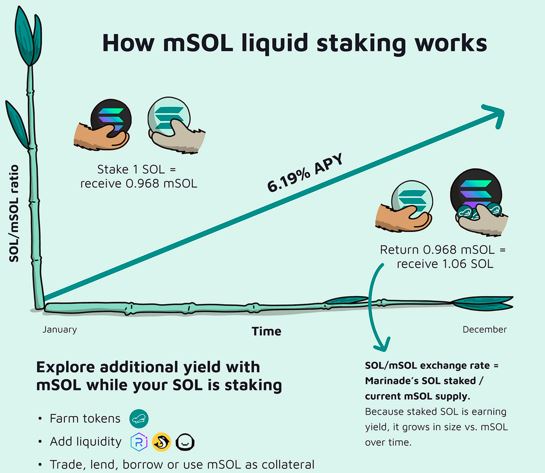
Staking operates by locking tokens to secure PoS networks, earning rewards for contributing to consensus. Users may operate validator nodes or delegate to others; however, liquid staking through providers such as Lido or Marinade grants derivative staking tokens (e.g., stETH, mSOL) to retain liquidity.
In Cloud Mining vs Staking, this method yields around 3% APY for Ethereum, 6%-8% for Solana, and up to 18% for Cosmos, offering steadier returns than mining’s volatility.
Smaller chains such as Injective or SUI offer double-digit returns, though with higher risks, making Cloud Mining vs Staking a choice between hardware dependency and token-based participation.
Cloud Mining vs Staking: Profit Comparison
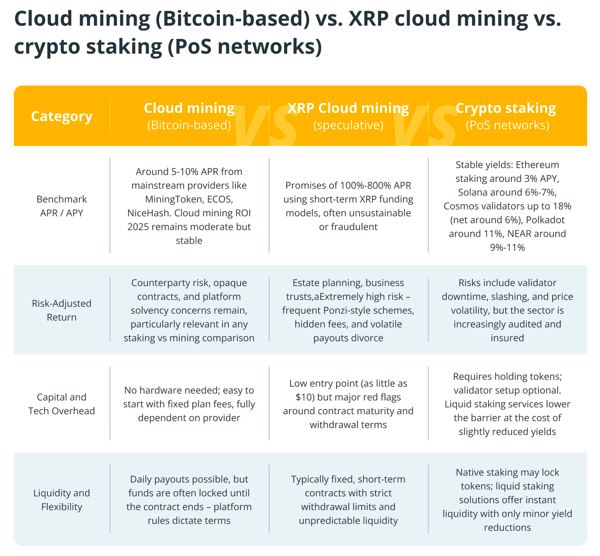
One of the deciding factors in Cloud Mining vs Staking is profitability. Generally, cloud mining provides 5-10% APR on Bitcoin contracts on trustworthy platforms, but XRP variants lure with unsustainable 100%-800% promises, heightening scam risks. Conversely, the staking levels are at 3% on Ethereum and 11% on NEAR, increasing flexibility by 10% and 12% on liquid protocols.
Conclusion
Cloud Mining vs Staking presents diverse paths for passive crypto income in 2025, each with unique strengths and drawbacks. Cloud mining is perceived as simpler and potentially faster, yet it carries higher scam and environmental risks, whereas staking is more stable, liquid, and sustainable with moderate returns.
By weighing profitability, you can pick the strategy that is best for you.
Disclaimer: Crypto products and NFTs are unregulated and can be highly risky. There may be no regulatory recourse for any loss from such transactions.
Frequently Asked Questions
Who Is Satoshi Nakamoto?
Satoshi Nakamoto is the pseudonym for whoever penned the original Bitcoin whitepaper and is the identity credited with inventing Bitcoin itself.
How Is Crypto Taxed in India?
In India, crypto is taxed under Section 115BBH, which states a flat 30% tax on crypto income. The other one is Section 194S, which levies 1%TDS to be charged on every crypto transaction.
How To Start Bitcoin SIP in India?
You can easily start a Bitcoin SIP in India using SunCrypto. Here, you get 0 buying fees along with the option to edit or cancel the SIP anytime.