

Wall Street is celebrating. The S&P 500 has soared past the 7,100 level, Nasdaq is recording remarkable winning streaks, and the AI-based tech stocks are hitting new highs; but the long-awaited Bitcoin breakout is still out of reach. As equities are registering record highs, Bitcoin (BTC) has been battling in a stubborn $70,000 to $80,000 range, and is unable to maintain any upward momentum.
To investors who are paying attention to both markets, the divergence poses an immediate question: why is the largest cryptocurrency in the world being left behind? Let’s understand the major forces that are holding BTC back- and what it would take to finally change the story.
Is BTC being crushed by the $80,000 wall?
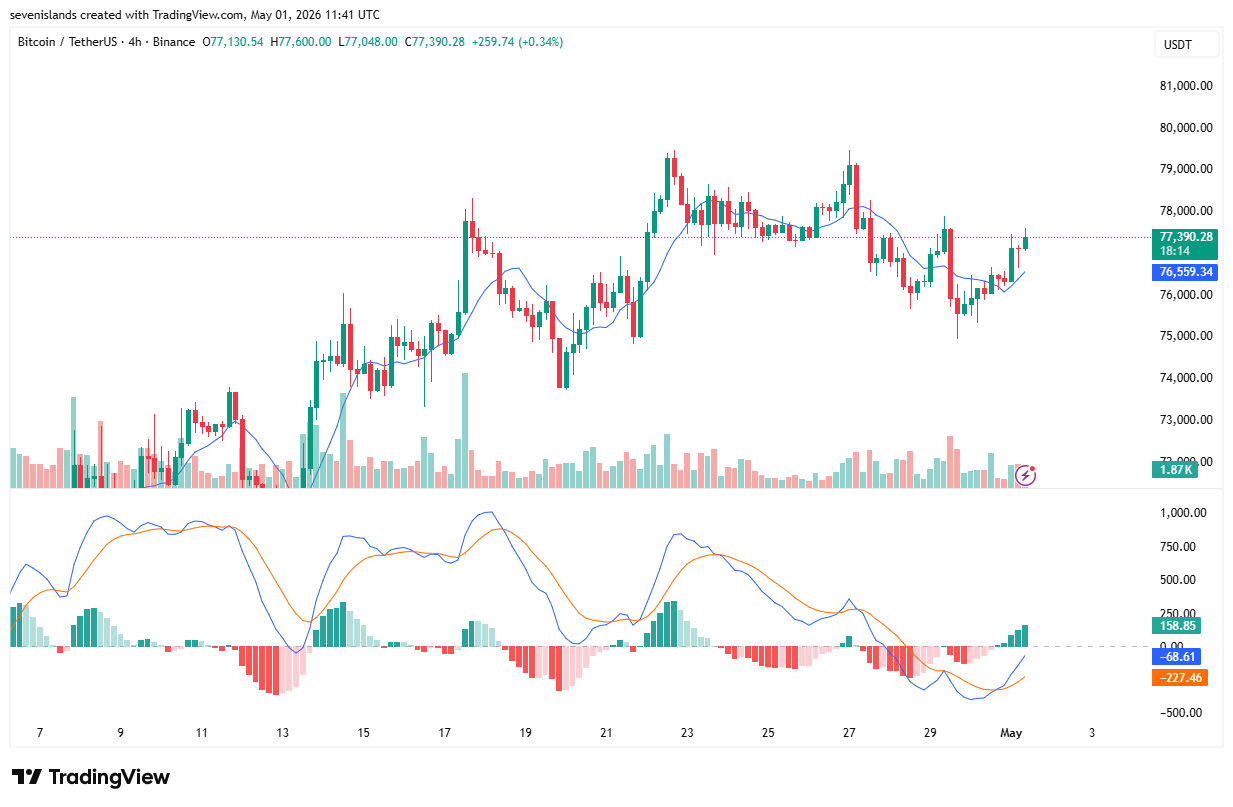
The greatest obstacle in the path of a Bitcoin breakout is the strong psychological barrier of the $80,000 level. Each time BTC touches this mark, it is greeted by a wave of sell-orders by both retail traders and institutional market participants who create limit orders, stop losses and profit targets around whole round numbers. Bitcoin soared to its highest point of the year in late April 2026, hitting a high of $79,000: its best price since the start of February only to be turned back by sellers defending that zone.
CoinGlass data indicates that at one point, there were sell orders amounting to around $450 million stacked between $75,900 and $76,300, forming an imposing wall that buyers could not digest. Without an extraordinary surge in demand, the breakout above $80,000 remains structurally blocked.
As far as the current price movement is concerned, BTC has experienced a surge of 1.67% in the past 24hrs and is currently trading at around $77,394.78 (~ ₹73,39,988.38)
Why is BTC lagging while stocks hit new highs?
The blistering recovery of the stock market has been catalyzed by an extremely narrow range of factors that are not directly beneficial for crypto. The S&P 500 recovered all its 2026 losses in just one week after the April 8 ceasefire announcement in the Iran conflict, soaring up out of war-time lows to an all-time high of 7,165.
The Nasdaq was rewarded with blockbuster returns: Intel shot up 23% in one day, Nvidia regained a $5 trillion market value, and AI stocks turned the table around. These are essentially equity based stories. The Bitcoin breakout theory, on the other hand, relies on other catalysts: ETF inflows, regulatory clarity, macroeconomic liquidity, and crypto-native sentiment; none of which have gone off with sufficient decisive force over the same timeframe to correspond with the momentum of equities.
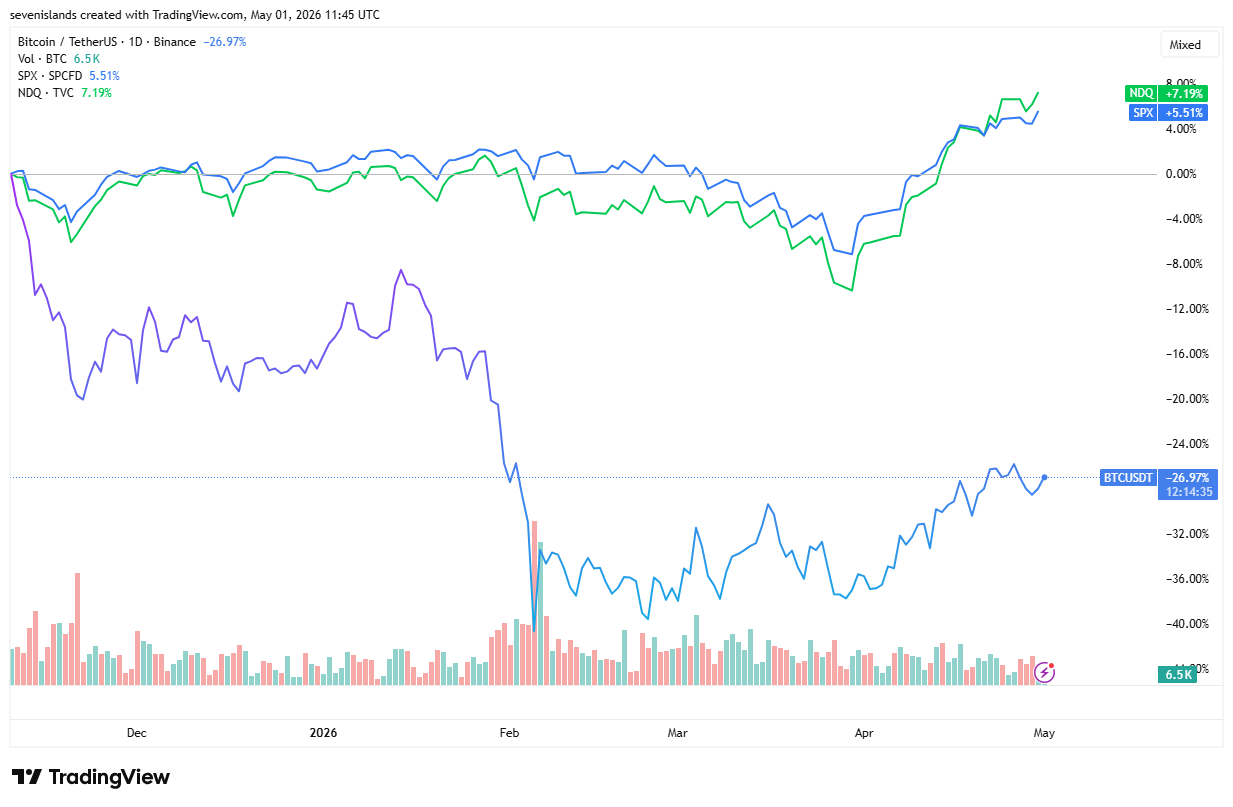
Image: Price movement comparison of Nasdaq & S&P500 with BTC
Is weak institutional demand stopping BTC from breakout?
Although there is a partial recovery, institutional enthusiasm towards Bitcoin remains unstable in 2026, which is one of the main factors that a Bitcoin breakout remains stuck on.
Although cumulative inflows in the BlackRock spot Bitcoin ETF and other products have been in the billions, the inflows have decelerated significantly as compared to the pace in late 2024. The January 2026 Fed meeting saw weekly ETF outflows of $1.33 billion, indicating that big money was not pushing into the trade but was withdrawing. Until institutional conviction returns at scale, any breakout risks being a false signal.
How are short term holders sabotaging the Bitcoin breakout?
Another major but less talked about challenge to the Bitcoin breakout is the cost-based resistance that short-term holders have developed. On-chain analysts have also noted that a significant group of BTC during late 2025 were purchased in the $75,000-$80,000 price bracket, implying that many of these owners are now at a breakeven point or slightly at a loss.
When prices once again approach those levels, a wave of relief selling ensues: they sell to recapture capital instead of staying to get additional gains. This behavior sets a ceiling which the BTC will have to smash before new price discovery can commence. Historically, such resistance is dissolved when the price is above such levels in a number of weeks, but such long-term validation is yet to be realized.
Is the macro environment truly ready?
The macro conditions are the decisive factors in crypto performance and the existing environment is sending mixed signals about a Bitcoin breakout. The Federal Reserve kept the interest rates unchanged at 3.50-3.75% in early 2026, eliminating the immediate risk of rate increases but also leaving out the rate cuts that usually stimulate risk-asset rallies.
J.P. Morgan estimated that it would not see any cuts before late 2027, eliminating one of the most important bullish catalysts in BTC. In the meantime, oil prices were unpredictable too, surging to over $103 per barrel following the news of the U.S. seizure of Iranian tankers, further introducing macro uncertainty. Gold, which is regarded as the digital counterpart of Bitcoin, shot to over-record highs of above $4,800 and experienced safe-haven flows that could otherwise have boosted a Bitcoin breakout.
Does the 2024 Halving have a role in Bitcoin Breakout?
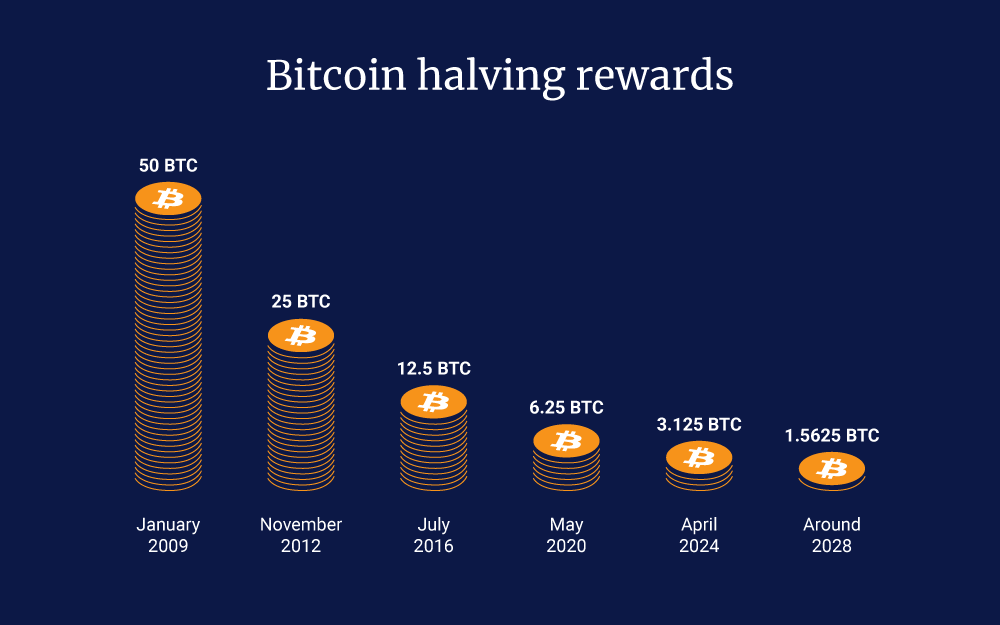
One of the most debated questions in crypto circles is whether the April 2024 halving, which cut Bitcoin’s block reward to 3.125 BTC, has already been fully priced in, thus undermining the Bitcoin breakout narrative. Halvings in the past caused explosive bulls runs 12-18 months after the event, with supply shortages exceeding demand. However, Bitcoin reached an all-time high of $126,000 in October 2025; long before the roughly six-month post-halving boom period ended – indicating that the market may have anticipated the event.
Bitcoin is now trading at about 40% below that high. According to analysts, the successive bull cycles are yielding smaller percentage gains, which is a sign of the law of diminishing returns as the market matures, and institutional money flows more methodically than retail-driven manias of earlier cycles.
Conclusion
The contrast between equities hitting record highs and Bitcoin struggling below $80,000 is stark but not permanent. The question of when the Bitcoin breakout will happen depends entirely if and when the right catalysts come together. The spark could be anything: a sustained weekly close above $80,000, a significant increase in ETF inflows, a macro change of the Fed or a new crypto-native story. As of now, all we can do is wait and speculate. But yes, crypto moves very fast, whenever BTC takes down the $80,000 level, the catchup to stocks will be fast !!
Disclaimer: Crypto products and NFTs are unregulated and can be highly risky. There may be no regulatory recourse for any loss from such transactions.
Is Pi Coin dead?
Pi Network is not technically “dead,” however, it faces severe challenges, including declining valuation, delayed open mainnet functionality, and low liquidity.
How to sell Pi Coin in India?
In India, you can easily sell Pi coin through SunCrypto.
Is SunCrypto safe?
Yes