
US India trade deal has shifted the global financial landscape, and it as a landmark trade agreement. From a peer’s perspective, this deal is a “strategic reset,” which is moving beyond traditional commodities to focus on high-tech integration, energy security, and financial services.
The Finance Perspective
US India trade deal centers on a dramatic reduction in “reciprocal tariffs” and a realignment of capital flows. From a purely financial standpoint, the deal aims to stabilize the Rupee and attract long-term institutional investment.
Tariff Rollbacks:
-
- The U.S. has slashed existing tariffs on Indian goods from 50% down to 18%. This 32% reduction is expected to save Indian exporters billions annually, directly improving the “Current Account Deficit” (CAD).
- Current Account Deficit (CAD) refers to the net flow of money between the two nations, which is expected to be significantly impacted by the reduction of US tariffs on Indian goods.
- Goldman Sachs analysts estimate that the deal will cause India’s CAD to narrow by approximately 0.25% of GDP in 2026. Following the deal, India’s CAD is projected to settle at roughly 0.8% to 0.9% of GDP for the 2026 calendar year.
The “Russian Oil” Trade-Off:
-
- In a massive geopolitical pivot, India has agreed to scale down its purchase of Russian oil. In exchange, the U.S. will facilitate massive exports of Liquefied Natural Gas (LNG) and technology to India, valued at over $500 billion over the next decade.
- Liquefied Natural Gas (LNG) serves as a primary pillar of India’s commitment to increase imports of American goods in exchange for a massive reduction in US tariffs.
- India has agreed to scale up energy imports as part of a projected $500 billion purchase of American goods over the coming years. The deal emphasizes long-term energy security by securing stable, competitively priced LNG based on the Henry Hub pricing benchmark, which is often less volatile than global spot markets.
Banking & FDI:
-
- The deal reinforces India’s liberalization of its financial sector, where it now allows 100% Foreign Direct Investment (FDI) in insurance and up to 74% in banking, making it easier for Wall Street firms to scale operations in Mumbai and GIFT City.
- Foreign Direct Investment (FDI) is identified as a primary beneficiary of the new “strategic economic alignment.” Analysts and government officials expect the US India trade deal to trigger a significant surge in FDI by removing the “biggest stumbling block” for investors: trade uncertainty and high punitive tariffs.
- The US reduction of reciprocal tariffs from 50% to 18% is expected to unlock nearly $100 billion in deferred investments.
Impact on the Global Crypto Market
The US India trade deal is not just about physical goods; it contains a “Digital Finance” annex that signals a move toward cross-border regulatory alignment.
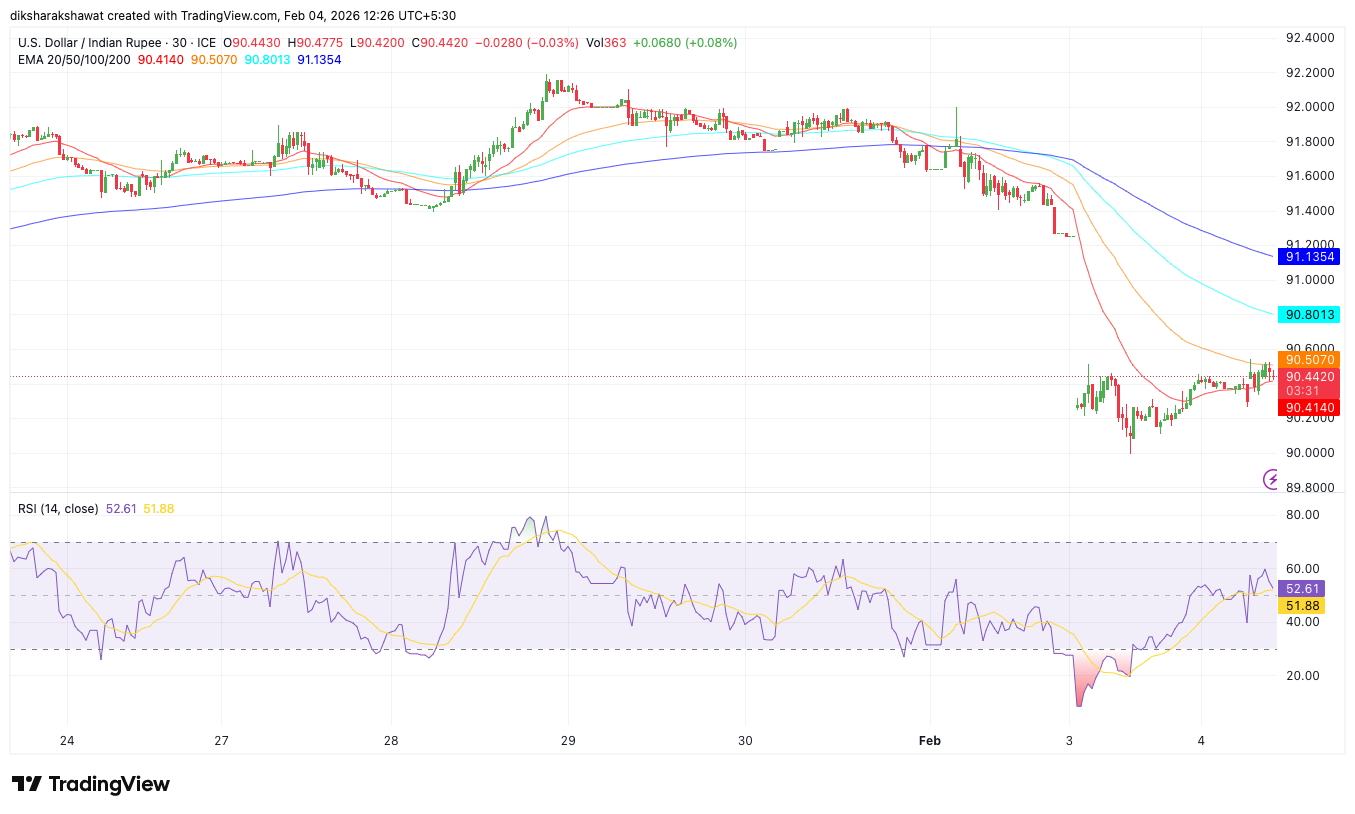
- Dollar-Backed Stablecoin Dominance: As part of the $500 billion energy and tech commitment, there is increasing talk of using regulated U.S. stablecoins (like USDC) for trade settlement. This adds massive institutional legitimacy to the global stablecoin market, reducing reliance on “shadow” offshore tokens.
- Institutional “De-Risking”: The deal encourages U.S. financial giants (who are now deep in the Bitcoin ETF space) to partner with Indian banks. This creates a “corridor of trust” that makes it easier for global liquidity to flow into crypto-assets that have clear regulatory stamps of approval.
- A Multi-Moneyverse: The deal acknowledges the co-existence of Central Bank Digital Currencies (CBDCs) and private digital assets. This global “stamp of approval” from two of the world’s largest economies is expected to act as a catalyst for a global crypto “bull run” based on utility rather than speculation.
Impact on the Indian Crypto Market
For the Indian crypto ecosystem, which has faced a “winter” of high taxes and regulatory ambiguity since 2022, the US India trade deal is a breath of fresh air.
A. Regulatory Thaw
The U.S. has pushed for “interoperable digital standards.” This pressure is expected to nudge the Indian government toward a more favorable tax structure (potentially reducing the 30% flat tax on gains) to remain competitive with the U.S. market.
B. The CBDC-UPI Integration
With the U.S. showing interest in India’s Unified Payments Interface (UPI), the trade deal likely paves the way for the Digital Rupee (e₹) to be used for cross-border B2B transactions. This would be the first major bridge between a sovereign digital currency and a global reserve currency (USD).
C. Inflow of Web3 Capital
As trade barriers fall, Silicon Valley VC firms are expected to increase funding for Indian Web3 startups. The deal provides a legal framework for “technology transfer,” which includes blockchain-based supply chain and trade finance solutions.
|
Trade Deal Winners |
Sector |
Impact |
|
Indian IT/Tech |
High |
Increased deal flow and lower export costs. |
|
Stablecoins |
Very High |
Will likely become the “plumbing” for bilateral trade. |
|
Retail Crypto Investors |
Moderate |
Expect better liquidity and potentially lower “compliance” hurdles. |
Disclaimer: Crypto products & NFTs are unregulated and can be highly risky. There may be no regulatory recourse for any loss from such transactions.