
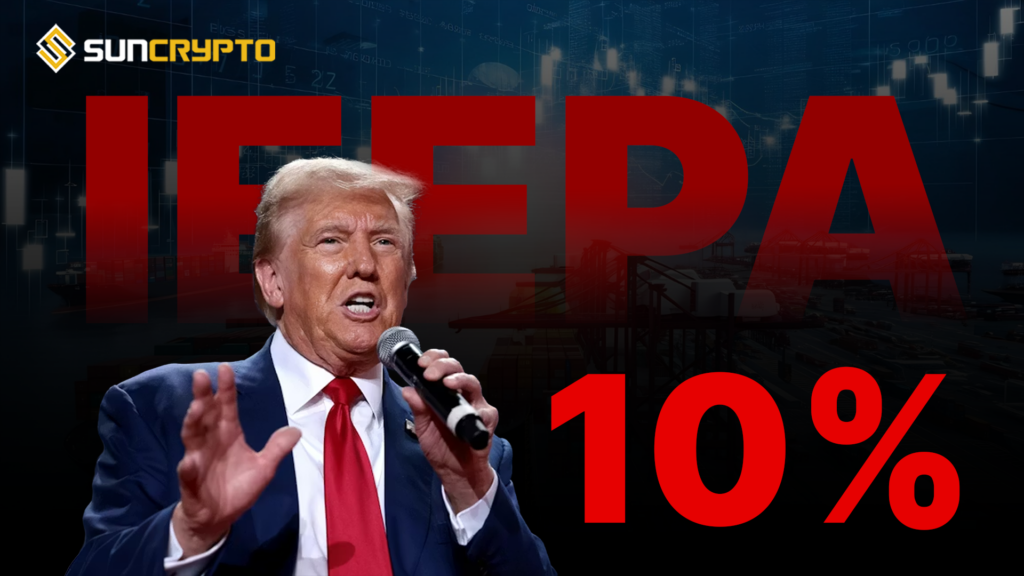
On February 20, 2026, the global trade landscape was upended by a landmark U.S. Supreme Court ruling in Learning Resources v. Trump. The decision dismantled the primary legal pillar of the administration’s trade policy, forcing an immediate and “convoluted” restructuring of American import taxes. For India, this represents a sudden, favorable shift in trade math, though long-term volatility remains.
What are IEEPA Tariffs?
IEEPA Tariffs are a specific type of import tax implemented under the International Emergency Economic Powers Act (IEEPA) of 1977.
- The Original Law of IEEPA was designed to let the President freeze foreign assets or block financial transactions during a “national emergency” (e.g., sanctions on hostile regimes).
- President Trump invoked IEEPA to declare a national emergency over trade deficits and drug trafficking, using the law’s power to “regulate importation” as a justification for broad, country-wide tariffs.
- Unlike traditional trade laws (Section 232 or 301), IEEPA had no built-in limits on how high the tariffs could be or how long they could last. This allowed for the rapid imposition of “Reciprocal” and “Fentanyl” tariffs.
- The Supreme Court struck them down, ruling that the power to tax belongs solely to Congress. They stated that “regulating” property does not mean “taxing” it, rendering billions of dollars in collected duties illegal.
Part I: The End of IEEPA Tariffs
The Supreme Court ruled 6–3 that the International Emergency Economic Powers Act (IEEPA) of 1977 does not grant the President the authority to impose tariffs.
- Chief Justice John Roberts, writing for the majority, clarified that while IEEPA allows the President to “regulate” property during emergencies, the power to tax and raise revenue (tariffs) belongs exclusively to Congress under Article I of the Constitution.
- The Invalidation: This ruling effectively nullified two massive tariff categories:
- “Reciprocal Tariffs”: Blanket duties intended to match the rates of trading partners.
- “Fentanyl/Migration Tariffs”: Targeted levies on China, Mexico, and Canada.
- The $175 Billion Question: Because the court deemed these tariffs “unauthorized” from their inception, U.S. importers may be eligible for up to $175 billion in refunds for duties collected since 2025.
Part II: The “Rip and Replace” Strategy (Section 122)
Refusing to abandon his trade agenda, President Trump immediately invoked Section 122 of the Trade Act of 1974 to replace the struck-down laws.
- The New 10% Baseline: Effective February 24, 2026, a new 10% global import surcharge will apply to most goods entering the US.
- The 150-Day Clock: Unlike IEEPA, Section 122 is specifically designed for “balance-of-payments” emergencies. However, it is strictly temporary, lasting only 150 days unless Congress votes to extend it.
- The Pivot: The administration is also launching new “Section 301” investigations (targeting unfair trade) and “Section 232” (national security) probes to create a more permanent legal foundation for future duties.
Part III: Impact on India – A Strategic Windfall
The transition from IEEPA to Section 122 has provided India with an unexpected economic “breather.”
1. Immediate Duty Relief
India was previously facing an 18% reciprocal tariff under a deal negotiated to avoid even higher penalties. With the court ruling, that 18% rate is legally void.
- The New Rate: Indian exports will now be subject to the 10% Section 122 surcharge, a net reduction of 8% in costs for Indian manufacturers.
- Export Coverage: Roughly 55% of India’s exports to the US (previously hit by reciprocal duties) will see this immediate cost drop.
2. Sector-Specific Gains
- Pharmaceuticals & Electronics: Products like generic medicines and smartphones, which account for nearly 40% of India’s export value to the US, remain largely shielded or see lower effective rates.
- Textiles: As a low-margin industry, the 8% reduction is the difference between profit and loss for many Indian garment exporters.
- Steel & Aluminum: These remain under Section 232 (50% duty), as that law was not affected by the IEEPA ruling.
3. Negotiating Leverage
The ruling weakens the US “big stick” approach. Indian officials have noted that the “India-US Interim Trade Deal” may now be re-examined. Since the US can no longer use IEEPA to punish India for buying Russian oil or other foreign policy choices, New Delhi holds a stronger hand in upcoming trade talks.
Final Thoughts
The recent Supreme Court ruling has fundamentally reshaped the trade relationship between Washington and New Delhi, creating a period of both legal vindication and tactical reshuffling. By striking down the IEEPA-based tariffs, the Court has not only granted Indian exporters a temporary reprieve from the “asphyxiating” 18% reciprocal rates but has also re-anchored the power of taxation within the U.S. Congress.
This shift effectively lowers the immediate cost of doing business for Indian firms in the textile, pharmaceutical, and electronics sectors, who now face a 10% surcharge rather than the higher penalties previously imposed. While the administration’s pivot to Section 122 ensures that a baseline of protectionism remains, the 150-day limit on this new authority grants India a critical window to renegotiate from a position of relative strength.
Looking forward, the focus for Indian commerce will shift from managing crisis-level duties to navigating a complex “refund and restructure” phase. With billions of dollars in potentially refundable illegal duties at stake, Indian manufacturers and their U.S. partners must now engage in a rigorous legal and administrative push to reclaim capital.
However, the long-term outlook remains cautious; the administration’s intent to “replace and rip” implies that while the legal justification has changed, the underlying desire for trade reciprocity has not. India must use this current legal “breather” to finalize a more durable trade agreement that can withstand the shifting statutory winds of the U.S. executive branch.
Disclaimer: Crypto products & NFTs are unregulated and can be highly risky. There may be no regulatory recourse for any loss from such transactions.