
The global commodities market witnessed a sharp correction as gold and silver prices dropped significantly in recent trading sessions. For investors, this sudden decline may feel alarming—especially given gold’s reputation as a “safe-haven” asset. However, this crash is not random. It is driven by a combination of macroeconomic forces, policy expectations, and market psychology.
In this blog, we break down why gold and silver crashed, what it means for investors, and what strategy to follow next.
What Happened in Precious Metals?
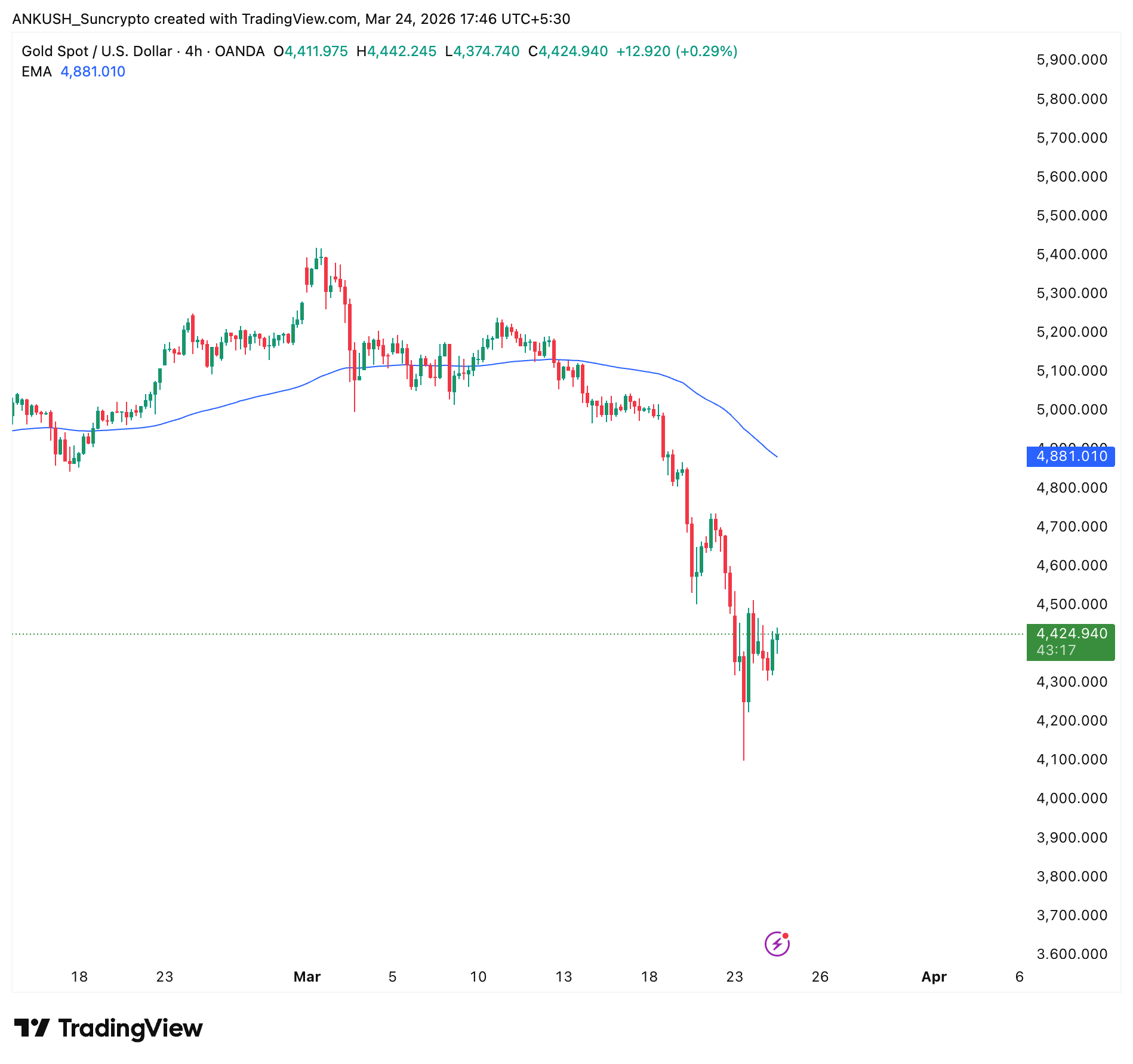
Gold and silver have recently experienced a notable price drop, marking one of the most significant corrections in 2026 so far. Gold prices declined by 20% points in a single day, while silver—known for its higher volatility—fell even more sharply.
In India, the correction was clearly visible:
- Gold prices dropped by thousands of rupees per 10 grams
- Silver saw steep declines per kilogram, reflecting global weakness
This movement signals a broader shift in market sentiment rather than a short-term fluctuation.
Key Reasons Behind the Gold and Silver Crash
1. Rising Interest Rate Expectations
The primary driver behind the crash is the expectation that global central banks, particularly the Federal Reserve, may keep interest rates elevated for a longer period.
With the current scenario, US benchmark rates are in the range of 3.5% to 3.7% with a hawkish outlook. The market ruled out near-term rate cuts and even saw the possibility of hikes. Gold fell 22% during a 10-session decline as rate cut hopes faded. Along with this, gold dropped 5.9% in a single session; it is one of the steepest falls linked to rate expectations. Even a 0.25% shift in rate expectations significantly impacts gold because it directly increases the opportunity cost of holding non-yielding assets.
Gold and silver are non-yielding assets, meaning they do not generate interest. When interest rates rise, investors tend to move their capital into interest-bearing instruments like bonds and fixed-income assets.
“While interest rate hikes had already created pressure, the major drop in gold and silver was triggered by the escalation of the US–Iran war, which strengthened the dollar and led to heavy sell-offs.”
This aligns with market behavior where war-driven volatility pushed investors toward USD and liquidity instead of traditional safe havens like gold.
As a result, demand for gold and silver declines, leading to price corrections.
2. Strengthening US Dollar
A strong US dollar plays a crucial role in determining gold prices. Since gold is priced globally in dollars, a stronger dollar makes it more expensive for international buyers.
Recently, the US dollar index surged in 1-3 months, as the dollar gained 0.9% to 1% in a short period, triggering heavy selling in metals. Silver fell by 6.5% to 11% in a single session due to dollar strengthening. Gold dropped 1.4% to 3% intraday when the dollar rallied. Historically, we saw a 1% rise in USD can trigger a 1% to 3% drop in gold and silver, especially in leveraged markets.
This reduces global demand and puts downward pressure on prices. The recent strengthening of the dollar has been a major factor behind the decline in precious metals.
3. Profit Booking After Record High
Before the crash, gold had been trading near all-time highs in early 2026. Such rallies often attract institutional investors who eventually book profits.
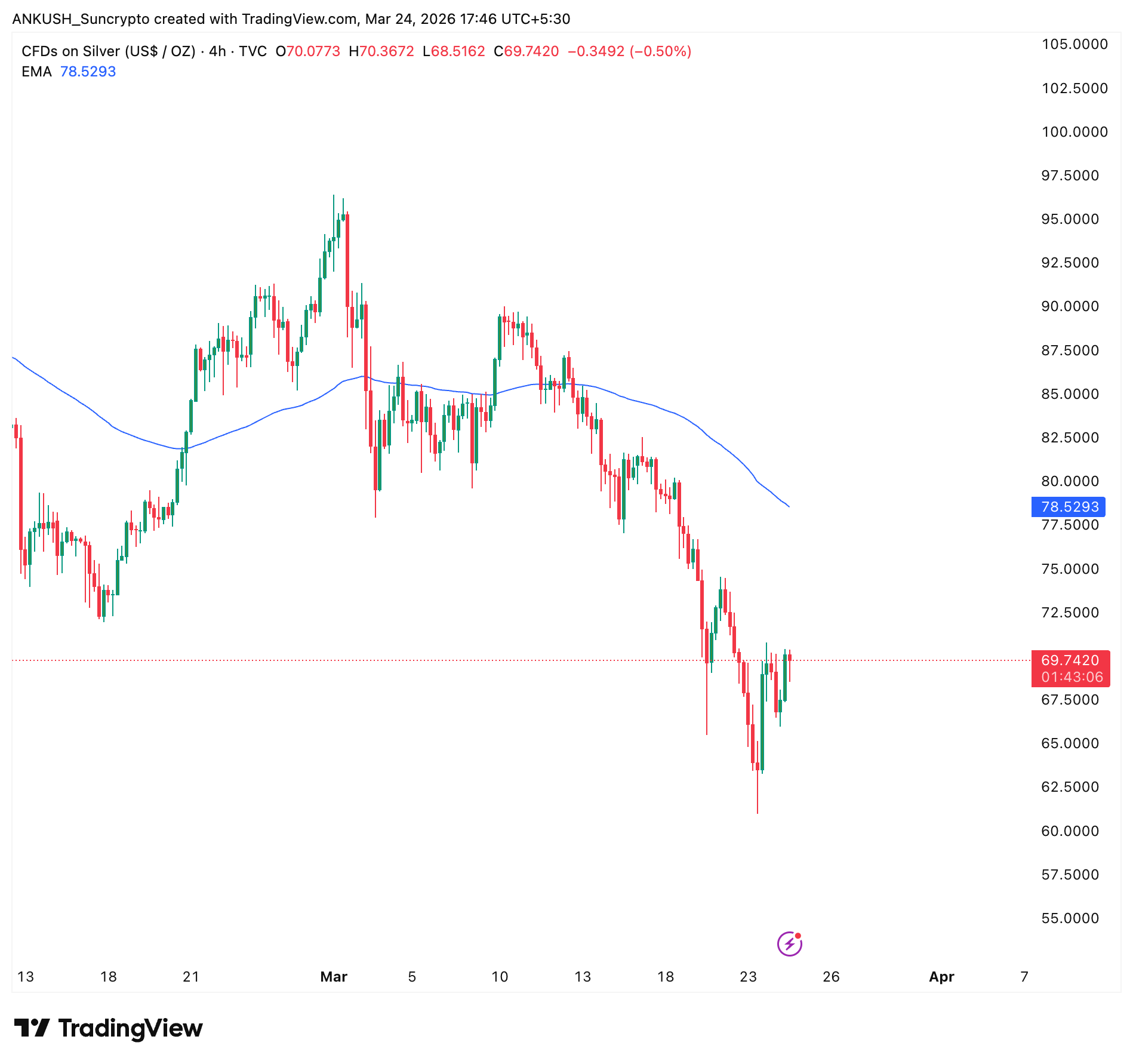
In Jan 2026, gold hit an all-time high of $5,318; after this peak, gold hiked from 13% to 18%. On the other hand, silver dropped from $120 to $70, a correction stage of 40% . Gold ETFs saw $10.5 million in outflows in just 6 days. After a multi-year rally (2024–2026), institutional profit booking created a cascading sell-off.
This large-scale selling creates downward pressure, accelerating the correction phase. In simple terms, the crash is partly a natural pullback after a strong rally.
4. Inflation vs Interest Rate Dynamics
Traditionally, gold is considered a hedge against inflation. However, the current market is behaving differently.
Rising inflation has led to expectations of higher interest rates. Instead of supporting gold, inflation is indirectly hurting it by strengthening the case for tighter monetary policy.
Oil prices surged above $100 per barrel, increasing inflation fears, which in turn pushed bond yields higher and strengthened the US dollar. As US Treasury yields spiked alongside dollar strength, gold prices declined despite rising inflation, breaking their traditional correlation.
In earlier cycles, an increase in inflation typically led to a rise in gold prices. However, in the current cycle, rising inflation is leading to higher interest rates, which is causing gold prices to fall.
This shift has created a paradox where inflation is no longer immediately bullish for gold.
5. Silver’s Dual Nature Amplified the Fall
Silver is not just a precious metal—it is also widely used in industrial applications such as electronics and solar panels.
This dual nature makes silver more volatile:
- When economic growth expectations weaken, industrial demand
- This leads to sharper price declines compared to gold
In March 2026 alone, silver prices plunged 10.4% in a single day, with weekly losses crossing 10% and an overall correction of nearly 48% from recent highs. This steep fall comes after an aggressive silver rally of 130%–180% during 2025–2026, making it highly vulnerable to profit booking.
On the demand side, industrial consumption is expected to decline by around 2% in 2026 (to approximately 650 million ounces), driven by a global manufacturing slowdown and material substitution trends.
As a result, silver reacts to both investment sentiment (like gold) and industrial weakness, creating a double impact during downturns. This dual sensitivity is why silver typically falls 2–3 times faster than gold during market corrections, making it significantly more volatile in uncertain macroeconomic conditions.
Why the Crash Feels Sudden?
The sharp drop in gold and silver prices can also be explained by liquidity dynamics.
In uncertain times, investors often sell highly liquid assets to raise cash. Gold, being one of the most liquid commodities, becomes an easy option for liquidation.
This phenomenon creates rapid price declines, even if the long-term fundamentals remain intact.
Impact on Indian Investors
For Indian investors, the situation has a slightly different dimension:
- Rupee fluctuations can partially offset global price movements
- Seasonal demand (weddings, festivals) provides some price support
- Import costs and duties also influence domestic pricing
As a result, while global prices may fall sharply, the impact in India is often moderated.
What Should Investors Do Now?
Long-Term Investors
For long-term investors, this correction may present an opportunity. Gold continues to be supported by:
- Global economic uncertainty
- Rising debt levels
- Geopolitical risks
A systematic investment approach (SIP-style buying) can help average out costs during volatility.
Short-Term Traders
Short-term traders should remain cautious, as the market is highly sensitive to:
- Interest rate decisions
- Currency movements
- Global economic data
Volatility is expected to remain high in the near term.
Existing Investors
If you have already invested at higher levels, it is important not to panic. This correction is driven by macroeconomic factors rather than a collapse in fundamentals.
Historically, gold has shown resilience over longer time horizons.
What Lies Ahead?
The direction of gold and silver prices will largely depend on:
- Central bank policies
- Inflation trends
- Strength of the US dollar
- Global geopolitical developments
- Bond yields
If interest rates stabilize or begin to decline, gold could regain momentum. Until then, the market may remain range-bound with periods of volatility.
Final Thoughts
The recent crash in gold and silver prices highlights an important shift in market dynamics. While these assets remain valuable for diversification and long-term wealth preservation, they are not immune to macroeconomic pressures.
For investors, the key takeaway is simple:
This is not a breakdown—it is a correction shaped by interest rates and global liquidity conditions.
A disciplined and informed approach will be crucial in navigating this phase effectively.
Disclaimer: Crypto products & NFTs are unregulated and can be highly risky. There may be no regulatory recourse for any loss from such transactions.