

India is the world’s largest consumer of gold, with Indian families holding an estimated 34,600 tonnes of physical gold, valued at roughly $5 trillion, passed down across generations as jewelry, coins, and bars. Yet today, a new contender has entered the conversation: Bitcoin. As of March 2, 2026, Bitcoin trades around $66,286.83 per coin, while 24K gold in Delhi is priced near $1863.34 per gram. The question isn’t which is “better”; it’s which fits you.
Gold: The Traditional Store of Value
Gold has endured for over 5,000 years as a trusted store of wealth, and in India, its significance goes well beyond finance. From wedding jewelry to investment portfolios, gold is cultural capital. Its value is driven by global economic uncertainty, inflation, and central bank demand, all of which have worked in its favor lately.
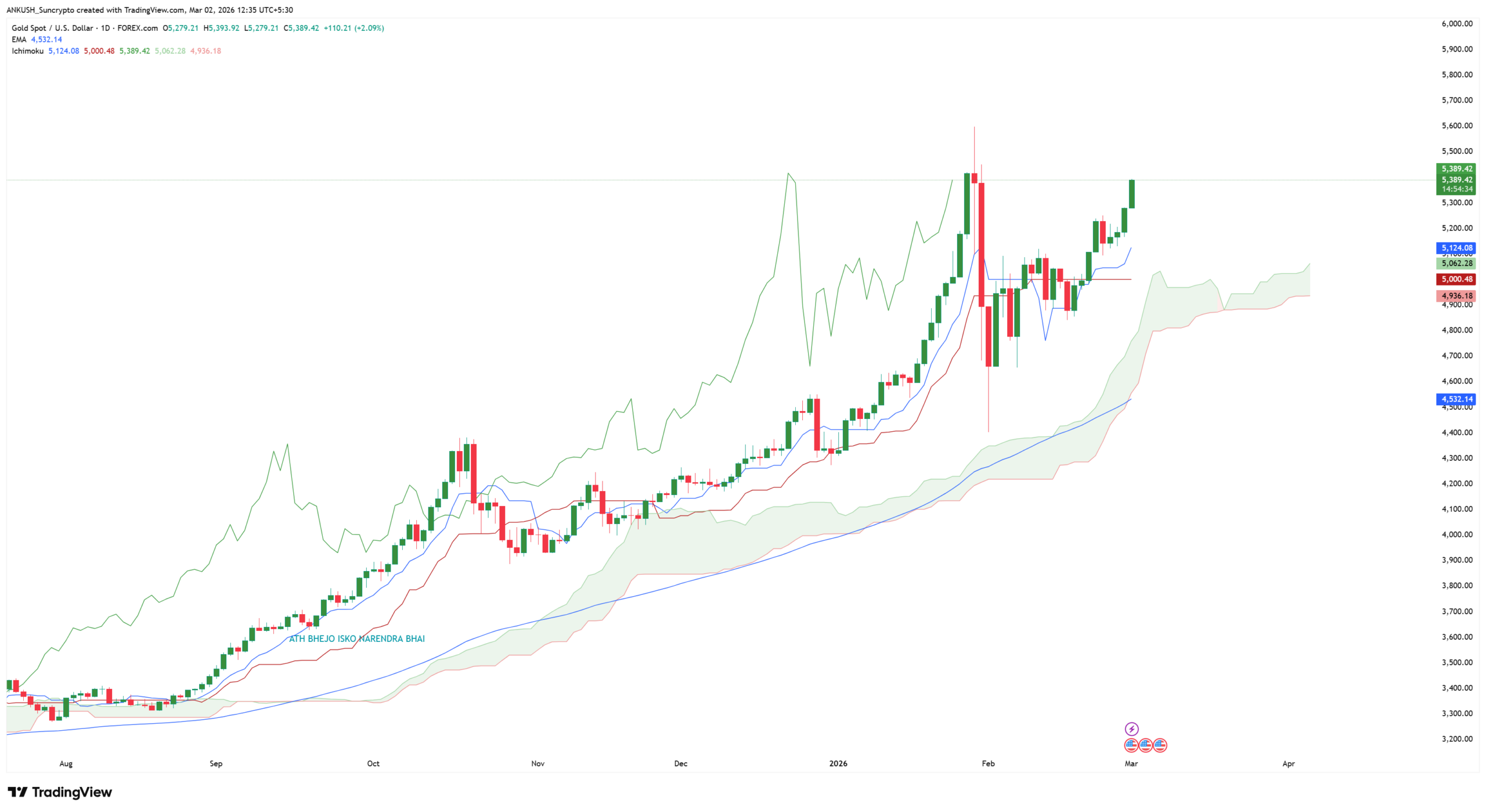
In 2025, gold delivered its best yearly gain since 1979, rising over 65%. International prices breached $5,400 per ounce in early 2026, pushing domestic prices to record highs. Even after a 7% correction from those peaks, gold continues attracting strong investment demand. Importantly, investment demand in India surged 17% in 2025 to 280.4 tonnes, driven by ETF inflows and the explosion of digital gold purchases via UPI, which saw 219 million transactions in January 2026 alone, totalling ₹3,926 crore.
Bitcoin: Beyond the “Digital Gold” Label
Bitcoin is often called “digital gold,” but that label undersells what it actually is—a decentralized financial infrastructure with a hard cap of 21 million coins. No government can print more Bitcoin. No single institution controls it. Every transaction is recorded on a public blockchain, making it fully transparent.
For Indian investors, Bitcoin offers global accessibility. You can transfer value across borders without intermediaries, buy fractional amounts as small as ₹100, and hold it outside the traditional banking system. Platforms like Suncrypto are registered with India’s Financial Intelligence Unit (FIU) and make buying Bitcoin straightforward with INR.
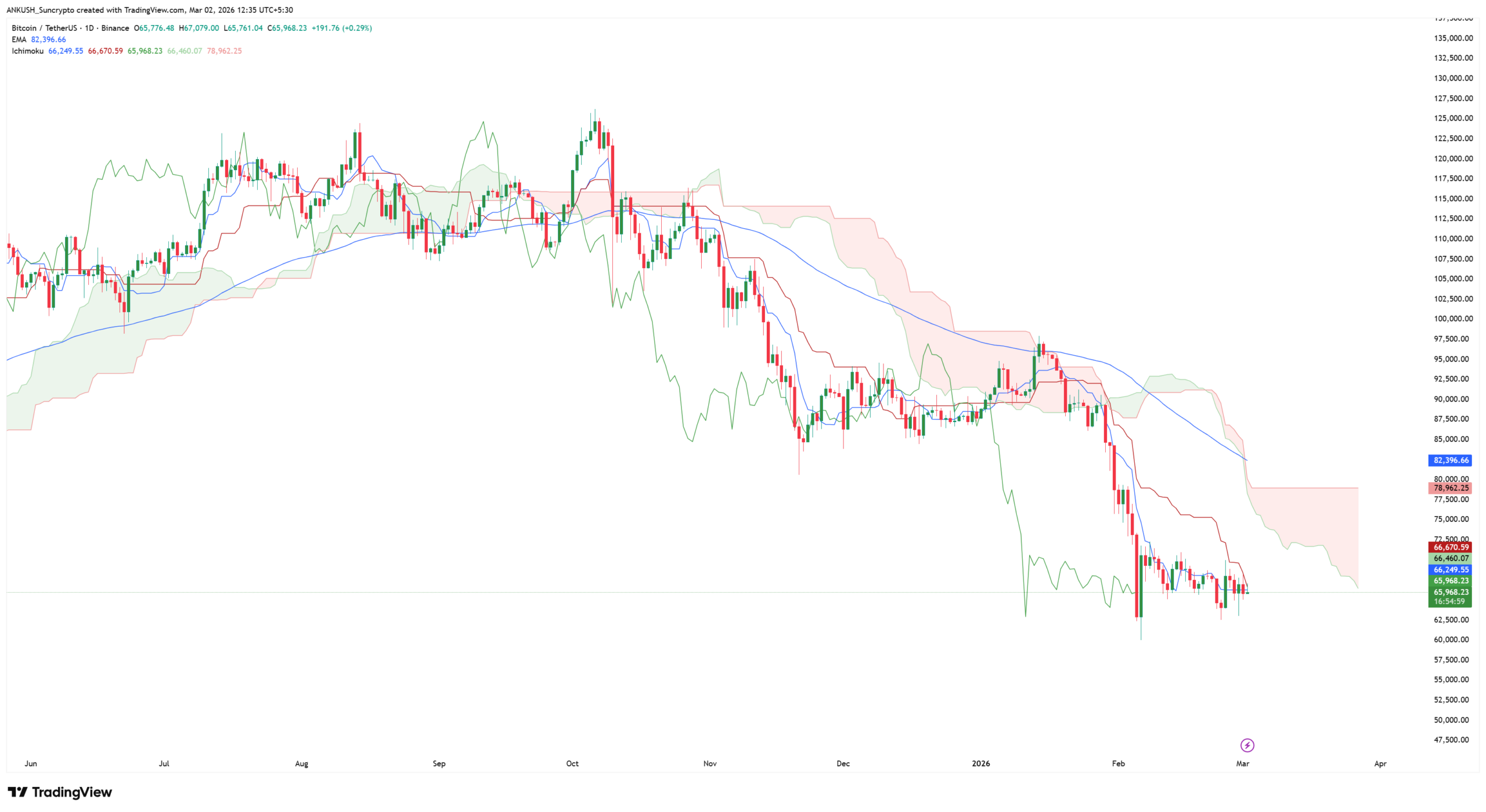
That said, 2026 has been turbulent for Bitcoin. After hitting a peak near $127,000 in October 2025, prices fell roughly 47% to the current range of $66,000–$68,000. Bitcoin ETFs globally have seen over $4.1 billion in net outflows year-to-date in 2026 as investors shifted toward safer assets.
Key Differences: Gold vs Bitcoin
- Scarcity: Gold’s supply grows ~1–2% annually through mining; Bitcoin’s supply is permanently capped at 21 million coins.
- Utility: Gold has industrial uses in electronics, dentistry, and aerospace. Bitcoin’s utility lies in its network—borderless payments, programmable finance, and censorship-resistant value storage.
- Accessibility: Both are accessible digitally in India today. Digital gold via UPI has made micro-investing in gold as easy as a phone tap. Bitcoin is equally accessible on regulated exchanges like Suncrypto.
- Transparency: Bitcoin’s blockchain offers complete transaction transparency—every transfer is publicly verifiable. Gold’s supply chain remains opaque, with concerns around conflict gold and purity verification in unorganized markets.
Volatility vs Long-Term Vision
Gold’s volatility, while present, is lower than Bitcoin’s by a wide margin. Duke University’s Campbell Harvey, in his 2025 paper “Gold and Bitcoin,” concluded that Bitcoin cannot replace gold as a safe-haven asset, particularly during financial crises, where Bitcoin has historically moved with risk-on assets rather than against them.
Bitcoin’s greater volatility creates both risk and opportunity. Over a 10-year horizon, Bitcoin has dramatically outperformed gold in percentage returns. Indian investors with a low risk appetite or near-term financial goals (marriages, property) should maintain balance between the two asset types.
Best Investment in India for Long-Term Wealth?
Neither asset is universally superior. The right answer depends on your time horizon, risk tolerance, and financial goals:
- Conservative/traditional investors: Gold (physical or ETF) remains the bedrock of wealth preservation in India, with strong regulatory oversight, cultural familiarity, and proven crisis performance.
- Growth-oriented investors (5–10+ year horizon): Bitcoin offers asymmetric upside, especially if global institutional adoption continues.
- Balanced approach: Many financial advisors increasingly recommend a 5–15% allocation to Bitcoin with the rest in traditional assets like gold, equities, and debt—not as a substitute, but as a diversifier.
Conclusion
Gold and Bitcoin are not enemies; they are different tools for different goals. In India’s unique context, where gold holds emotional, cultural, and financial significance, it remains irreplaceable for most households. Bitcoin, however, is no longer a fringe experiment; it’s a maturing asset class with growing institutional backing. The smartest Indian investor of 2026 doesn’t choose between tradition and technology; they harness both.
Is Bitcoin better than gold for long-term investment in India?
There is no absolute “better.” Bitcoin has offered vastly higher returns over the last decade, making it excellent for aggressive growth, while gold offers significantly more price stability and capital preservation.
Should Indian investors allocate both gold and Bitcoin in their portfolio?
Yes, many modern financial experts recommend allocating both: Gold to act as a defensive anchor during crises, and Bitcoin to act as an aggressive growth engine against currency devaluation.
What is the difference between gold and Bitcoin?
Gold is physical gold stored in a vault that you own digitally via an app, while Bitcoin is a decentralized digital currency and network that exists entirely on the blockchain with no physical counterpart.