
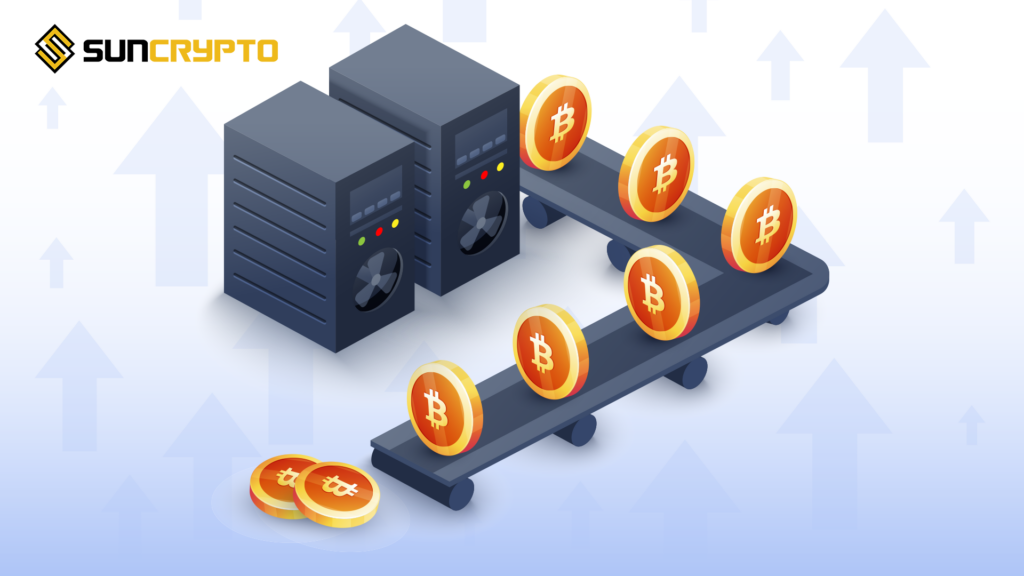
When the Bitcoin mining cost ($81,000) is higher than the market price (suppose $70,000), the operation is not profitable in terms of immediate cash flow. However, the decision to keep mining is more complex than a simple “yes” or “no.” Whether it is “profitable” depends on your timeline and business structure.
Why it is NOT Profitable (Short-Term)
In 2026, if you mine a Bitcoin for $81,000 and sell it immediately for $70,000, you have a net loss of $11,000.
- Negative Cash Flow: You are spending more on electricity, cooling, and hardware maintenance than you are bringing in.
- Operational Stress: Small miners with high electricity costs usually go bust or shut down their machines during this phase because they cannot afford the monthly bills.
Why it CAN BE Profitable (Long-Term Strategy)
Professional miners and “Centaurs” often stay online despite the $11,000 loss for several strategic reasons:
- Tax Harvesting: In many countries, business losses can be used to offset taxes on other income. A $11,000 loss per coin can reduce the overall tax burden for a large corporation.
- Speculative HODLing: Miners often don’t sell their rewards immediately. They mine at an $81,000 cost today because they believe Bitcoin will be worth $150,000 in a few years. In their view, they aren’t “losing” $11,000; they are “buying” Bitcoin at a price they expect will double.
- Sunk Costs: If a miner has already paid for 12 months of electricity in advance (a common “take-or-pay” contract), the cost is already gone. At that point, mining anything is better than mining nothing.
- Difficulty Drop: When the price stays below the cost, weak miners quit. This makes it easier (and cheaper) for the remaining miners to earn rewards. Staying online is a way to “outlast” the competition and gain more market share.
|
Perspective |
Profitability Status |
Logic |
|
Retail Miner |
Not Profitable |
High bills and immediate need for cash make the $11k loss fatal. |
|
Institutional Miner |
Strategically Profitable |
High bills and immediate need for cash make the $11k loss fatal. |
|
AI-Pivot Miner |
Profitable |
Switches power to AI tasks when BTC mining is in the red. |
The Relation: Bitcoin Mining Cost, its Price, and Hashrate
These three factors are locked in a constant “Feedback Loop.”
- Profitability Squeeze (The Current State)
When the Mining Cost > BTC Price, profit margins vanish. Miners start losing $11,000 for every coin they produce. At this stage, the Hashrate usually begins to stall or drop as the least efficient miners (those with high electricity bills) turn off their machines to save money.
- The Difficulty Adjustment (The Auto-Correction)
Bitcoin has a built-in “thermostat” called Difficulty Adjustment that triggers every two weeks:
- Lower Hashrate = Easier Mining: If miners shut down and the bitcoin hashrate drops, the network realizes there is less competition.
- Cost Reduction: It then makes the mathematical puzzles easier to solve. This automatically lowers the “Mining Cost,” bringing it back down toward the market price of $70,000.
- Hashrate as a “Buy Signal”
Traders on platforms often watch for a “Hash Ribbon Recovery.”
- When the hashrate starts to rise again after a period of being flat or falling, it means the “weak” miners have been washed out and the “strong” miners are expanding.
- The Result: Historically, a recovering hashrate is one of the most reliable signals that a major Bitcoin price rally is about to begin.
Why is this “The Big Question” in February 2026?
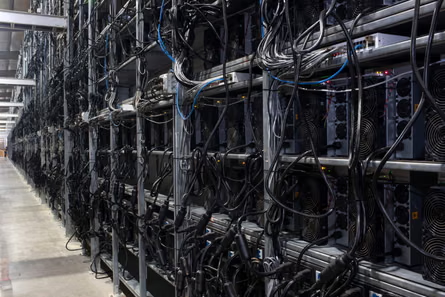
This question is perfectly timed in Feb 2026, the market is currently seeing a massive gap between the market price and the cost of production.
- Data from early February shows the network hashrate has fallen to its lowest level since September 2025. This means “weaker” miners—those paying more than $0.07/kWh for power—have actually stopped mining.
- Because many miners shut down, the Bitcoin network recently had its largest difficulty drop since 2021 (an 11% decrease). This makes it easier—and therefore cheaper—for the “strong” miners who stayed online to earn Bitcoin.
- Many mining companies (like TeraWulf and IREN) are no longer just “Bitcoin miners.” They have become Centaurs of infrastructure. If mining BTC at $70k is unprofitable, they simply flip a switch and sell their electricity and computing power to AI companies instead.
- JPMorgan analysts recently noted that the production cost (now around $77,000) acts as a “soft floor.” Historically, whenever the price stays below this cost for a few weeks, it marks the ultimate market bottom before a massive rally.
Disclaimer: Crypto products & NFTs are unregulated and can be highly risky. There may be no regulatory recourse for any loss from such transactions.
What is Bitcoin mining?
Bitcoin mining is the process of using powerful computers to solve complex puzzles that secure the network and verify transactions in exchange for newly created Bitcoin.
What is Hashrate?
Bitcoin hashrate is the total combined “guessing power” of all the computers in the world currently working to secure the Bitcoin network.