
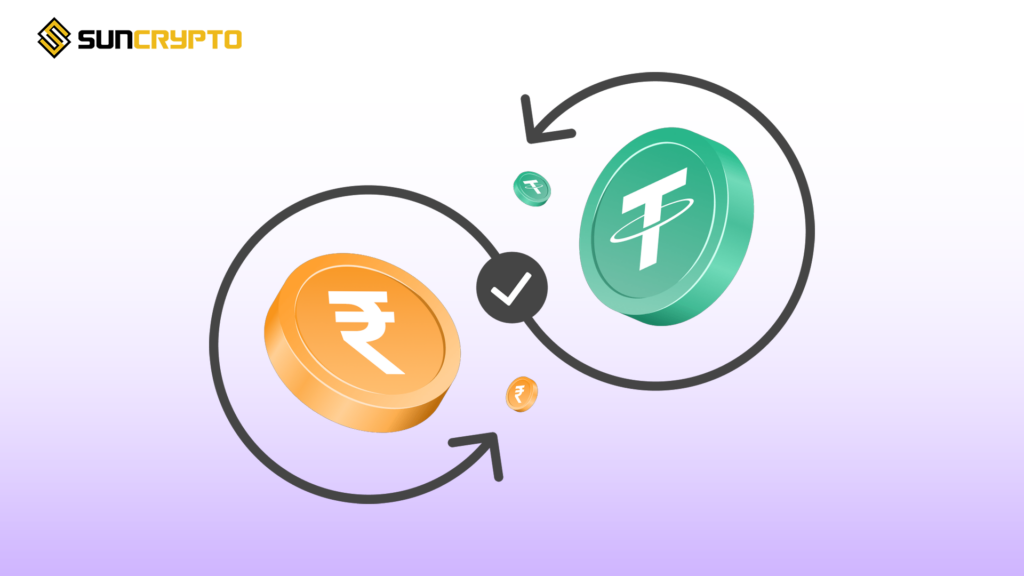
For Indian cryptocurrency investors, the ability to smoothly and securely convert stablecoin holdings—specifically USDT to INR—is the final and most critical step in realizing profits or managing funds. SunCrypto, a popular Indian crypto exchange, provides a direct and efficient platform for this conversion, adhering to local banking and taxation norms.
This detailed guide outlines how the SunCrypto USDT to INR conversion works, ensuring a clear and compliant process for withdrawing funds to your linked bank account.
Why is USDT to INR Conversion Important?
Tether (USDT) is the world’s largest stablecoin, pegged to the US dollar (USD). It serves several vital functions for crypto traders:
- Safety from Volatility: Traders convert volatile assets (like Bitcoin or Ethereum) into USDT to lock in profits without leaving the crypto ecosystem.
- Global Liquidity: Many altcoins and international trading pairs are primarily listed against USDT, making it a necessary intermediary.
- Final Off-Ramp: When a trader is ready to move profits back to the traditional financial system, the USDT to INR conversion on an Indian exchange is the final gateway to the bank.
The USDT to INR Conversion Process on SunCrypto
The process of converting your USDT to INR on SunCrypto involves a simple spot market trade followed by a bank withdrawal.
Phase 1: Preparation
- Verify KYC and Bank Account: Ensure your SunCrypto account has completed KYC verification and that your bank account details (Account Number, IFSC, Name) are accurately registered and verified. Withdrawals can only be processed to your linked bank account.
- Consolidate USDT: If your USDT is in an external wallet or another exchange, you must first deposit it into your SunCrypto USDT wallet. Note: SunCrypto has simplified this by consolidating various USDT network deposits (like TRC-20) into a single unified USDT balance.
Phase 2: Converting USDT to INR
This step executes the sale of your stablecoins for your local fiat currency.
Step 1: Navigate to the Trading Pair
- Open the SunCrypto application.
- Go to the “Exchange” or “Trade” section.
- Search for and select the USDT/INR trading pair.
Step 2: Place a Sell Order
- Switch to the “Sell” tab.
- Choose Order Type:
- Market Order: To sell instantly at the current best market price. Best for quick conversions.
- Limit Order: To set a specific, higher price at which you wish to sell your USDT. Best for control over the exchange rate.
- Enter Amount: Input the quantity of USDT you wish to sell (e.g., 100 USDT).
- Review INR Value: The platform will display the estimated INR amount you will receive.
Step 3: Confirm and Execute
- Confirm the sell order.
- The trade is executed, and the resulting INR amount (minus trading fees and TDS) is instantly credited to your INR Wallet on SunCrypto.
Phase 3: Withdrawing INR to Your Bank
Once the INR balance is available, you can initiate the withdrawal process.
Step 4: Initiate INR Withdrawal
- Go to the “Portfolio” or “Wallet” section.
- Select the “INR Withdrawal” option.
Step 5: Finalize Withdrawal Details
- Select Account: Choose your verified bank account.
- Enter Amount: Input the amount of INR you want to withdraw.
- Review Fees: Check for any final INR withdrawal fees (SunCrypto has historically offered low/zero withdrawal fees, but policies can change).
- Authenticate: Complete the security verification (PIN/OTP).
Step 6: Receive Funds
- SunCrypto typically processes INR withdrawals quickly. Funds are usually credited to your bank account within a few hours, though in some cases, it may take up to 24-48 hours depending on the banking network.
Key Compliance and Fee Considerations
For Indian investors converting USDT to INR, two critical regulatory points must be understood:
By providing a clear USDT to INR trading pair and handling the mandatory 1% TDS deduction, SunCrypto simplifies the off-ramping process, allowing users to efficiently convert their stablecoin holdings into liquid currency and manage their portfolio.
Disclaimer: Crypto products & NFTs are unregulated and can be highly risky. There may be no regulatory recourse for any loss from such transactions.