
India’s cryptocurrency journey in 2026 tells a compelling story of resilience and growth. Despite some of the world’s strictest tax regulations, India has emerged as a global leader in Bitcoin adoption, with over 100 million crypto users, driven largely by retail participation. As we stand in February 2026, understanding how India’s retail trends will shape Bitcoin’s future price becomes crucial for investors navigating this dynamic market.
Why India’s Retail Adoption Matters for Bitcoin in 2026
India ranks first in grassroots cryptocurrency adoption, surpassing the United States and China. This is driven by enthusiastic traders expanding their source of income around different digital sources and their desire for financial inclusion.
Despite the 30% tax on crypto gains and 1% TDS on transactions, investors have shifted toward long-term holding patterns. Tier-2, tier-3, and tier-4 cities account for 75% of crypto activity. Female participation has grown by 300% since 2020.
Current Bitcoin Price in India and INR Impact
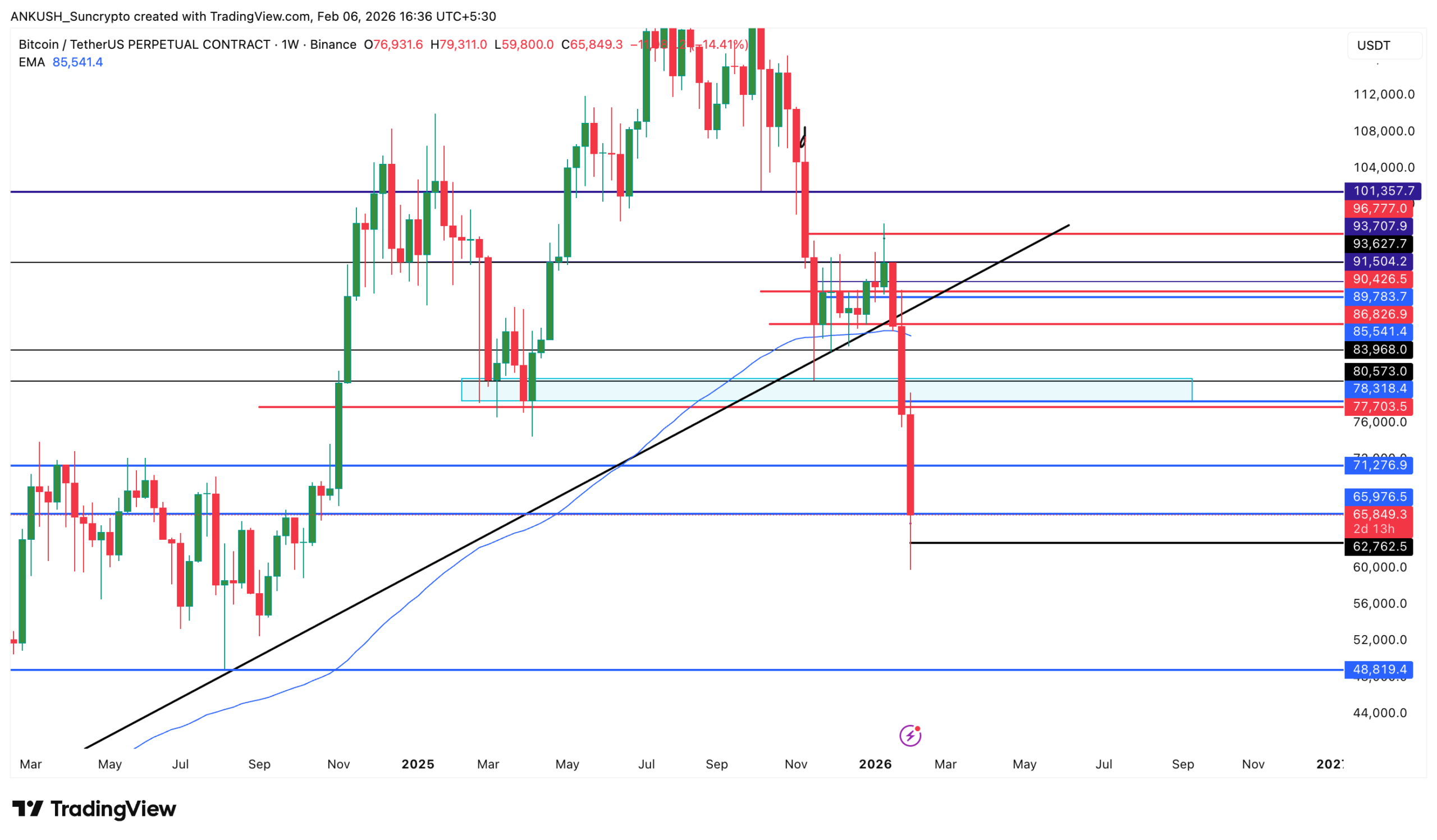
As of February 5, 2026, one bitcoin trades at approximately ₹67-75 lakh, down from its all-time high of ₹1.14 crore in October 2025. Bitcoin prices in India typically trade at a premium or discount compared to global markets, depending on local demand-supply dynamics and INR fluctuations.
Price Prediction for 2026 Based on Indian Retail Trends
Conservative Scenario (Stable Adoption)
With stable adoption and no major regulatory changes, Bitcoin could trade between ₹65-85 lakh by the end of 2026. Traders are more likely interested in spot trading in comparison to futures trading in INR. This conservative scenario could be uplifted only by genuine education and personal willingness to liberate themselves.
Moderate Growth Scenario (Rising Retail & Policy Clarity)
With regulatory policy clarity and increased participation by retail investors worldwide, Bitcoin could reach ₹90 lakh to ₹1.2 crore by late 2026.
High-Growth Scenario (Mass Retail + Global Tailwinds)
In an optimistic scenario with comprehensive regulatory clarity, favorable global monetary policy, and sustained institutional adoption, Bitcoin could surge toward ₹1.5-2 crore by year-end 2026.
Role of Regulation and Indian Crypto Infrastructure in 2026
Regulation remains crucial in India’s crypto story. The country operates under a taxation-first approach, with cryptocurrencies classified as virtual digital assets. While not banned, crypto exists in a monitored space overseen by multiple agencies.
FIU-IND’s strict compliance requirements have forced exchanges to implement robust KYC processes. All crypto transactions exceeding ₹10,000 must be reported, and new penalties for crypto exchanges have also been enforced. While this adds friction, it builds legitimacy and could enable institutional participation.
How Bitcoin Halving and Global Trends Support the 2026 Outlook
The April 2024 Bitcoin halving reduced mining rewards from 6.25 to 3.125 BTC per block. Historically, halvings preceded major bull runs, though 2025 broke the pattern by finishing in the red for the first time post-halving.
With Bitcoin’s market cap exceeding $1.38 trillion, moving prices requires substantially more capital than previous cycles. However, the psychological impact of scarcity remains powerful as awareness grows that Bitcoin’s issuance continually decreases toward its 21 million cap.
Key Risks That Could Affect Bitcoin Price in India
Regulatory crackdowns remain a primary concern. Stricter controls or increased Indian taxes could dampen retail enthusiasm. Global macroeconomic conditions present another major risk, as persistent high interest rates or recession fears could trigger risk-off sentiment.
Technical risks include exchange failures and security breaches. Currency risk also affects Indian investors uniquely, as rupee depreciation could create the illusion of Bitcoin gains while global prices remain flat.
Final Verdict: What This Means for Indian Bitcoin Investors in 2026
The most probable scenario for 2026 is Bitcoin trading in the $68,000 to $77,000 range by year-end, reflecting continued retail accumulation and gradual regulatory clarity.
Maintaining a long-term perspective is key. The 30% tax on profit and 1% TDS make frequent trading unviable, pushing toward buy-and-hold strategies. Dollar-cost averaging remains the most sensible approach given Bitcoin’s volatility. Diversification is crucial, with Bitcoin representing only a portion of investment portfolios.
India’s crypto story is being written by millions of retail investors who believe in financial innovation and technological progress.
Disclaimer: Crypto products & NFTs are unregulated and can be highly risky. There may be no regulatory recourse for any loss from such transactions.
What could one Bitcoin price be in India by 2026?
Based on current adoption trends and regulatory landscape, one Bitcoin price could trade between ₹75 lakh to ₹1.2 crore ($83,000 to $133,000) by the end of 2026 as per analysts in the moderate scenario. Current prices as of February 2026 are around ₹67-75 lakh.
Is Bitcoin a good long-term investment for Indian retail investors?
Yes, historically it outperforms traditional assets over 4-year cycles. However, due to high volatility, it should ideally form only 5-10% of a diversified portfolio.
Why does Bitcoin price in India differ from global prices?
The difference comes from the USDT/INR exchange rate in Indian markets due to limited direct banking liquidity.
What factors will influence BTC price prediction in 2026?
Key drivers include global interest rate cuts and institutional ETF inflows into Bitcoin.