
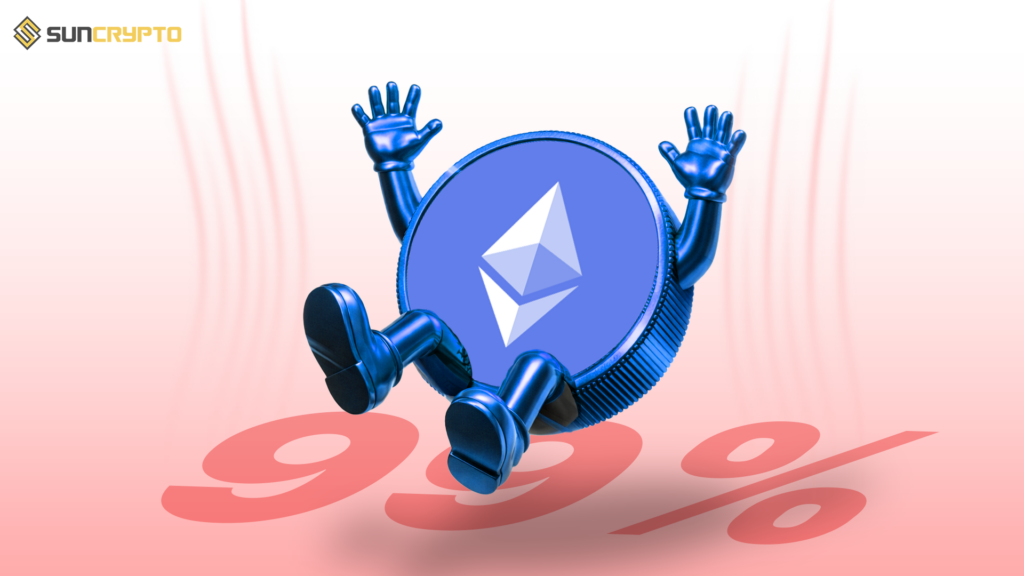
As of early 2026, Ethereum transaction fees have plummeted by over 99% from their November 2021 highs, with average fees dropping from over to less than. This massive reduction is driven by Layer-2 (L2) adoption and recent network upgrades (e.g., Dencun), which have moved activity off the mainnet, lowering costs while maintaining high transaction volume.
Key Findings:
- Cost Collapse: Fees have dropped from peak levels to as low as , with off-peak transactions sometimes costing less than.
- Driver of Change: Increased usage of Ethereum Layer-2 scaling solutions (like Arbitrum and Base) has significantly reduced congestion on the Ethereum mainnet.
- Network Activity: Despite the low fees, Ethereum is processing record transaction volumes, according to Yahoo Finance.
- Impact on Revenue: The lower fees have significantly reduced network revenue, down to roughly million annually from a high of billion in 2021.
While these lower costs enhance user experience, they have also resulted in a lower “burn rate” of ETH, making the network’s deflationary mechanism less intense than during the 2021-2022 peak periods.
The Numbers at a Glance
- Peak Cost (Nov 2021): During the bull run, a single simple transaction often cost $50–$100, with complex swaps exceeding $200.
- Current Cost (March 2026): The average transaction fee has plummeted to just $0.016.
- Total Decline: A staggering 99%+ reduction in user expenses over four years.
Why Did Costs Drop So Sharply?
- The EIP-4844 “Blob” Revolution: The Dencun upgrade (and subsequent refinements like Pectra and Fusaka) introduced “data blobs.” This allowed Layer 2 networks (like Arbitrum, Base, and Optimism) to post data to Ethereum in a separate, much cheaper lane, removing the “congestion tax” from the main network.
- Layer 2 Dominance: In 2026, over 99% of retail activity has moved to Layer 2. Since the main Ethereum chain (Layer 1) is no longer crowded with small individual trades, the “gas wars” that drove prices to $100 have vanished.
- Structural Efficiency: Technical upgrades in late 2025 and early 2026 (such as PeerDAS) expanded Ethereum’s data capacity. The network can now process record-breaking volumes (reaching 17.3 million transactions weekly) while keeping fees near zero.
- Supply vs. Demand: With the shift to Proof of Stake, the network is more efficient at processing transactions. The increased “blob space” supply currently outweighs the demand, keeping prices at these historic lows.
What This Means for Users?
- Micro-transactions: For the first time in Ethereum’s history, sending $1 worth of crypto is economically viable because the fee is less than 2 cents.
- Institutional Adoption: Low, predictable costs have allowed major banks to use Ethereum for settling “Real World Assets” (RWA) without worrying about unpredictable fee spikes.
- End of “Gas Fear”: Users no longer have to wait for “off-peak” hours or weekends to perform trades; the network is “majority-cheap” 24/7.
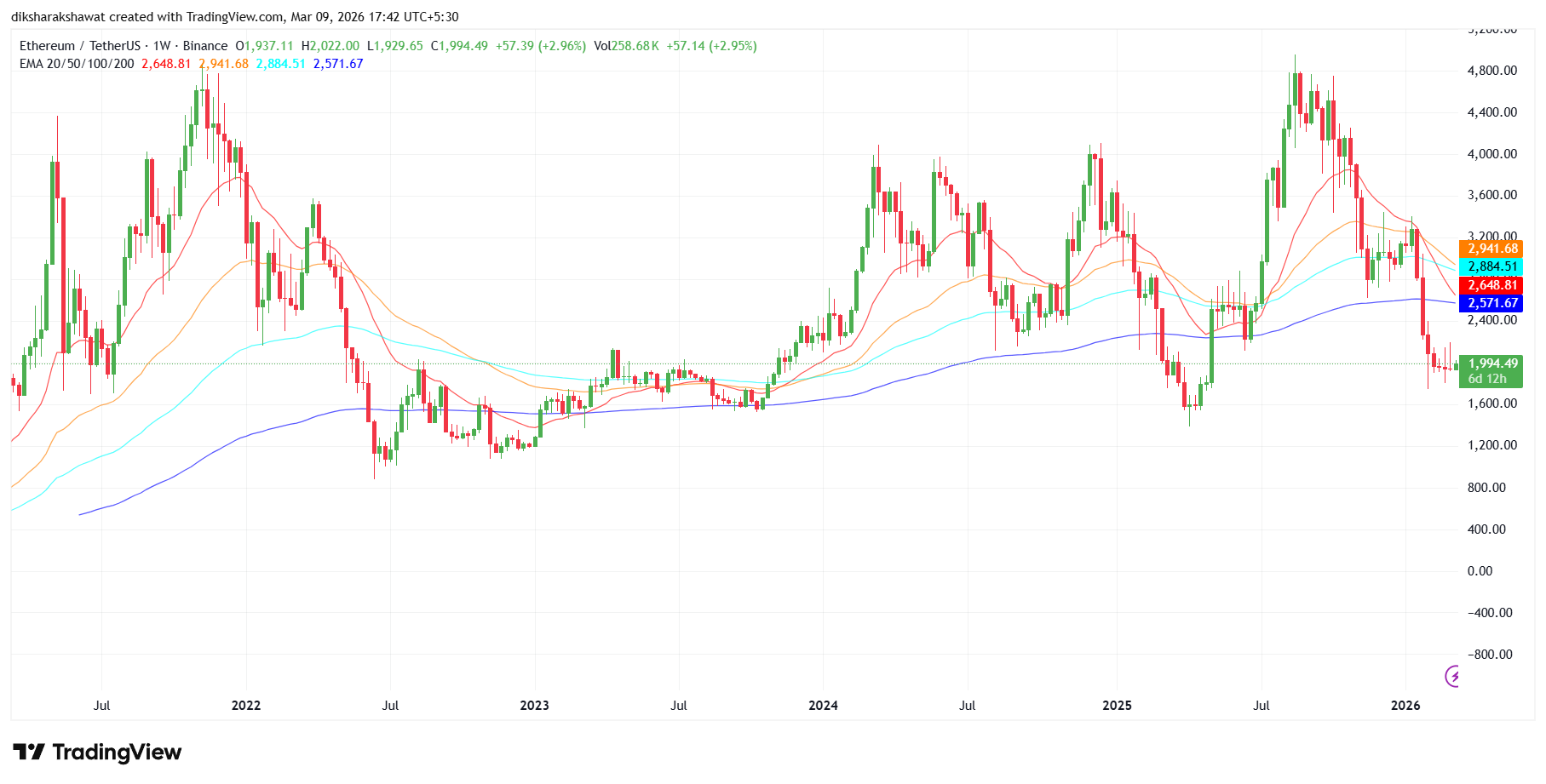
Ethereum Price Analysis
1. Short-Term Outlook: The “Utility Explosion” (2026 Q2–Q3)
- Price Target: $4,800 – $5,500
- Analysis: Now that transactions cost only $0.016, the barrier to entry for retail users has vanished. We expect a massive migration of users from “alternative” low-cost chains back to the Ethereum ecosystem. This “re-homing” of liquidity into Ethereum Layer-2s (Base, Arbitrum, Optimism) creates a strong buy-wall for ETH, as it remains the required collateral and gas asset for the entire ecosystem.
2. Mid-Term Outlook: The “Institutional Integration” (Late 2026)
- Price Target: $6,500 – $8,200
- Analysis: Institutional players and major banks were previously hesitant to use Ethereum due to “Gas Spikes” that made settlement costs unpredictable. With the 99% cost reduction and the stability provided by PeerDAS and “Blobs,” Ethereum is becoming the global settlement layer for Real World Assets (RWA). As trillions of dollars in bonds and credit are tokenized on-chain, the demand for ETH as the underlying “Triple-Point Asset” (Store of Value, Capital Asset, and Consumable) will likely drive a push toward previous all-time highs and beyond.
3. Long-Term Outlook: The “Network Effect” Peak (2027 and Beyond)
- Price Target: $10,000+
- Analysis: While the “burn rate” is currently lower due to cheap fees, a massive increase in transaction volume (reaching hundreds of millions of transactions per week) will eventually compensate for the low cost per transaction. Once the network reaches a “Critical Mass” of activity, the sheer scale of micro-transactions will trigger the deflationary mechanism again. At this stage, Ethereum transitions from a “expensive luxury computer” to the “invisible utility of the global internet,” potentially pushing its valuation into the five-figure range.
Key Market Factors to Watch:
- The Deflation Flip: Watch for the moment when total L2 transaction volume scales so high that the tiny $0.016 fees collectively burn more ETH than is being issued. This is the “Ultra Sound Money” turning point.
- Staking Yields: As network activity increases, the rewards for ETH stakers remain high, creating a supply crunch as more ETH is locked up and removed from the open market.
- Ecosystem Stickiness: The lower the fees, the less reason users have to leave for other chains. Ethereum’s “moat” is currently the widest it has ever been in its history.
Disclaimer: Crypto products & NFTs are unregulated and can be highly risky. There may be no regulatory recourse for any loss from such transactions.