
In March 2026, analysts are looking back at the 2,000%+ returns from the 2018 lows not just as a historical fact, but as a blueprint for understanding the “New Crypto Regime.”
The Bitcoin (BTC) Growth Trajectory
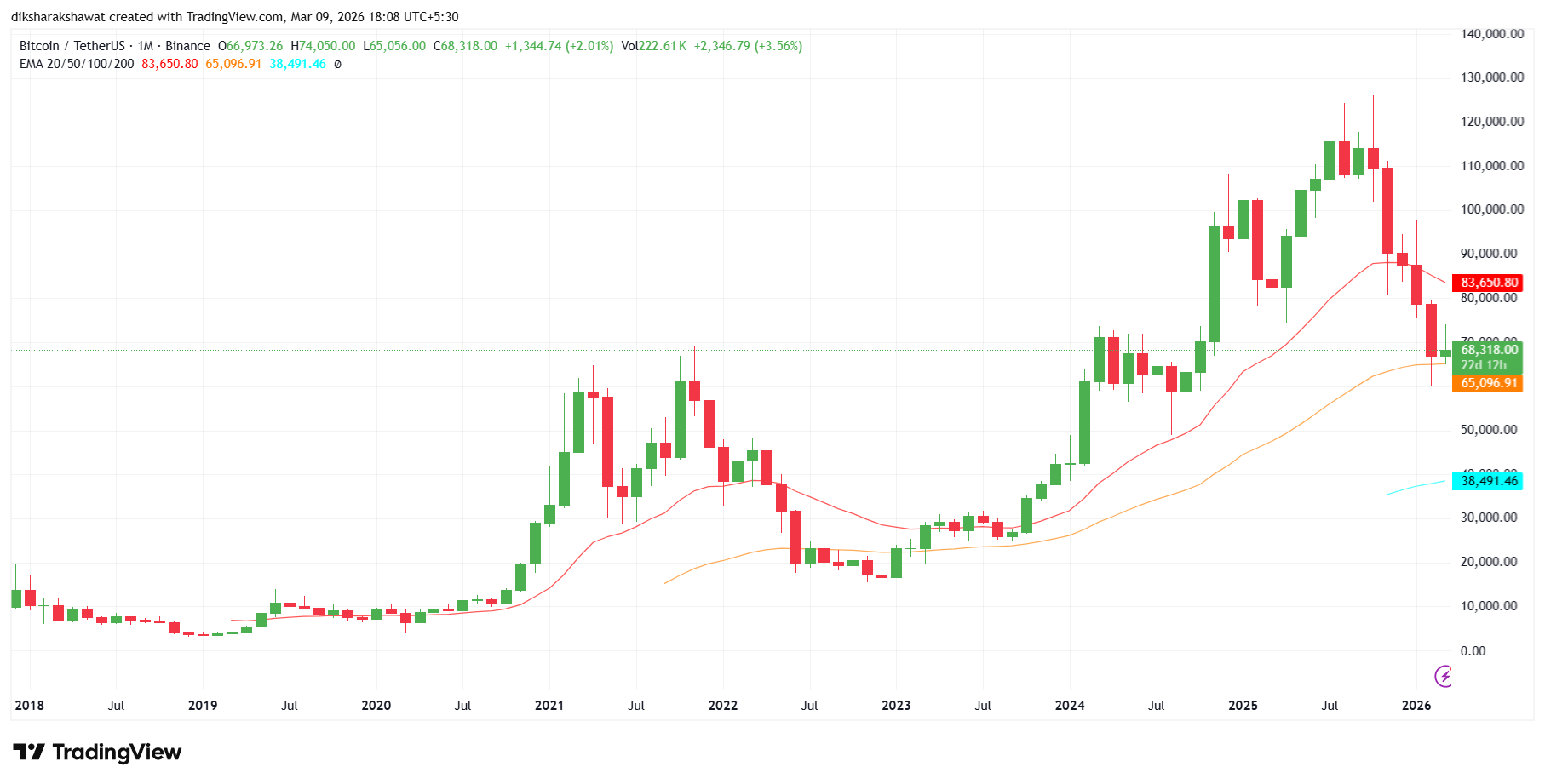
- The 2018 Low: Bitcoin hit its bottom in December 2018 at approximately $3,122.
- The 2000%+ Milestone: To reach a 2,000% return, BTC only needed to hit $65,562. With BTC trading well above $100,000 in early 2026, long-term holders from the 2018 low are actually seeing returns closer to 3,200%.
- Institutional Shift: This growth was driven by the transition from retail speculation to institutional adoption, including the 2024 Spot ETF approvals and corporate treasury buys (e.g., MicroStrategy).
The Ethereum (ETH) Growth Trajectory
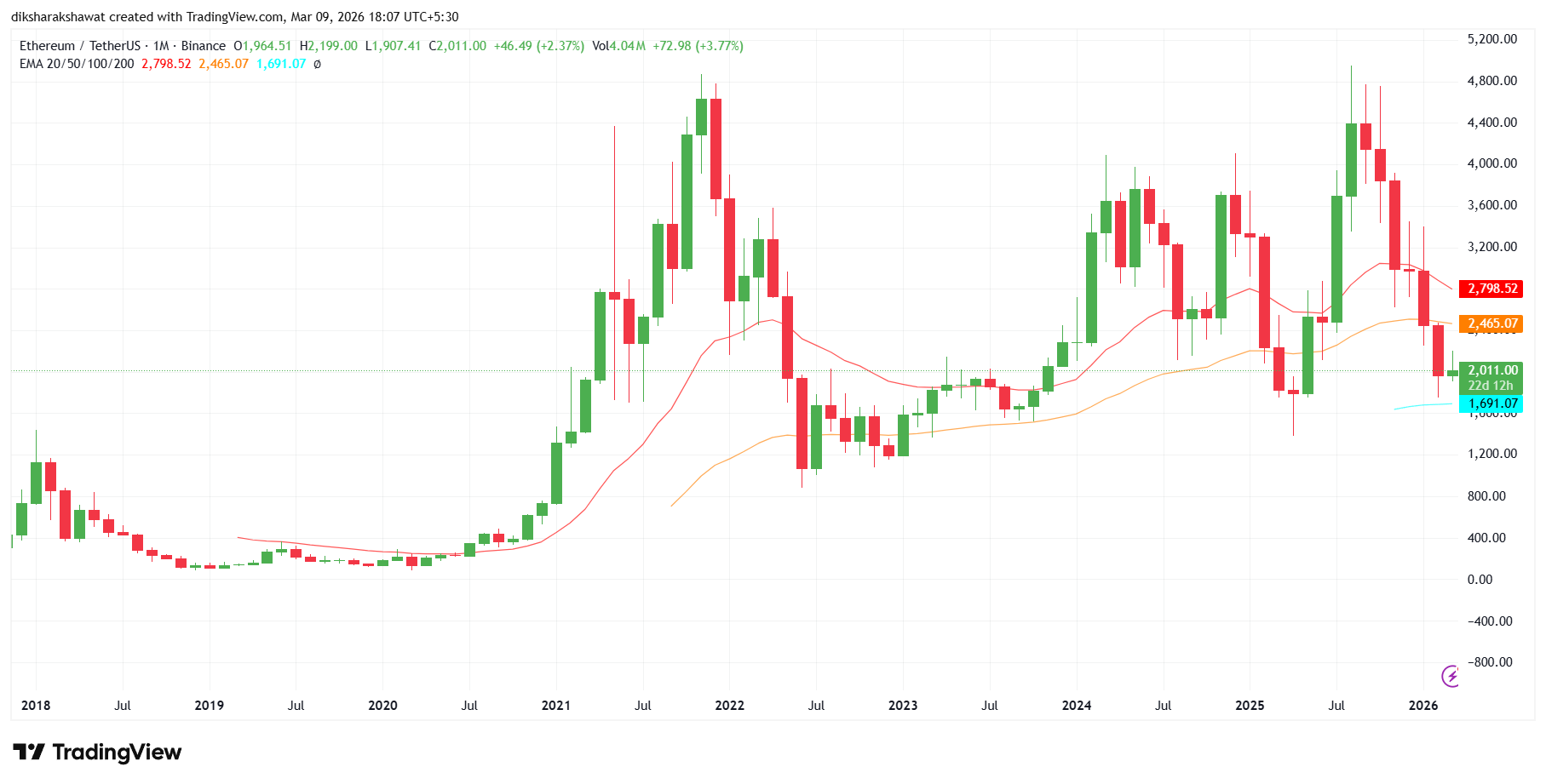
- The 2018 Low: Ethereum suffered a deeper drawdown, bottoming out in December 2018 at roughly $80.
- The 2000%+ Milestone: ETH reached the 2,000% mark ($1,680) relatively early in the 2021 bull run.
- Current Performance: With ETH prices in the $4,000 – $5,000 range in 2026, investors from the 2018 lows have seen staggering returns exceeding 5,000%.
- Ecosystem Drivers: This massive outperformance compared to BTC is attributed to the rise of DeFi, NFTs, and the successful transition to Proof-of-Stake (The Merge), which made ETH a yield-bearing asset.
Comparative Market Insights
- Risk vs. Reward: While both plummeted 80-90% in 2018, those who braved the “capitulation phase” were rewarded with returns that outperformed almost every traditional stock market index (like the S&P 500) by a factor of 10 or more.
- Volatility as an Opportunity: The 2018 bear market is now cited by analysts as the “ultimate accumulation zone,” proving that crypto cycles reward patience over active daily trading.
- Supply Dynamics: The 2026 data shows that “HODLing” behavior is at an all-time high, with exchange reserves hitting 7-year lows, further fueling these parabolic price recoveries.
The consensus among major firms like Grayscale, JPMorgan, and Coinbase Institutional suggests that we have moved from a retail-driven speculative market to one anchored by institutional “floors.”
1. The Death of the “Four-Year Cycle”
Traditional analysts (including those from Grayscale Research) are debating whether the predictable four-year halving cycle is officially over.
- The Argument: Previously, Bitcoin followed a rigid “boom and bust” pattern tied to its halving. However, in 2026, the massive influx of Spot ETFs (now managing over $130 billion) has created a “permanent bid.”
- Analyst View: They suggest we are in a “Sustained Bull Market” where institutional rebalancing provides a cushion that prevents the 90% crashes seen in 2018.
2. Bitcoin as a “Non-Sovereign Financial Rail”
Analysts at 21Shares point out that the 2,000% gain since 2018 is largely due to Bitcoin’s evolving role during geopolitical crises.
- The Context: In early 2026, amid conflicts in the Middle East and currency collapses in nations like Iran and Venezuela, BTC has behaved as a “flight-to-safety” asset.
- The Shift: Experts now categorize BTC alongside gold. They note that while it used to trade like a “tech stock,” it now increasingly correlates with M2 Money Supply and global liquidity.
3. The “Bifurcation” of BTC and ETH
A major discussion point in 2026 is the widening gap between Bitcoin and Ethereum’s market behavior:
- Bitcoin’s Resilience: Analysts from Capital Street FX highlight that BTC has established a “hard floor” near $62,000, supported by corporate treasuries (like Strategy Inc., formerly MicroStrategy) which now hold nearly 5% of the total supply.
- Ethereum’s Pivot: Conversely, some analysts are cautious about ETH, noting it has faced “structural headwinds” and six months of institutional outflows. They are watching the $2,000 level as a critical psychological “pivot zone” that will determine if ETH can maintain its 2,000% gain from the 2018 bottom ($80).
4. Valuation Toward 2027: “The $100K Consensus”
Despite a volatile start to 2026, the analytical framework for the next 12 months is highly optimistic:
- Target Prices: Many institutional reports (e.g., Bitcoin Suisse) project BTC approaching $180,000 and ETH reaching for $8,000 by late 2026/early 2027.
- The Catalyst: Analysts cite the “Triple Threat” of bullish factors:
- The end of the Federal Reserve’s tightening cycle.
- The passage of bipartisan US crypto legislation (the “CLARITY Act”).
- The rise of Agentic Finance (AI agents using crypto for autonomous payments).
Key Takeaway for 2026 Investors
- Historical Precedent: The 2000%+ return since 2018 serves as a benchmark for the “Four-Year Cycle” theory, suggesting that even during current 2026 pullbacks, the long-term trend remains aggressively upward.
- Asset Maturity: BTC is now viewed as “Digital Gold” (Store of Value), while ETH is viewed as “Digital Oil” (The Utility Layer), both proving they can survive and thrive after a 90% crash.
Disclaimer: Crypto products & NFTs are unregulated and can be highly risky. There may be no regulatory recourse for any loss from such transactions.