

The blockchain and cryptocurrency space is full of such special concepts that explain how decentralized networks work. One such concept that tends to raise eyebrows is “orphan blocks.” They sound like lost souls in the blockchain universe, but they play an important part in the operation of distributed ledger systems. Let’s explore what orphan blocks are, why they happen, and how they affect the crypto space.
What Are Orphan Blocks?
Orphan blocks are valid blocks that do not make it to the main blockchain. This occurs when several miners solve a block almost simultaneously, but only one can be received by the chain. The other rival blocks, although legitimate, are rejected and orphaned.
Most of the time, orphan blocks occur because of the distributed nature of blockchain networks, wherein nodes take time to agree. They do not belong to the longest chain and hence are overlooked by the network.
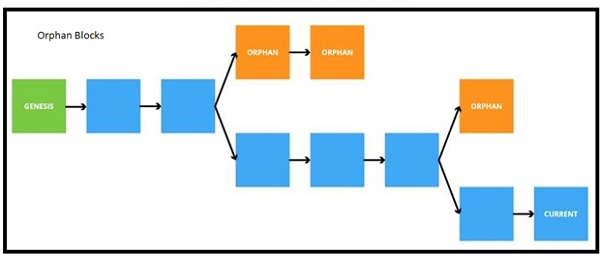
How Do Orphan Blocks Occur?
Several reasons can result in the generation of orphan blocks, such as:
- Network Latency: If two miners mine a block at the same time, there is a possibility that some nodes might get and validate one block ahead of the other, resulting in temporary forks.
- Mining Competition: The blockchain network can only support one block, and when two or more miners send their blocks, the network selects the block that is built on the most quickly.
- Propagation Speed: The rate at which new blocks are propagated over the network determines which block is confirmed first.
- 51% Attack (Uncommon Instances): If an attacker has greater than 50% of the network’s mining capabilities, it can intentionally orphan blocks to control transactions.
How Do Orphan Blocks Affect the Blockchain?
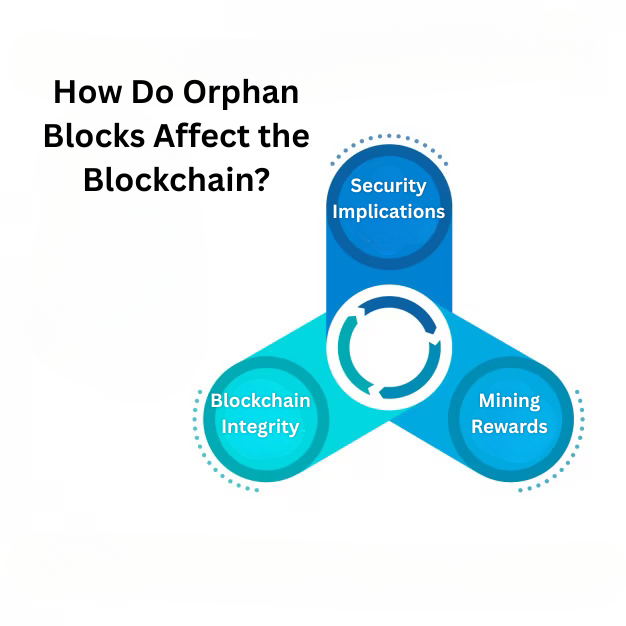
While orphan blocks are inherent by-products of blockchain transactions, their effect is negligible in well-protected networks. Still, there are a couple of things to take into account:
- Security Implications: Valid transactions may be present in orphan blocks and not become confirmed. Most blockchains, however, rely on the longest-chain rule, so re-added transactions from orphan blocks are often put back in the mempool and included in subsequent blocks.
- Mining Rewards: There are certain networks where miners who create orphan blocks do not receive the mining rewards, and it is a loss to them.
- Blockchain Integrity: Excessive orphan blocks would suggest network inefficiencies, yet most contemporary blockchains are coded to reduce them to a bare minimum.
Orphan Blocks vs. Stale Blocks vs. Uncle Blocks
These are usually confused terms, but they have separate meanings. Orphan blocks were first used to describe blocks that lack a known parent because of network problems. Nowadays, the term generally refers to blocks that are discarded because they are competing with other valid blocks that fail to find their place in the longest chain. These blocks are not given acknowledgement within the blockchain network even though they are valid.
Stale blocks, in contrast, are valid blocks that are not part of the longest chain but do have a parent block that is known to them. They are much like orphan blocks but are explicitly traced back to the blockchain history. They tend to be discarded when an alternate chain takes their place due to length, rendering them obsolete even though they had been valid to begin with and were correctly linked to the network.
Uncle blocks are only found in the Ethereum network. While orphan and stale blocks do not add to network security and decentralization, uncle blocks do. Ethereum pays miners for creating uncle blocks to encourage them, even though these are not added to the main chain. This method prevents computational power used on near-successful blocks from being completely wasted, making Ethereum’s blockchain more efficient and secure.
Can Orphan Blocks Be Prevented?
It is not possible to completely eradicate orphan blocks due to the competitive nature of mining, but it still can be avoided through:
- Better Network Propagation: Quicker node-to-node communication minimizes the likelihood of parallel block discoveries.
- Improved Consensus Mechanisms: Certain blockchain platforms use different models of consensus such as Proof of Stake (PoS) to decrease the occurrence of orphaned blocks.
- Mining Optimization: Strategies can be applied by mining pools to propagate blocks more quickly, minimizing block conflicts.
Conclusion
Orphan blocks are an inevitable part of blockchain networks, illustrating the decentralized nature of these systems. They do not present serious network security threats, but learning about their existence allows one to better appreciate the nuances of blockchain technology.
Disclaimer: Crypto products and NFTs are unregulated and can be highly risky. There may be no regulatory recourse for any loss from such transactions. All content provided is for informational purposes only, and shall not be relied upon as financial/investment advice. Opinions shared, if any, are only shared for information and education purposes. Although the best efforts have been made to ensure all information is accurate and up to date, occasionally unintended errors or misprints may occur. We recommend you do your own research or consult an expert before making any investment decision. You may write to us at help@suncrypto.in.